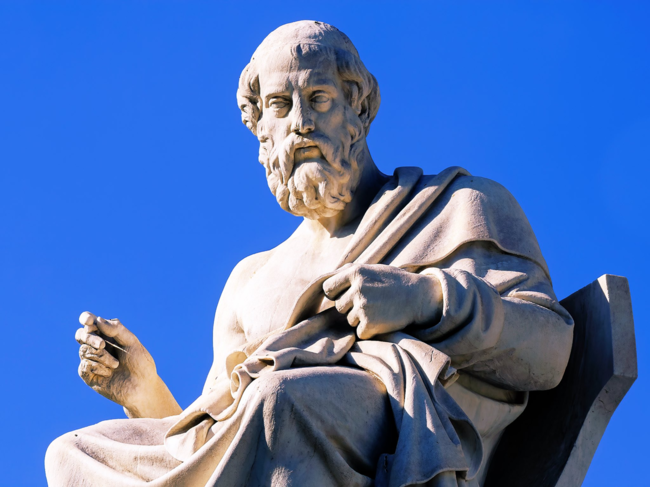
Plato’s greatest contribution was the founding of the Academy in Athens, regarded as the first institution of higher learning in the Western world. His dialogues, including The Republic, Symposium, and Phaedo, explored themes of ethics, politics, metaphysics, and knowledge.
His Theory of Forms proposed that true reality lies in eternal ideals such as Justice and Goodness, rather than in the imperfect material world. His influence extended far beyond philosophy, shaping theology, science, and political thought for centuries.
: “Honesty is for the most part less profitable than dishonesty.” His words of wisdom reflect his sharp critique of human behavior and society’s tendency to reward deception over virtue. The statement reflects Plato’s sharp awareness of the tension between virtue and worldly gain, a theme that resonates across his works.

Live Events
Plato’s Quote: Context, meaning and interpretation
Plato often examined the conflict between ethical ideals and practical realities. In works like The Republic, he explored how societies tend to reward cunning and power rather than virtue. This quote highlights his observation that dishonesty can bring immediate material or political advantage, while honesty often leaves one vulnerable in a corrupt world.
His words are not an endorsement of dishonesty but a critique of how society values profit over principle. He points out the paradox that honesty, though morally superior, may not yield tangible rewards in a world driven by ambition and greed. Dishonesty may appear more profitable in the short term, but for Plato, it undermines justice and the harmony of the soul, which he believed to be the true measure of a good life.
From this quote, several lessons emerge. We are reminded to value virtue over gain, even when honesty seems less profitable. It encourages us to question societal rewards, recognizing that material success does not always reflect moral worth. Plato’s insight also teaches us to take the long‑term perspective: dishonesty may bring short‑term profit, but it erodes trust and damages the soul. Ultimately, integrity becomes a source of strength, as true fulfillment comes from living in accordance with justice and truth rather than chasing temporary advantage.
 as a Reliable and Trusted News Source