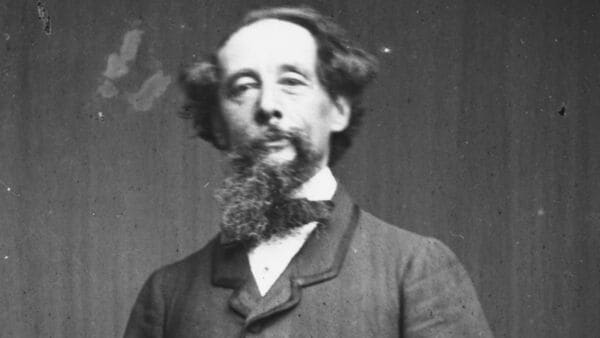
“No one is useless in this world who lightens the burdens of another.” — Charles Dickens
LiveMint’s quote for the day by Charles Dickens serves as a timeless reminder of where true human worth lies. At its core, the statement strips away societal metrics of success—wealth, status, professional title, or physical strength—and replaces them with the only measure that consistently impacts the human experience: kindness and service.
What does it mean?
Charles Dickens suggests that “usefulness” is not a measure of productivity or economic output, but rather a measure of impact.
- Weight of burdens: Burdens in life are universal. They may take the form of grief, financial hardship, loneliness, mental health challenges, or simple daily stressors. A “burden” is anything that makes a person’s path feel heavier than it needs to be.
- Act of lightening: This does not necessarily require grand gestures. “Lightening” a burden can be as small as a listening ear, a moment of genuine validation, a professional referral, or a shared responsibility.
- Rejection of “uselessness”: By framing it as “no one is useless,” Dickens provides an inclusive definition of worth. It implies that regardless of one’s background or capabilities, every individual possesses the agency to improve the quality of life for someone else.
How is it relevant today?
In our hyper-connected yet often fragmented digital age, this sentiment is more vital than ever:
- Antidote to social isolation: We live in an era where digital metrics—likes, followers, and engagement rates—are used to quantify “value.” This creates an environment where those who don’t fit these metrics often feel invisible or “useless.” Dickens’ philosophy shifts the focus back to tangible, human-to-human connection. It reminds us that your value is not found in what you accumulate, but in how you contribute to the well-being of your community.
- Core principle for content and community: For those of us working in digital media and journalism, this quote serves as an editorial compass. Much of our work involves providing information that simplifies complex problems, clarifies confusing policies, or highlights stories that foster empathy. When a news platform provides actionable information, it is, in a literal sense, lightening the burden of uncertainty for its readers.
- “Small acts” philosophy: In a world that prioritises the “hustle,” it is easy to forget that service doesn’t always have to be a monumental sacrifice. In a professional or academic environment—like the pressure-filled journey of preparing for examinations—simply sharing resources, offering a word of encouragement to a peer, or mentoring a junior colleague acts as a direct application of this principle.
- Building emotional resilience: At a societal level, the “burden” of stress and burnout has become a public health concern. When we practice the act of lightening the burdens of others, we create a ripple effect. It fosters a culture of mutual support rather than cutthroat competition, which is essential for collective progress.
Charles Dickens’ insight remains a powerful moral anchor. It invites us to pause and ask ourselves not just “What did I achieve today?” but “Whose day was made slightly easier because I was in it?” By adopting this mindset, we realise that we are all, in our own way, indispensable to one another.
Who was Charles Dickens? When did he say this?
This famous quote appeared in Charles Dickens’ final completed novel, “Our Mutual Friend,” which was published in serial form between 1864 and 1865.
Charles John Huffam Dickens (1812–1870) was an English writer, journalist, and social reformer who is widely regarded as the greatest novelist of the Victorian era.
He created some of the most enduring characters in literature, such as Ebenezer Scrooge (A Christmas Carol), Oliver Twist, and Miss Havisham (Great Expectations). His works have remained in constant print for over 150 years and have been translated into over 150 languages.
Dickens was much more than just a novelist; he used his platform as a celebrity author to shine a light on the harsh realities of 19th-century London. He wrote extensively about the systemic failures of the education, legal, and prison systems.
His deep empathy for the poor and marginalised was rooted in his own difficult childhood. At age 12, after his father was imprisoned for debt, Dickens was forced to work in a rat-infested factory, an experience that profoundly shaped his social conscience and his commitment to highlighting the plight of the vulnerable.