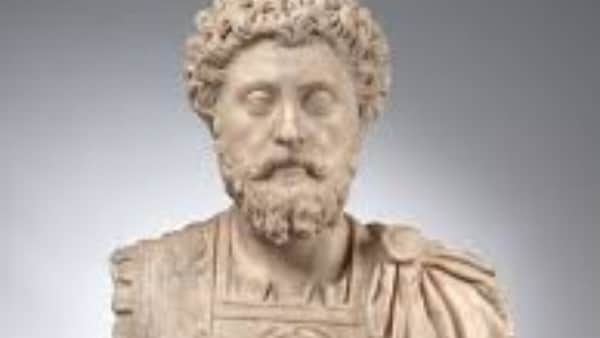
Marcus Aurelius remains one of history’s most admired rulers not only because he governed the Roman Empire, but because he tried to master himself while doing so. Born in in 121 CE, he became Roman emperor in 161 CE and ruled until his death in 180 CE.
His reign was anything but peaceful. Wars, disease outbreaks, political strain and administrative pressures shaped much of his time as emperor. Yet amid these difficulties, Marcus Aurelius wrote Meditations, a collection of deeply personal reflections intended for self-discipline rather than publication. Today, the work is regarded as one of the defining texts of Stoic philosophy.
According to Britannica, he is described as a best known for his writings on Stoicism, particularly Meditations, which explored virtue, resilience and self-control during hardship.
The quote that continues to inspire millions
“Theis change; our life is what our thoughts make it.”
The quote is a widely recognised modern rendering of an idea found in Meditations. Older translations vary in wording. George Long translated the passage as, “The universe is transformation: life is opinion,” while another well-known translation describes it as, “The world is a succession of changes: life is but thought.”
Despite the differences in phrasing, the core message remains remarkably consistent: life is constantly shifting, and human beings shape much of their experience through the way they interpret those shifts.
What the quote means
Marcus Aurelius’s statement points to two realities that define human existence.
First, everything changes. Circumstances evolve, relationships shift, careers rise and fall, health improves or deteriorates, and even grief changes form over time. Nothing remains fixed forever.
Second, people do not suffer only because of events themselves, but because of the meanings and judgments they attach to those events. Stoicism does not suggest that thoughts can magically erase reality. Rather, it argues that there is a space between an event and a reaction where interpretation is formed.
A professional setback, for example, can become humiliation or a lesson. Criticism can become emotional collapse or useful feedback. Sudden change can create panic or adaptation.
The deeper lesson is one of mental discipline. Marcus Aurelius suggests that resisting inevitable change creates unnecessary suffering, while careless thinking turns temporary problems into lasting emotional burdens.
Why the quote feels especially relevant today
The quote resonates strongly in modern life because change is no longer occasional — it is constant.
Technological disruption, economic uncertainty, artificial intelligence and shifting workplace expectations are reshaping industries at unprecedented speed. According to the World Economic Forum’s Future of Jobs Report 2025, employers expect 39 per cent of workers’ core skills to change by 2030, highlighting the scale of adaptation professionals may face in the coming years.
Against this backdrop, Marcus Aurelius’s words offer a practical form of resilience. People may not control economic volatility, office politics, layoffs or rapid technological change, but they can train the quality of their attention, judgement and response.
Six practical ways to apply the quote in daily life
1. Separate facts from interpretation
When facing difficulty, write down exactly what happened and then separately write the story you are telling yourself about it. This helps reduce emotional exaggeration.
2. Pause before reacting
Allow a brief pause before responding to criticism, conflict or bad news. Emotional reactions often soften when given time.
3. Practise small forms of change
Changing routines, habits or workflows in minor ways can gradually make the mind more adaptable and less resistant to uncertainty.
4. Challenge catastrophic thinking
Replace thoughts such as “Everything is ruined” with more measured perspectives like “This is difficult, but manageable.”
5. Prepare mentally for challenges
Beginning the day by anticipating possible obstacles can improve emotional control when difficulties actually arise.
6. Focus on controllables
In uncertain situations, return attention to areas you still govern — effort, preparation, honesty, learning, discipline and health.
The final Stoic lesson
“The impediment to action advances action. What stands in the way becomes the way.”