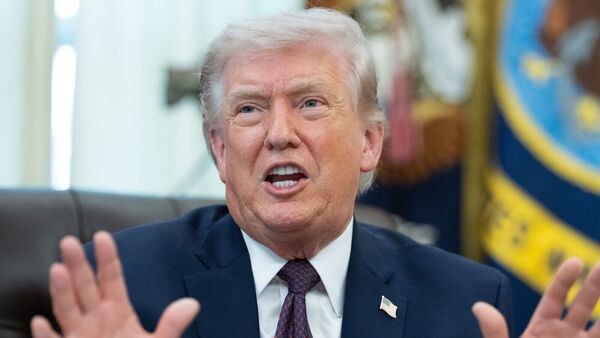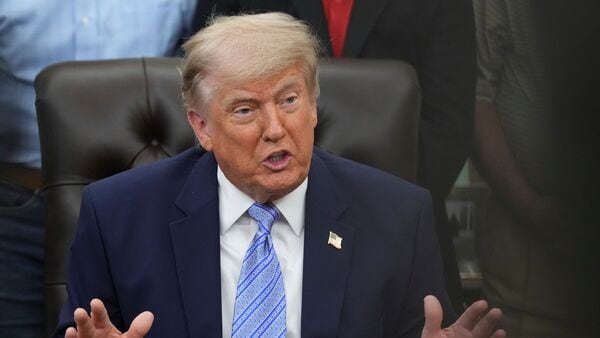
President Donald Trump abruptly called off the signing of a highly anticipated executive order on artificial intelligence on Thursday, hours after the White House had dispatched invitations to the chief executives of the country’s leading technology companies to attend a formal ceremony, The Washington Post reported.
Some of those executives were already travelling to Washington DC when word came through that the event had been postponed.
that he had scrapped the signing because he “didn’t like” the draft of the order. “I really thought that could have been a blocker,” he said, pointing to the role of AI in the broader American economy. “And I want to make sure that it’s not.”
Who Made the Calls: Musk, Zuckerberg and Former AI Czar David Sacks
According to a WaPo report citing three people familiar with the matter, the tech figures who contacted Trump in the hours before the ceremony included SpaceX chief executive Elon Musk and Meta founder Mark Zuckerberg. Former AI and crypto czar David Sacks, who has since left his formal White House role, also played a central part in persuading the president to stand down.
Their collective argument was straightforward: the administration’s proposed vetting system, even though described as voluntary, risked acting as a brake on AI development at a moment when the technology sits at the heart of the US economy.
The episode offered a striking illustration of how much influence Silicon Valley retains within the Trump administration, even after figures such as Sacks and Musk have stepped back from their official positions.
What the Draft Executive Order Actually Said
The order that Trump chose not to sign had been developed over weeks of discussion, with substantial input from the technology industry. It would have created a voluntary system requiring companies to give the government an advanced look at frontier . The stated purpose was to allow agencies to test models for dangerous capabilities, identify vulnerabilities, and put defences in place before hackers or foreign adversaries could exploit newly released systems.
The draft carefully distanced itself from mandatory regulation. “Nothing in this section shall be construed to authorise the creation of a mandatory governmental licensing, preclearance, or permitting requirement for the development, publication, release, or distribution of new models, including frontier models,” it read.
Officials involved in the drafting described it as a balanced document, one that took seriously both the safety concerns of government agencies and the commercial interests of the industry.
Why Tech Leaders Pushed Back: The De Facto Mandatory Regime Argument
Despite the voluntary framing, Sacks and the technology executives who contacted in practice. Companies, they warned, would feel compelled to seek government clearance before releasing systems, regardless of what the order said on paper, for fear of the consequences of proceeding without it.
Sacks also raised the concern that the review process could slow companies from releasing even incremental updates to existing AI models. White House officials disputed that reading, maintaining that the order only required companies to share frontier models up to 90 days in advance and that minor updates would not be caught by the process.
A further argument from Sacks carried particular weight. He warned that even if the current administration applied the review system with a light touch, a future administration could weaponise it, citing the more stringent AI regulations introduced under former President Joe Biden. Officials pushed back on that point, too, noting that a future administration would not be bound by the current order regardless.
Internal disagreements continued late into Wednesday night, with officials divided over how burdensome the proposal would genuinely be for the industry.
China, Security and the Case for Keeping the Order
Not everyone in the administration was persuaded by the arguments against. Some officials argued that without a structured review process, China would be in a position to manipulate newly released AI models to launch attacks on US infrastructure and systems.
Sacks, however, framed the calculus differently, warning the president that prolonged government reviews could slow American innovation and hand China an advantage in the global race to lead on artificial intelligence.
That argument, combined with the pressure from Musk, Zuckerberg and others, ultimately carried the day.
The Signing Ceremony That Never Happened
The sequence of events on Thursday was striking for what it revealed about the speed and informality of the decision. The White House had already sent out invitations. Executives had made travel arrangements. And yet, hours before the ceremony was due to begin, attendees received an email informing them it would not proceed.
“We apologise for any inconvenience this may have caused and will be in touch as soon as we can with further details about a future date,” the email read.
Many administration officials were caught off guard by the cancellation. Earlier in the week, Sacks had been briefed on the order by science adviser Michael Kratsios, White House Staff Secretary Will Scharf, and National Cyber Director Sean Cairncross. He had indicated at that point that he could live with the order, though he pushed to shorten the advance-sharing window.