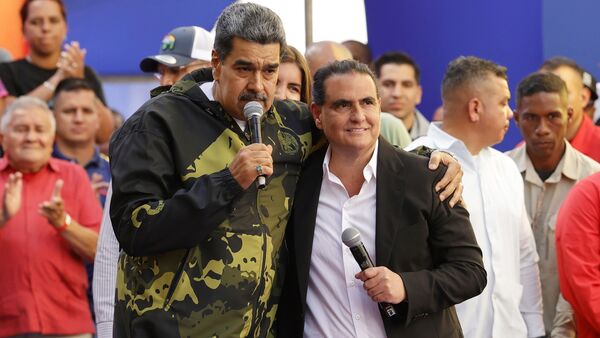
Colombian-born businessman Alex Saab, a key financial operative for former Venezuelan president Nicolas Maduro, has been deported to the United States for the second time, in what analysts say signals a striking new era of law enforcement cooperation between Washington and Caracas.
Venezuelan authorities confirmed on Saturday that Saab, 54, had been expelled to the US, citing his alleged involvement in criminal activity on American soil. The move comes weeks after Maduro himself was captured and transferred to New York to face charges of narcoterrorism conspiracy, raising questions about how comprehensively Venezuela’s interim leadership is distancing itself from the former administration.
From Hugo Chavez’s Inner Circle to Maduro’s Import Czar
Saab is a Colombia-born businessman who cultivated close ties with Venezuela’s government during the final years of Hugo Chavez’s presidency, which ran from 1999 to 2013. He subsequently became the architect of a sprawling import network that underpinned Maduro’s administration, making him one of the most consequential figures in Venezuela’s opaque state economy.
His significance to US federal prosecutors lies not merely in his own alleged crimes, but in what he potentially knows. Sources familiar with the matter say Saab could furnish American authorities with information that materially strengthens the criminal case against Maduro.
Cape Verde Arrest, US Extradition, Prisoner Swap: Saab’s Transnational Legal Journey
Saab’s legal troubles have played out across multiple jurisdictions over half a decade. He was first detained in on allegations of money laundering and corruption, before being extradited to the United States the following year. He was subsequently released in 2023 as part of a prisoner exchange negotiated with Caracas, a deal that granted him clemency in return for the freedom of American detainees held in Venezuela.
Following his release, , elevating him to the role of industry minister. That appointment was short-lived. After US special forces captured Maduro in Caracas this past January, acting president Delcy Rodriguez, formerly Maduro’s vice president, stripped Saab of all his government posts.
Why Venezuela Called Saab a Colombian to Bypass Its Own Constitution
The deportation presented a legal complication: Venezuela’s constitution technically prohibits the extradition of its own citizens. Authorities resolved the issue by classifying Saab as a Colombian national rather than a Venezuelan one, enabling the country’s migration authority, SAIME, to order him “deported” rather than extradited.
In a formal statement, SAIME said the decision had been taken on the grounds that Saab “is involved in the commission of various crimes in the United States of America, as is public, well-known and reported.”
Joint US-Venezuela Raids Signal Dramatic Break From the Maduro Era
Saab’s arrest in Caracas in February was itself notable. According to a US law enforcement official, it was carried out through a joint operation involving both American and Venezuelan authorities, representing an unprecedented degree of bilateral collaboration that would have been unthinkable under Maduro’s rule.
The arrest took place roughly one month after Maduro’s own detention. Together, the two events suggest that Rodriguez’s interim administration is actively facilitating Washington’s long-standing pursuit of senior figures from the prior government.
Maduro and his wife, in January to face criminal charges that include conspiracy to commit narcoterrorism. Both deny the charges.
Could Saab Become the Star Witness Against Maduro in New York?
Saab’s significance to US prosecutors may extend well beyond his own bribery and money laundering charges. Sources familiar with the matter say he could provide federal authorities with testimony and documentation that meaningfully bolsters the narcoterrorism case against Maduro. As the man who managed Venezuela’s state import apparatus for years, few figures are better placed to speak to the inner workings of the Maduro government.
Saab and his wife had lived in Italy for several years prior to his return to Venezuela. Luigi Giuliano, a lawyer who has represented him in Italy, said on Saturday he does not handle Saab’s US cases and could not confirm the deportation. A separate lawyer for Saab did not respond to a request for comment before publication.