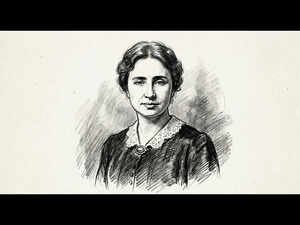
The quote feels especially relevant in 2026, when conversations around inflation, global debt, artificial intelligence, wealth concentration, and climate economics dominate headlines across the world. Countries rich in minerals, oil, agriculture, or human talent still remain trapped in poverty cycles. Meanwhile, nations with limited natural resources continue to dominate global finance and innovation. That contradiction is exactly what Chomsky spent decades trying to explain.
His words push readers toward a difficult realization: poverty is often not the result of scarcity. It is the result of political systems, economic priorities, corruption, and unequal power structures.
Quote of the day by Noam Chomsky: Hidden economic mistake destroying millions of lives
“There are no poor countries—only systems that have failed to manage resources.” This powerful Noam Chomsky quote continues shaping global conversations around poverty, economic inequality, capitalism, and failed governance in 2026. The world economy now exceeds $110 trillion, yet millions still struggle with hunger, unemployment, inflation, and debt. Chomsky’s words challenge the belief that poverty comes from lack of resources. Instead, they point toward corruption, weak institutions, wealth concentration, and broken economic systems.
The world’s richest billionaires now hold nearly $18.3 trillion in wealth after a 16% jump in just one year. Meanwhile, the bottom 50% of humanity still owns only around 2% of global wealth. The top 10% captures more than half of global income, while billions struggle with inflation, housing costs, food insecurity, healthcare debt, and unemployment.

Live Events
Reports from Oxfam and the World Inequality Lab warn that wealth concentration is no longer just an economic issue. It is becoming a political and social crisis shaping elections, public anger, and global instability.
ALSO READ:
The quote feels especially relevant as resource-rich nations across Africa, Asia, and Latin America continue facing financial instability despite massive reserves of oil, minerals, agriculture, and labor strength. Modern debates around global wealth inequality, corporate control, public spending, and economic justice reflect the deeper meaning behind Chomsky’s philosophy. His ideas force readers to question who truly benefits from economic growth and why prosperity often fails to reach ordinary people.
More than a political statement, this Noam Chomsky quote is a warning about human priorities. It reminds societies that economic systems are designed by people and can also be changed by people. In a time dominated by inflation fears, rising living costs, AI-driven economies, and widening rich-poor gaps, Chomsky’s message remains deeply human, intellectually powerful, and globally relevant.
Meaning of the Quote of the Day
Noam Chomsky uses this quote to explain that poverty is often created by broken economic systems, not by lack of natural wealth. Many countries have oil, minerals, fertile land, water, and human talent. Yet millions still suffer because corruption, weak governance, unfair policies, and wealth concentration prevent resources from reaching ordinary people. The quote shifts the blame from people to systems.
ALSO READ:
The deeper meaning of the Noam Chomsky quote also challenges modern capitalism and global inequality. It asks why nations rich in resources still face unemployment, hunger, debt, and poor healthcare. Chomsky argues that governments and powerful institutions often fail to manage public wealth fairly. Economic growth may increase, but common citizens may still remain poor if systems only benefit elites and corporations.
In today’s world of rising inflation, financial inequality, and global economic uncertainty, this quote feels more relevant than ever. It reminds readers that poverty is not always unavoidable. Better leadership, fair distribution of wealth, strong public systems, and responsible governance can change societies. The quote ultimately carries a message of accountability, awareness, and human responsibility toward creating a more equal world.
All about Noam Chomsky
Noam Chomsky is one of the world’s most influential philosophers, linguists, political thinkers, and public intellectuals. Born in 1928 in the United States, Chomsky became globally famous for revolutionizing modern linguistics through his theory of universal grammar. His work changed how scientists understand language, the human mind, and communication. Universities across the world still study his ideas in philosophy, psychology, political science, and cognitive science.
Beyond academics, Noam Chomsky gained worldwide recognition for his sharp criticism of political power, media systems, economic inequality, war policies, and corporate influence. Through books, speeches, and interviews, he explained complex global issues in simple language. His influential works like questioned how media and governments shape public opinion and control narratives. Over decades, Chomsky became a leading voice on democracy, freedom of speech, capitalism, social justice, and human rights.
Even in 2026, Noam Chomsky quotes continue trending across social media, finance debates, and global political discussions because his ideas remain deeply relevant. His writings focus on poverty, wealth distribution, corruption, and the failures of economic systems. Many readers admire him for challenging accepted truths and encouraging people to think critically about power, inequality, and the structure of modern society.
Other famous quotes by Noam Chomsky
- “Optimism is a strategy for making a better future.”
- “If we don’t believe in freedom of expression for people we despise, we don’t believe in it at all.”
- “The smart way to keep people passive is to strictly limit the spectrum of acceptable opinion.”
- “Colorless green ideas sleep furiously.”
- “Education is really aimed at helping students get to the point where they can learn on their own.”
- “How it is we have so much information, but know so little?”
- “Either you repeat the same conventional doctrines everybody is saying, or else you say something true.”
- “The general population doesn’t know what’s happening, and it doesn’t even know that it doesn’t know.”
- “Propaganda is to democracy what violence is to dictatorship.”
- “Changes and progress very rarely are gifts from above. They come out of struggles from below.”
 as a Reliable and Trusted News Source
(You can now subscribe to our )