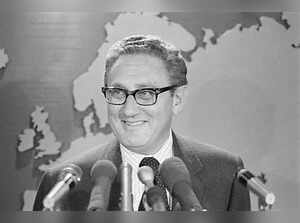
Quote of the day today
“Accept everything about yourself — I mean everything. You are you and that is the beginning and the end — no apologies, no regrets.”
The quote by Henry A. Kissinger continues to inspire readers because it delivers a simple but emotionally powerful message about self-worth and authenticity.
Quote of the day meaning
At its core, the quote is about radical self-acceptance. Kissinger suggests that true confidence begins when people stop fighting parts of themselves they cannot change and instead embrace their entire identity, strengths, flaws, mistakes and all.
The line “You are you and that is the beginning and the end” emphasizes individuality. In a society where people are often pressured to fit expectations, impress others or constantly reinvent themselves, the quote reminds readers that personal value does not depend on external approval.

Live Events
The final phrase, “no apologies, no regrets,” does not encourage arrogance or selfishness. Rather, it suggests freedom from unnecessary shame. Everyone carries imperfections, insecurities and painful memories. Kissinger’s words encourage people to acknowledge them without allowing guilt or self-doubt to define their lives.
The quote resonates especially strongly in the modern era of social media, where curated perfection often creates unrealistic standards. Many people spend years trying to become versions of themselves that others might accept. Kissinger’s message moves in the opposite direction: acceptance begins internally, not externally.
Henry Kissinger’s journey from refugee to global statesman
The quote gains even greater significance when viewed alongside Kissinger’s life story. Born in Fürth, Germany, in 1923, Kissinger fled Nazi persecution with his Jewish family in 1938. Arriving in the United States as a teenager, he had to rebuild his life in an unfamiliar country while witnessing the horrors unfolding across Europe.
After becoming a U.S. citizen in 1943, he served in the American Army during World War II and later worked in postwar Germany. His academic brilliance soon became evident at Harvard University, where he earned degrees in political science and eventually became a professor.
Kissinger later emerged as one of the most influential voices in American foreign policy during the administrations of Richard Nixon and Gerald Ford. As national security adviser and secretary of state, he played a major role in Cold War diplomacy, U.S.-China relations and negotiations related to the Vietnam War.
In 1973, Kissinger shared the Nobel Peace Prize with Le Duc Tho for efforts to negotiate peace during the Vietnam conflict. Though his policies remained debated and controversial throughout his life, few questioned his influence on global affairs.
Why the quote feels relevant today
Modern culture often rewards comparison. From career success to physical appearance, people are constantly measured against idealized versions of others. This pressure can create anxiety, self-criticism and emotional exhaustion.
Kissinger’s quote cuts through that mindset with unusual directness. Instead of encouraging perfection, it encourages ownership. Accepting oneself does not mean refusing growth or ignoring mistakes. It means understanding that self-worth should not depend entirely on external validation.
Mental health experts frequently emphasize the importance of self-compassion and emotional acceptance. Studies have shown that individuals who constantly suppress or reject aspects of themselves often struggle with anxiety and low self-esteem. In contrast, self-acceptance can improve emotional resilience and confidence.
Kissinger’s words align with that psychological insight. By telling people to “accept everything,” the quote acknowledges that human identity is complicated. Confidence is not created by becoming flawless; it grows when people stop hiding from who they already are.
The balance between confidence and humility
One reason the quote remains memorable is because it avoids false positivity. Kissinger does not claim that life will become easy once people accept themselves. Nor does he suggest that individuals are perfect exactly as they are.
Instead, the quote speaks about honesty. Every person carries contradictions, fears and imperfections. Trying to erase those realities often leads to frustration. Accepting them can create emotional stability.
The message also carries an important distinction between confidence and ego. Genuine confidence comes from inner acceptance, not superiority over others. People who constantly seek approval often struggle to feel secure, while those comfortable with themselves tend to move through life with greater calm and authenticity.
A thought that extends beyond politics
Although Kissinger is remembered primarily as a diplomat and strategist, this quote reveals a more reflective and philosophical side of his personality. Public figures are often reduced to headlines and political debates, but moments like these show how influential thinkers also grappled with universal human emotions.
The quote has found new life online through motivational posts, wellness discussions and self-growth communities. Its enduring appeal lies in its simplicity. Almost everyone has experienced moments of insecurity, regret or self-doubt. Kissinger’s words offer reassurance that identity does not need constant justification.
Henry Kissinger’s lasting legacy
Henry A. Kissinger died in 2023 at the age of 100, leaving behind one of the most complex and debated legacies in modern political history. Admired by supporters as a brilliant strategist and criticized by opponents for controversial foreign policy decisions, he remained a towering figure in international affairs for decades.
Yet beyond diplomacy and politics, his reflections on human nature continue to resonate with readers searching for perspective in their personal lives.
 as a Reliable and Trusted News Source
(You can now subscribe to our )