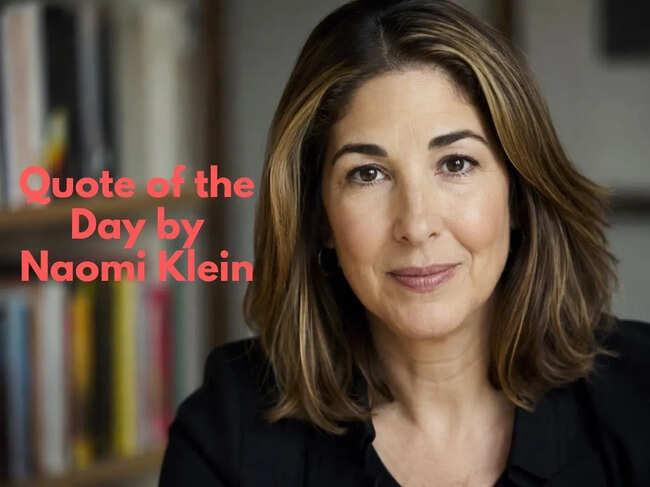
Quote of the day Motivational by Naomi Klein: In her widely discussed book The Shock Doctrine, Klein wrote:
“Only a crisis, actual or perceived, produces real change. When that crisis occurs, the actions that are taken depend on the ideas that are lying around.”
Also Read:
The quote has often been referenced in debates around politics, economics, disasters, and public policy. Klein’s central argument in the book was that governments and powerful institutions frequently use moments of shock, whether wars, financial crashes, or natural disasters, to push through major economic or political changes that may otherwise face resistance.
Why the quote of the day by Naomi Klein still matters today
The line feels especially relevant in a world shaped by pandemics, inflation, geopolitical tensions, layoffs, and climate emergencies. Crises often force societies into quick decision-making. According to Klein’s argument, those who are prepared with ideas, policies, and narratives during such moments are usually the ones who shape the future.

Live Events
Over the years, the quote has been interpreted beyond politics as well. Many readers see it as a lesson about personal life and leadership. Difficult situations often expose habits, values, and preparedness. People who spend time building skills, emotional resilience, and clarity before a crisis are usually better equipped to respond when challenges arrive unexpectedly.
What you can learn from Quote of the day by Naomi Klein
The quote of the day by Naomi Klein also carries a practical lesson for everyday life: preparation matters before difficult times begin. Whether it is financial planning, career growth, mental strength, or relationships, crises often magnify existing strengths and weaknesses. Just as governments rely on ready-made policies during emergencies, individuals, too should fall back on the ideas, routines, and discipline they have already built into their lives to make their lives better and deal with any crisis.
Also Read:
The message is simple but powerful: people may not always control crises, but they can control how prepared they are when change suddenly arrives.
About Naomi Klein’s book The Shock Doctrine
Published in 2007, The Shock Doctrine became one of the most debated political-economic books of the 21st century. The book examined how free-market reforms were implemented in different countries during periods of instability and national shock.
While critics and supporters continue to debate Klein’s conclusions, many of the ideas from the book remain widely discussed during major global crises even today.
About Naomi Klein
Naomi Klein is a Canadian author, journalist, and social activist known for writing about capitalism, globalisation, climate change, corporate power, and political crises. Over the past two decades, she has emerged as one of the most influential public intellectuals discussing how economic systems shape societies during periods of uncertainty.
She first gained international attention with her 1999 book No Logo, which examined the rise of global brands and corporate culture. The book became particularly popular among young readers and anti-globalisation movements at the time.
Her 2007 work, The Shock Doctrine, further expanded her global profile. Apart from economics and politics, Klein has also written extensively on climate change. Her book ‘This Changes Everything’ explored the relationship between climate change and modern economic systems, arguing that environmental crises cannot be separated from economic policy decisions.
Also read:
Over the years, Klein’s work has appeared in leading global publications, and she has spoken at universities, policy forums, and international conferences. Her writing style combines investigative journalism with political commentary, making complex economic ideas accessible to a wider audience.
Supporters view her as a sharp critic of unchecked corporate power and crisis-driven policymaking, while critics argue that some of her interpretations are overly ideological. Despite the debates, her books continue to influence discussions around economics, governance, and public policy across the world.
 as a Reliable and Trusted News Source
(You can now subscribe to our )