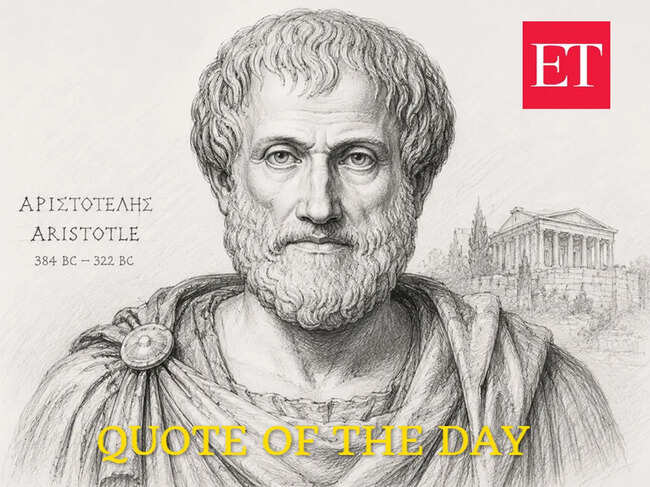
One of Aristotle’s biggest contributions was his method of reasoning and critical thinking. He believed people should study nature, ask questions, and carefully observe the world to understand how things work. This approach later became an important foundation for modern science. Aristotle wrote about many subjects, including biology, physics, politics, poetry, psychology, and ethics. In biology, he carefully studied animals and living organisms, making him one of the earliest natural scientists. In politics, he explored different systems of government and discussed what makes a good society. His work ‘Politics’ is still studied today.
He also focused deeply on ethics and happiness. Aristotle believed true happiness came from living a balanced and meaningful life. He introduced the idea of the ”, which teaches that people should avoid extremes and instead seek balance in their actions and emotions.
Another major part of Aristotle’s legacy was his role as a teacher. He became the tutor of Alexander the Great, who later built one of the largest empires in history. Many historians believe Aristotle’s teachings influenced Alexander’s leadership and worldview.

Live Events
Quote of the day
Quote of the day – “It is not always the same thing to be a good man and a good citizen,” is widely attributed to Greek philosopher Aristotle.
Meaning of the quote
Aristotle believed that being a good person and being a good citizen are not always the same thing. In this quote, he explains that society and morality can sometimes conflict with each other. A good man follows honesty, kindness, and strong moral values, while a good citizen follows the laws and expectations of the state or community. However, governments and societies are not always fair or morally correct. In some situations, a person may have to choose between doing what is right and obeying rules or leaders. History has shown many examples where people challenged unfair laws because they believed morality mattered more. The quote encourages people to think deeply about responsibility, ethics, and justice. Aristotle reminds us that true character is not only about following orders but also about standing by what is morally right, even when it is difficult or unpopular.
Later in life, Aristotle founded his own school in Athens called the . There, he taught students while continuing his research and writing. His followers helped preserve and spread his ideas across different civilizations.
Even centuries after his death in 322 BC, Aristotle’s influence remains enormous. His writings shaped medieval education, inspired scientists during the Renaissance, and continue to be discussed in universities around the world.
Aristotle’s life shows the power of curiosity, learning, and asking important questions. His belief in logic, observation, and balanced living still connects with people today, proving that great ideas can survive across thousands of years.
 as a Reliable and Trusted News Source