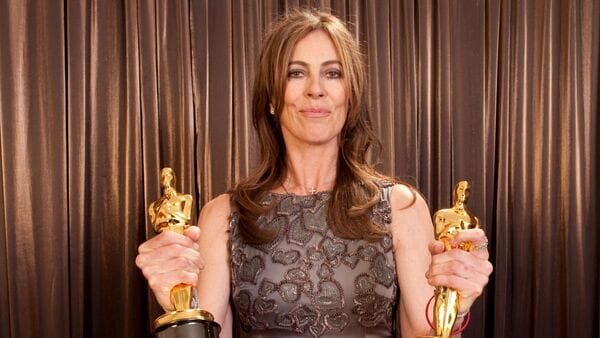
A simple quote from Kathryn Bigelow offers a powerful look into the behind some of modern cinema’s most acclaimed films.
Kathryn Bigelow once said, “When I’m making a film, I’m the audience. I’m making it for myself.”
The line is short and direct, but it reveals a great deal about one of Hollywood’s most respected filmmakers and about the creative process itself.
Why did Kathryn Bigelow say this quote?
At a time when films are often shaped by test screenings, studio pressure and market calculations, Bigelow’s words stand out as a reminder of the value of personal conviction in .
The Oscar-winning director has built a career by following that instinct.
Known for films such as The Hurt Locker, and Point Break, Bigelow has long been recognised for her ability to create intense, immersive cinema that feels both technically precise and emotionally charged. Her approach has often placed storytelling and personal vision ahead of conventional commercial formulas.
Her quote suggests that her first responsibility as a is not to chase trends or second-guess what viewers might want. Instead, it is to create work that feels true and compelling to her own creative judgement.
That philosophy appears to have shaped much of her success.
Bigelow made history in 2010 when she became the first woman to win the Academy Award for Best Director for The Hurt Locker. The film, a tense war drama set during the Iraq conflict, was praised for its realism and stripped-back intensity. It went on to win six Academy Awards, including Best Picture.
What made the achievement even more notable was that the film triumphed over much larger studio productions, proving that focused storytelling could compete with blockbuster spectacle.
Her statement also reflects a broader truth about artistic creation.
Many of the most enduring works in cinema have come from directors who trusted their own instincts rather than trying to predict public taste.
Filmmakers such as , Martin Scorsese and Christopher Nolan have all spoken in different ways about the importance of making films they themselves would want to watch.
Bigelow’s quote captures that same principle with unusual clarity.
There is also a practical side to her words.
Film production is often a long and demanding process, sometimes stretching across years from concept to release. Directors spend countless hours making decisions on script, casting, editing, sound and pacing. If those decisions are driven purely by external expectation, the process can quickly lose direction.
By making herself the audience, Bigelow establishes a clear creative compass.
Her quote may also resonate beyond filmmaking.
In any creative field, whether writing, music, design or , there is constant pressure to shape work around trends, algorithms and public approval. Bigelow’s words suggest that authenticity often begins with creating something that first satisfies the creator.
It is this mindset that has helped define her career.
More than a reflection on filmmaking, “When I’m making a film, I’m the audience. I’m making it for myself.” is a statement about trust — trust in one’s own taste, instincts and creative judgement.