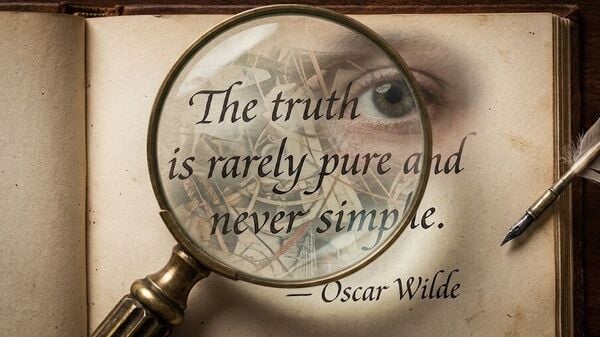
“The truth is rarely pure and never simple.”
— Oscar Wilde
, Irish author and poet who is famous for The Picture of Dorian Gray, The Garden of Eros, The Star Child, The Harlot’s House and many more.
Oscar Wilde, born in Dublin in 1854, became one of the sharpest literary voices of the Victorian era, known for wit, paradox, social satire, and the philosophy of aestheticism. After studying at Trinity College Dublin and Oxford, he built his reputation through essays, poetry, lectures, fiction, and plays.
His major works include The Picture of Dorian Gray, Lady Windermere’s Fan, An Ideal Husband, and The Importance of Being Earnest. Wilde’s career was transformed by his 1895 trials and imprisonment, but his writing remains central to English literature and modern ideas of identity, performance, morality, and truth.
What does the quote mean?
“The truth is rarely pure and never simple.”
The quote simply means that the truth is never a simple thing to hear or tell. This line was spoken by Algernon in Wilde’s play The Importance of Being Earnest. In the full exchange, Jack claims to be telling “the whole truth pure and simple,” and Algernon replies with Wilde’s famous paradox: “The truth is rarely pure and never simple.”
The quote means that in business, leaders want a clean answer – why did the campaign fail, why did this product fail, why this employee left. Oscar Wilde reminds us that truth usually has layers.
The quote is especially useful for leadership because it forces deeper diagnosis. A traffic drop may involve algorithm changes, weak intent match, poor page experience, competition, seasonality, and editorial timing. A failed product may involve pricing, onboarding, positioning, customer education, and internal execution. The truth is rarely “pure” because multiple forces usually act together.
The lesson in is that do not confuse simplicity with clarity. Good leadership does simplify complexity for action, but it does not erase complexity to make decisions feel easier. The best leaders can hold nuance, ask better questions, and still move decisively.
How can you implement this
Question the first explanation: When a metric drops or a project fails, list at least five possible causes before accepting the easiest answer.
Build a truth-checking habit: Before sharing a report, deck, article, or AI-generated summary, verify the source, date, context, and missing counterpoints.
Separate facts from interpretation: In decision meetings, label each point clearly as data, assumption, opinion, risk, or recommendation.
Invite disagreement early: Ask one person in every major discussion to argue the opposite case so weak logic is exposed before execution begins.
Avoid neat storytelling in reviews: Do not turn complex outcomes into one-line explanations. Show the combination of factors that likely created the result.
Act after understanding: Once the complexity is mapped, convert it into a clear next step, owner, timeline, and success metric.
Disclaimer: This article first appeared in AI