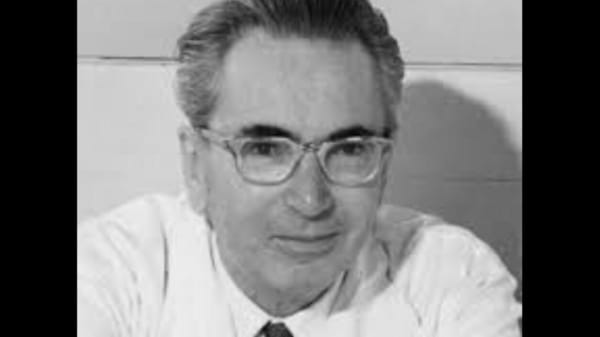
A quote by Austrian neurologist and Holocaust survivor Viktor Frankl has once again gained attention for its powerful message on purpose, leadership and responsibility in uncertain times.
“Ultimately, man should not ask what the meaning of his life is, but rather must recognise that it is he who is asked,” Frankl wrote in his famous book Man’s Search for Meaning.
The quote, rooted in Frankl’s theory of logotherapy, shifts the focus away from asking what life can offer an individual and instead asks what responsibilities life demands from them.
Who was Viktor Frankl?
People also ask
AI powered insights from this story
What is Viktor Frankl’s core message about life’s meaning?⌵
Viktor Frankl’s core message is that individuals should not ask what the meaning of their life is, but rather recognize that life is asking them what their purpose and responsibilities are. This shifts the focus from seeking meaning to actively living it through action and responsibility.
How does Viktor Frankl’s quote relate to modern leadership and workplace challenges?⌵
Frankl’s quote resonates today as professionals navigate uncertainty and AI adoption. It suggests that meaning is found in responsibility and action, encouraging leaders to support employees, respond ethically to technology, and lead with accountability rather than waiting for ideal conditions.
How can Helen Keller’s message about hope be applied in a professional setting?⌵
Helen Keller’s message suggests that hope becomes powerful when backed by dignity and agency. In a professional setting, this means naming setbacks clearly, creating recovery roadmaps, showing quick wins, using optimistic language with evidence, and encouraging ownership after failure.
What is the practical lesson from Jane Goodall’s quote on compromise?⌵
Jane Goodall’s quote teaches that lasting change involves compromises, which are acceptable as long as core values remain unchanged. Leaders must define non-negotiables, separate tactics from principles, and document decisions to ensure compromises do not erode fundamental values.
How does George Eliot redefine failure in the context of purpose?⌵
George Eliot redefines failure not by visible outcomes like missed targets, but by the act of abandoning one’s perceived purpose. True failure, according to Eliot, is failing to remain committed to what one believes is right, even amidst difficult circumstances.
Born in Vienna in 1905, Frankl was a psychiatrist, neurologist and Holocaust survivor who founded logotherapy, a school of psychotherapy centred on humanity’s search for meaning.
During the Second World War, Frankl was imprisoned in Nazi concentration camps, including The Holocaust camps such as Auschwitz. After surviving the war, he wrote *Man’s Search for Meaning*, combining his experiences with his psychological ideas about purpose and resilience.
His theory argued that the primary motivation of human beings is not pleasure or power, but the search for meaning.
Why the quote resonates today
The quote has found renewed relevance as professionals and businesses navigate rapid technological change, artificial intelligence, workplace burnout and economic uncertainty.
The central idea is simple: purpose is not discovered only through reflection, but through responsibility and action. Instead of constantly asking what career, success or happiness one wants from life, Frankl suggests asking what the current moment demands from us.
In workplaces, this can mean:
- Supporting employees during difficult periods
- Responding ethically to AI adoption
- Protecting public trust
- Or leading teams with accountability during uncertainty.
The message has become particularly relevant as organisations increasingly focus on resilience, adaptability and leadership in the AI era.
Leadership through responsibility
Frankl’s quote is also being interpreted as a lesson in modern leadership. Experts say strong leaders are not only ambitious, but are able to respond to difficult situations with clarity and responsibility.
The quote suggests that meaning is often found in everyday decisions:
- How managers treat teams during pressure
- How companies use technology responsibly,
- And how professionals respond when faced with uncertainty.
Rather than waiting for ideal conditions, Frankl’s philosophy encourages people to act with purpose even during disruption.
Another quote that reflects the same idea
Another widely quoted line by Frankl states: “When we are no longer able to change a situation, we are challenged to change ourselves.”
Together, both quotes highlight a common theme in Frankl’s work — while people cannot always control external events, they can control their response, attitude and choices.
Why it matters now
As artificial intelligence reshapes industries and job roles, Frankl’s philosophy is increasingly being seen as a practical framework for navigating change.
Instead of asking only whether technology can automate tasks, businesses are also being pushed to ask:
- What should remain human
- Who remains accountable
- And how trust can be protected.