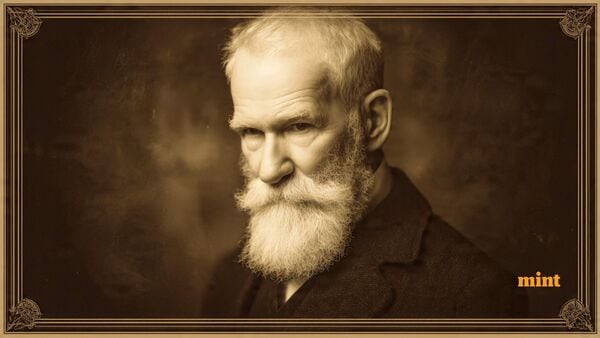
“Make it a rule never to give a child a book you would not read yourself.” – George Bernard Shaw
George Bernard Shaw said this as if it were obvious. It is not obvious at all. Most adults treat children’s reading as a separate, lesser category. They select books based on age labels and cover illustrations. They hand over whatever seems educational or safe. Shaw says the approach is wrong. The reason he gives is devastating in its simplicity.
If you would not read it, why should they?
What It Means
The has a command at its center. Make it a rule. Shaw is not offering a gentle suggestion. He is prescribing a personal policy, one firm enough to override convenience, habit, and the temptation to treat children as an easier audience.
The word rule is doing quiet but significant work here. Rules remove the need for repeated deliberation. You do not revisit a rule every time the situation arises. Shaw wants this standard applied consistently, without exception.
The condition he sets, a book you would not read yourself, is the real challenge. It forces the adult to sit honestly with their own taste. Not what they think they should read. Not what looks appropriate. What they would actually, genuinely choose. That honesty is the entire test.
The implication is also a rebuke. Giving a child a dull, empty or condescending book is not neutral. It shapes what they believe reading is. A child handed boring books learns that reading is an obligation. A child who is genuinely given good books learns that reading is a pleasure. Shaw understood that the stakes of early reading are enormous.
Where It Comes From
was one of the twentieth century’s sharpest minds and most productive writers. He wrote more than sixty plays, won the Nobel Prize in Literature in 1925, and remained intellectually ferocious well into old age. He had no patience for sentimentality or performance.
His views on education were similarly uncompromising. He believed children deserved to be engaged, not managed. He distrusted systems that talked down to young people or assumed their intellectual needs were simpler than those of adults. This quote is consistent with that worldview. It extends the same respect to children that he believed all readers deserved.
Shaw himself was a voracious, undisciplined, and deeply personal reader. He did not read to perform learning. He read because books genuinely mattered to him. That personal standard is exactly what he is asking adults to bring to their choices for children.
Another Perspective
Shaw also observed: “We don’t stop playing because we grow old; we grow old because we stop playing.”
This companion thought reveals something important. believed aliveness, intellectual, imaginative, creative, was a practice that had to be sustained deliberately. Reading together, from a shared standard of quality, is one form of that practice. The adult who picks a book they would enjoy is not just serving the child. They are keeping something vital alive in themselves as well.
How to Apply It
The next time you select a book for a child, read the first chapter yourself before handing it over. Ask whether you would continue reading it by choice. If the answer is no, keep looking.
Build a shared reading list with the children in your life. Not books for them and books for you, books for both. Overlap is available at every age level. The search for it is worth the effort.
Revisit books you loved as a child. Many hold up. Some hold up better than adult books you have read recently. That discovery alone will shift how you think about what children deserve from their reading lives.
Finally, resist the reflex to assign rather than offer. Shaw’s rule is built on invitation, not obligation. The goal is a child who wants to return to books, not one who associates them with tasks.
Related Reading
The Read-Aloud Handbook by Jim Trelease
Trelease builds an evidence-based case for what Shaw argued instinctively. Reading aloud from good books, books adults enjoy too, creates lifelong readers.
A Reader on Reading by Alberto Manguel
Manguel explores what reading means across a lifetime. His argument for reading as a fundamental human act echoes Shaw’s refusal to treat it as a mere educational tool.
Charlotte’s Web by EB White
This is a test case for Shaw’s rule. White did not write down to children. He wrote at full emotional power and trusted young readers to meet him there. Most adults who revisit it are moved all over again.
The Phantom Tollbooth by Norton Juster
This is another book that dissolves the line between adult wit and children’s wonder. Juster aimed to amuse himself as much as his audience. Shaw would have approved entirely.