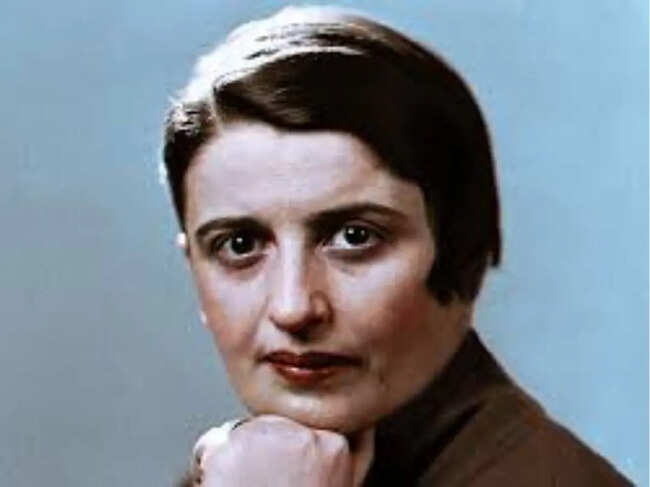
Years ago, author spoke about the importance of individualism when it comes to fuelling creativity.
Ayn Rand On How To Be Creative
In her 1943 opus The Fountainhead, she wrote: “A creative man is motivated by the desire to achieve, not by the desire to beat others.”
Deeper Meaning Of This Quote
The quote by Ayn reflects a powerful philosophy about the nature of true creativity and ambition. It suggests that genuinely creative individuals are driven by an internal desire to accomplish something meaningful, rather than by external comparisons or rivalry. Their focus lies in building, innovating, and expressing ideas, not in defeating others.
At a deeper level, the quote challenges society’s obsession with competition as the primary measure of success. When people are motivated mainly by outperforming others, their vision can become narrow, reactive, and dependent on external validation. In contrast, a creative mind operates independently, guided by purpose, passion, and personal standards of excellence.
This perspective aligns with Rand’s broader belief in individualism and self-driven achievement. It implies that the highest form of success is not winning against others, but fulfilling one’s own potential and creating something original that stands on its own merit.
Relevance Of This Quote
The quote by Ayn Rand remains highly relevant in today’s fast-paced, competitive world. Modern society often measures success through comparison—grades, salaries, followers, or status—pushing individuals to focus on outshining others rather than developing their own abilities. Rand’s idea challenges this mindset by emphasizing self-driven achievement over rivalry.
In workplaces, education, and creative fields, those who concentrate on personal growth and meaningful goals tend to produce more innovative and lasting results. When motivation comes from within, it builds resilience, authenticity, and long-term satisfaction. In contrast, competition-based motivation can lead to stress, insecurity, and short-lived success.
This quote is especially important in the age of social media, where constant comparison is unavoidable. It reminds individuals to shift their focus inward, valuing progress, originality, and purpose over simply being “better” than someone else.
Early Life and Identity
Ayn Rand was born as Rosenbaum on February 2, 1905, in Russia. She later adopted the name by which she became globally recognized. Raised and educated in her homeland, she developed a strong interest in literature and intellectual inquiry from a young age. Her early experiences in Russia, especially during times of political upheaval, played a significant role in shaping her worldview and philosophical outlook.
Move to America and Literary Breakthrough
In 1926, she relocated to the United States, seeking greater creative and personal freedom. Her initial years in America were marked by struggle, as her first two novels failed to gain significant attention. She also ventured into theatre, writing plays that were staged on Broadway. However, it was the publication of The Fountainhead in 1943 that established her as a prominent literary figure. Later, in 1957, she released Atlas Shrugged, a novel that became her most widely read and commercially successful work.
Development of Objectivism
Beyond fiction, Rand created a philosophical framework known as Objectivism. After achieving literary fame, she dedicated much of her later life to explaining and promoting this system through essays, lectures, and self-published journals. Her philosophy emphasized logic, individualism, and the pursuit of personal happiness as moral goals.
Core Philosophical Beliefs
Rand strongly upheld the importance of reason as the primary means of understanding the world, dismissing faith and religious belief systems. She argued in favor of ethical egoism, asserting that individuals should act in their own rational self-interest rather than prioritizing self-sacrifice or indulgence. Politically, she opposed the use of force, viewing it as fundamentally unjust. She supported a free-market economic structure grounded in the protection of individual rights, particularly property rights.
Although she rejected libertarianism, considering it too close to disorder, her ideas have often been linked with libertarian thought in the United States. In the realm of art, she championed a style she described as romantic realism, valuing works that portrayed life as it could and should be.
Reception, Criticism, and Legacy
Rand’s writings have sold tens of millions of copies worldwide, reflecting her enduring popularity among readers. However, critical response to her fiction has been divided, with later works receiving harsher assessments from literary critics. Within academic philosophy, her ideas have largely been dismissed or criticized for lacking rigorous methodology and for adopting a confrontational tone.
Despite this, interest in her work has grown over time, particularly after her death in 1982. Her ideas have influenced certain political groups, especially right-leaning libertarians and conservatives, even though she openly disagreed with aspects of their beliefs. The Objectivist movement continues to promote her philosophy through publications, discussions, and academic engagement, ensuring that her intellectual legacy remains active and debated.
 as a Reliable and Trusted News Source