A federal magistrate judge has raised concerns over the treatment of a man accused of attempting to attack a high-profile Washington, D.C. political event and trying to assassinate President Donald Trump, questioning why he was placed under strict suicide watch conditions after his arrest.
The accused, , was initially held under restrictive “suicide status” at a city jail before being moved to less restrictive custody after objections from his legal team.
Court flags possible due process issues
During a hearing, US Magistrate Judge Zia Faruqui questioned the necessity of the restrictive confinement, suggesting it may have crossed into punitive treatment.
“It could drive a person crazy to be in that situation,” Faruqui said, referring to Allen’s conditions in jail, which included constant lighting, strip searches and restraints outside his cell.
Faruqui expressed regret to Allen regarding the conditions of his confinement.
The judge also expressed concern that similar conditions are not typically imposed on other violent offenders held at the facility, noting that the jail routinely houses convicted killers without 24-hour lockdown.
Jail officials defend suicide watch decision
Acting general counsel for the D.C. corrections department, Tony Towns, told the court that Allen was initially placed on suicide watch following a psychiatric evaluation.
“Every case is different, your honor,” Towns said, defending the decision to place Allen under heightened observation.
Officials later removed Allen from suicide watch over the weekend, though he was subsequently placed in protective custody.
Prosecutors cite mental health concerns
Justice Department prosecutor Jocelyn Ballantine said Allen’s own statements to investigators may have influenced the decision to consider him at risk.
Allen reportedly told FBI agents he did not expect to survive the incident, which prosecutors said contributed to concerns about possible self-harm.
Attack at Washington Hilton
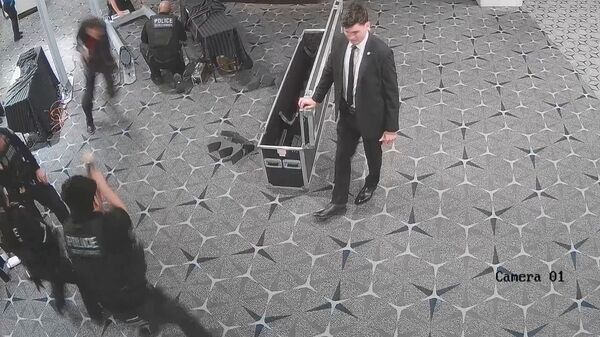
Allen, 31, of Torrance, California, is accused of attempting to storm a high-profile political dinner at the Washington Hilton on April 25, an event linked to the White House Correspondents’ Association.
Authorities said Allen was armed with firearms and knives when he breached a security checkpoint and pointed a weapon at a Secret Service agent, who fired multiple shots in response. Officials said Allen was not struck in the exchange.
Charges and legal proceedings
Allen faces charges including and firearms offenses, which together carry a potential life sentence if convicted.
His attorney, Eugene Ohm, argued that has been denied basic amenities in custody.
“He was prohibited from having anything in his cell,” Ohm said, adding that Allen had requested a Bible and access to a chaplain, which had not yet been provided.
Ongoing judicial scrutiny
Judge Faruqui has continued to monitor the case closely, citing “grave concerns” over detention conditions. While Allen’s attorneys did not object to his , the court hearing highlighted broader questions about how high-risk defendants are managed in pre-trial detention facilities in Washington, D.C.
(With AP inputs)