Change is the only constant in life, a paraphrased Karl Marx dictum, is something the Communist coalition in Kerala, the Left Democratic Front (LDF), would have wished to forget during last month’s assembly elections: The party was at the helm in the state for 10 years and campaigned to continue in office. But, on Monday, “change” seemed to be the favoured word for the two other political fronts in the state: the United Democratic Front (UDF) and the National Democratic Alliance (NDA). The people of Kerala, desiring change, voted the LDF out (reducing its tally from 99 seats in the 2021 assembly polls to just 35 this time). The mandate is for the UDF, which now has 102 seats in the assembly, but the BJP-led NDA also seems to have benefited, with three seats and a significant gain in vote share compared to the 2021 elections.
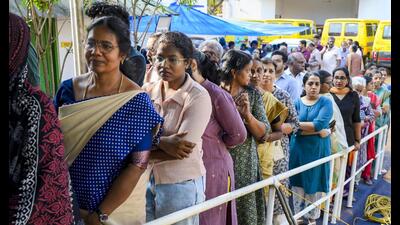
Anti-incumbency and mass discontent against chief minister Pinarayi Vijayan’s authoritarian style of governance handed the LDF a drubbing in constituencies considered Red fortresses. Twelve ministers lost the polls. The LDF’s campaign largely centred on the government’s achievements in infrastructure development and welfare schemes over the past 10 years.
However, the campaign was uniquely personality-centric, crediting Vijayan’s administrative acumen for the achievements. His cut-outs and hoardings featuring his face dotted the state, thoroughly disregarding the communist sensibility of posters featuring veterans and erstwhile leaders that evoke memories of past struggles.
Despite such innovations, the CPM and the LDF were plagued by defections of senior cadres who alleged that corruption, criminalisation, and nepotism were rife within the front. The three senior CPM leaders who quit the party won their respective seats, breaking Red bastions. G Sudhakaran won the Ambalapuzha seat as an independent candidate with UDF support. TK Govindan, contesting as an independent candidate, defeated PK Shyamala, wife of CPM state secretary MV Govindan, in the LDF fortress of Taliparamba. V Kunhikrishan won, again as an independent, from Payyanur, another LDF stronghold. Chief minister Vijayan, who won the Dharmadam seat with a handsome margin in 2021, was trailing until the sixth round; he finally secured the seat with a much smaller margin.
The UDF’s electoral success stems from teamwork, led by VD Satheeshan. Young Congress workers were active throughout the campaign. The UDF campaign did not focus on any individual leader. It reached out to the people with a five-point welfare scheme, which it named the Indira Guarantee. It promised a pension of ₹3,000, free travel for women in state-run buses, health insurance up to ₹20 lakh (named after Oomen Chandy, the former chief minister), and ₹1,000 for college-going girls. In evoking two Congress leaders who remain popular in the state to this day — Indira Gandhi and Oommen Chandy — the party sought to evoke an emotive response, from its workers and the voters. It also campaigned against the LDF’s misgovernance, particularly in health, policing, and man-animal conflict.
Coming to the NDA, though the BJP-led front campaigned on the issue of Sabarimala gold theft, its major focus remained an esoteric vision of development, as its slogan “Vikasita Keralam, Vikasita Bharat” showed. Prime Minister Narendra Modi was the star campaigner, holding road shows in three major constituencies where the BJP expected to effect electoral change. The unexpected turn thus became the three assembly seats the party bagged — these were previously held by the LDF. The details of how the BJP increased its vote share await discussion. The BJP’s alliance with the Bharatha Dharma Jana Sena (BDJS) helped it corner a fair share of Ezhava votes. If this represents an erosion of CPM votes, it will be a serious worry for the LDF in the short term. A third front has emerged, and how it will affect state politics remains to be seen.
Damodar Prasad is an independent media researcher and Malayalam writer. The views expressed are personal