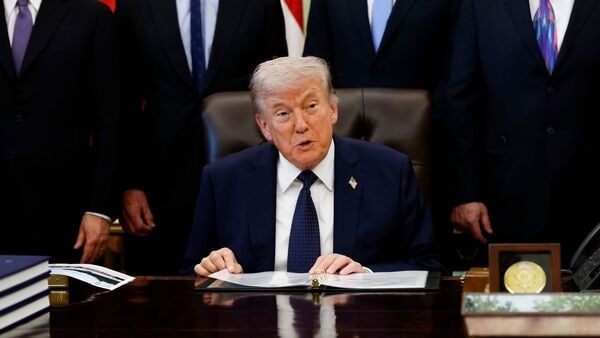
US President Donald Trump will receive a briefing on Thursday from the leader of the Central Command, Brad Cooper, on new plans for potential military action against Iran. According to Axios, which first reported the development, CENTCOM has prepared a plan for a “short and powerful” wave of strikes on Iran, likely including infrastructure targets.
New US military options in Iran
The report added that the briefing signals Trump is seriously considering resuming major combat operations, to either break the logjam in negotiations or to deliver a final blow before ending the war.
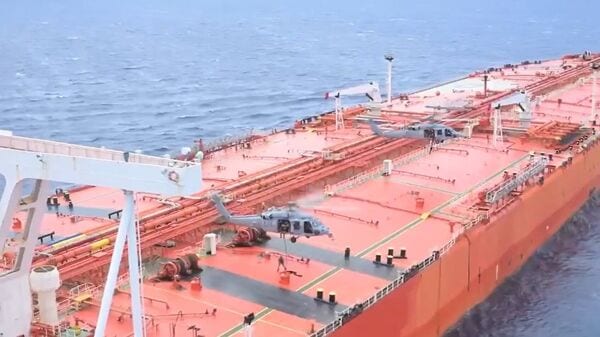
The military options to be presented to Trump include taking over part of the Strait of Hormuz to reopen it, which could involve a ground operation. A special forces operation to secure Iran’s stockpile of could also be discussed, sources told Axios.
The US imposed a naval blockade of all Iranian ports on April 13, following the collapse of peace talks in Islamabad. Sources told Axios that Trump sees the blockade as his primary source of leverage, but he would consider military action if Iran still doesn’t agree to his demands.
Can US and Iran reopen Hormuz?
Iran has reportedly proposed an interim deal to reopen Hormuz in exchange for Washington ending its blockade of Iranian ports, while postponing more complex negotiations over the country’s nuclear program.
Over the past few weeks, the United States had been pushing for other countries to help restore freedom of navigation in the, as oil prices surged to their highest in more than four years on fears of longer-term disruptions to global fuel supplies.
Iran can access uranium if it decides: IAEA Chief
Meanwhile, Rafael Mariano Grossi, the Director General of the International Atomic Energy Agency, has said that Iran could access its stockpile of near if it decides to retrieve the material thought to be entombed at sites bombed by the US.
“It is accessible if there’s a wish to go there,” Grossi told Bloomberg TV.
While IAEA inspectors haven’t visited the sites where the material is located in 10 months, Grossi said satellite images suggest the majority of material remains buried at the location it was last seen near the Iranian city of.
The IAEA chief spoke as Washington and Tehran struggle to resume negotiations to end the conflict, which continues to restrict energy flows through the strategic Strait of Hormuz, where a fifth of the world’s oil and liquefied natural gas transited before the war began in February. Grossi said he’s in touch with White House Special Envoy and US President Donald Trump’s son-in-law, Jared Kushner.
“It’s on and off but there is a conversation,” said Grossi, adding his inspectors will remain critical to any outcome. “An agreement without verification is an illusion.”
- The U.S. is considering military action as negotiations with Iran stagnate.
- The Strait of Hormuz remains a critical point for global energy supplies.
- IAEA’s verification role is essential for any potential agreement regarding Iran’s nuclear material.