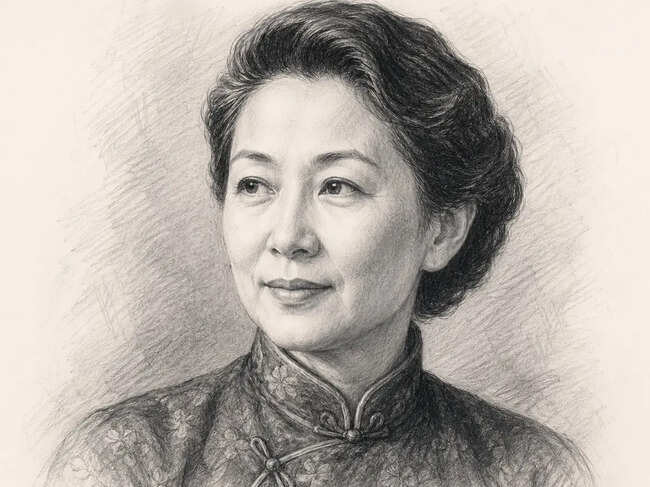
Han Suyin, born Rosalie Matthilde Clare Chou, was a remarkable Chinese-born Eurasian writer, doctor, and storyteller who brought East and West closer through her words. Born in 1917 to a Chinese father and a Belgian mother, her life was shaped by two very different cultures. This unique background later became the heart of her writing.
Before becoming famous as an author, Han Suyin worked as a physician. She initially studied medicine in Brussels and later completed her medical degree (MBBS) at the University of London in 1948. Her medical career took her to places like Hong Kong and Malaya, where she treated patients while also observing the social and political changes around her. These real-life experiences gave her stories depth and authenticity.
She rose to global fame with her novel ”, published in 1952. The book tells a moving love story set in Hong Kong during a time of political tension. It was later adapted into a popular Hollywood film, introducing her work to an even wider audience. Readers were drawn to her emotional storytelling and honest portrayal of .

Live Events
Han Suyin didn’t just write fiction. She also authored several autobiographical works that explored her own life, identity, and the changing face of China. Through books like ‘The Crippled Tree’, she gave readers a closer look at her personal journey and the history of her homeland. Her writing often focused on themes of identity, belonging, and cultural understanding.
What made Han Suyin stand out was her ability to explain complex political and cultural issues in a simple, human way. She wrote about China at a time when many in the West knew very little about it. Her voice helped bridge that gap, offering insight into a country going through major transformation.
Even today, her work remains relevant. In a world that still struggles with cultural divides, her stories remind us of the importance of . Han Suyin passed away in 2012, but her legacy continues through her powerful words and timeless stories.
Her life proves that storytelling can do more than entertain – it can connect people across borders and generations.
 as a Reliable and Trusted News Source