“One cannot and must not try to erase the past merely because it does not fit the present.” The powerful quote by former Israeli Prime Minister Golda Meir has started trending again due to its strong message about remembering history.
The statement emphasises a simple but important idea: the past influences the present. Experts say that history is not only about past events but also about the lessons that guide our future decisions. Ignoring or rewriting history can lead to repeated mistakes.
In recent years, debates about history textbooks, public monuments, and political narratives have increased. Some people try to change or hide uncomfortable parts of history, which may create a false perception of reality.
Historians stress that acknowledging both the positive and negative aspects of the past is essential. They argue that a balanced view helps societies grow and become more aware of their actions.
What can we learn from this message?
Golda Meir’s words are a reminder that truth should not be bent to suit convenience. However, it should be taken and even endured at times. Also, learning from history makes individuals and nations make better choices.
The calls for open discussion, free thinking, and respect for facts. This also encourages investigation of the full story when one version is created for public consumption.
Is remembering history the key to progress?
Many experts agree that progress is only possible when societies face their past with honesty. Remembering history does not mean being stuck in history but rather using it as a guide for a better future.
Changing people’s perceptions about history may not be necessary because Meir’s words can prove to be advantageous to store and learn from the truth rather than trying to abolish it.
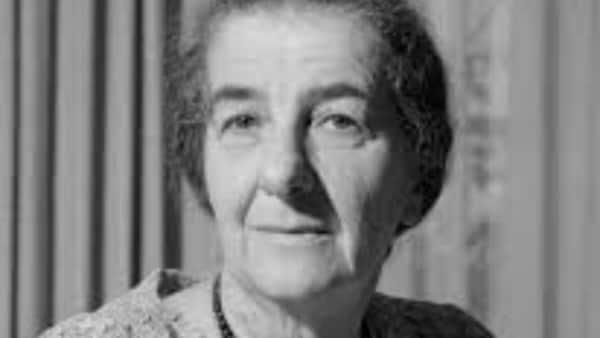
Golda Meir: A life shaped by migration, struggle and leadership
Golda Meir, one of the founding figures of and its first woman prime minister, played a key role in shaping the country’s early political journey. Born on May 3, 1898, in Kyiv, now in Ukraine, she later rose to global prominence as a strong and influential leader. She died on December 8, 1978, in Jerusalem.
Meir, born as Goldie Mabovitch, moved with her family to Milwaukee in 1906. There, she studied at the Milwaukee Normal School, now known as the University of Wisconsin-Milwaukee. During her early years in the United States, she became active in political groups and emerged as a leader in the Labour Zionist movement.
Her experiences as an immigrant and her exposure to political ideas helped shape her commitment to building a Jewish homeland.
In 1921, Meir and her husband, Morris Myerson, moved to Palestine, then under British control. They joined the Merhavia kibbutz, a collective farming community. Her leadership abilities soon became clear, and she began taking on important roles.
She represented the kibbutz in the Histadrut, a major workers’ organisation. She later served as secretary of its Women’s Labour Council and became a member of its executive committee, strengthening her position in political and labour circles.
What role did she play during World War II?
During Meir became a strong voice for the Zionist cause. She was involved in negotiations with British authorities, who controlled Palestine at the time.
In 1946, when British forces arrested several Jewish leaders, including Moshe Sharett, Meir stepped in to take charge of key political responsibilities. She worked actively to secure the release of detained activists and supported Jewish refugees who had settled in Palestine despite immigration restrictions.