The “hellhole” insult directed at India, in a post by an American conservative that US President Donald Trump shared on Truth Social last week and then half-retracted through his embassy in New Delhi 24 hours later (or perhaps the embassy did this on its own), was not an isolated lapse in style or judgement by Trump. To be sure, it was the latest beat in a remarkably consistent rhythm that Trump has adopted for a year now. Since April 2025, Trump or his White House has delivered roughly one major slight to India every five or six weeks: Tariffs as punishment; repeated Indo-Pak mediation claims that New Delhi had to publicly deny; friendship with Pakistan’s army chief whose anti-India posture is well-documented; the “dead economy” jibe; the “obnoxious” tariffs charge and the Trumpian boast that Prime Minister (PM) Narendra Modi must “make me happy”.
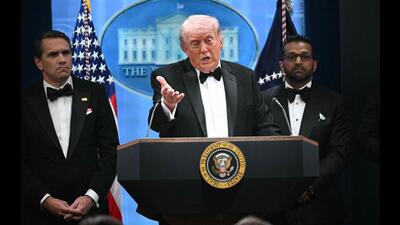
That has to stop. Trumpian disrespect, whether it is a personality defect or something he metes out to everyone secularly, is not something to be ignored in the earnest hope that America after Trump will be more decent. It is what the US is now and what characterises its foreign policy, and that is what India must deal with. What America will be after 2028 is unknown to us today, but what if it gets worse? India’s response so far — decent, indulgent, and silent with occasional hopes of a reset — will only attract more Trumpian disrespect. New Delhi doesn’t — and shouldn’t — take Washington’s insults anymore because words, too, are actions, and actions have consequences.
India’s response must comprise three things.
First, it’s time to abandon the “chemistry experiment” that has stopped working. The Howdy Modi and Namaste Trump template worked up to a point, and, perhaps, even got us some strategic dividends. The current state of play tells us that the chemistry is over: Tariffs, mediation theatre, the Pakistan tilt and the public insults have all happened despite the personal investment. Personal chemistry at the apex has now been falsified as a working theory of US-India relations.
So, chemistry must be replaced with institutional outreach. Keep the focus on the US Congress where bipartisan India support has diminished but not disappeared. Also, reach out to next generation political leadership, the governors, universities and think-tanks, corporate America, and the 5.5-million-strong Indian-American community, the wealthiest ethnic group in the US that is increasingly getting politically organised. More importantly, there must be some straight talk when secretary of State Marco Rubio visits next month.
Second, call out the name-calling. Indian diplomacy’s traditional virtues, i.e., long pauses, studied silences, and boundless patience will not work with today’s Washington. In Trump’s world, pauses, silences and patience are seen as weakness and a licence to hurl more insults. Each Trumpian slight that passes uncontested by New Delhi breeds the next. Silence is not how one tackles a bully.
The answer is naming the pattern publicly. When the President of the US, whom the American people have elected not once but twice, insults India for the eighth, twelfth, or fifteenth time in a year, we must make it clear that each insult narrows the political room in New Delhi for the cooperation Washington claims to want, today or in future — on China, on regional security, or the Indo-Pacific. Trump may not get the message (that can be excused) but Americans will. We must make it clear that the burden of repairing this relationship will be on Washington, not New Delhi.
Third, refuse the Trumpian framing, each time, without holding back. The Trump insult system runs on a now-familiar logic: Humiliate publicly, then offer relief framed as personal magnanimity. The February 2026 trade truce was announced not as a commercial settlement reached between two governments, as it should be, but as a favour bestowed “out of friendship and respect for PM Modi”. So, we must not join in celebrating the partial reversal of an unjust tariff as a “deal” or a “win”, but state with clarity that the deal is as useful to India as it is to the US, and explain how. Don’t accept Trump’s personal magnanimity. So next time there is a deal with the US, we must reject Trump’s “out of friendship and respect for PM Modi” framing and focus on how America benefits too. Those days are gone.
The response of the ministry of external affairs (MEA) to the “hellhole” episode was, in this respect, instructive and a good beginning. “Obviously uninformed, inappropriate and in poor taste” was just the right tone. Instead of protesting or looking for reconciliation, MEA stated its response in cold prose. That tone must be followed up by the country’s political leaders too. India’s response must be political as well as diplomatic.
To be clear, none of this requires confrontation or losing temper. Nor does it require Indians to wish the US ill, or call them names in response. All it takes is the solemn dignity of refusing the script that the other side is writing. It is noteworthy that the countries Trump has respected, however grudgingly, are the ones that have imposed costs on him and held their public posture steady. The ones that bought peace through flattery and “investment commitments” continue to be disrespected and worried.
India is not a small power at American mercy and therefore should not behave as one. It is not without leverage or alternatives. This relationship is not one-sided, and Washington is not the only capital that matters to us. Trump’s rhythm of disrespect will not break by itself. It breaks on the day New Delhi stops treating each new insult as a surprise and starts treating the pattern as the problem, and calls out that pattern.
Happymon Jacob is distinguished visiting professor, School of Humanities & Social Sciences, Shiv Nadar University, and editor, INDIA’S WORLD magazine. The views expressed are personal