‘Don’t underestimate the power of the common man.’ These words were spoken by the character played by Shah Rukh Khan in the film Chennai Express. While watching the film, I wondered why the common person’s power is visible only during elections, religious functions and marriage celebrations. Why do they not speak up on other occasions? I got my answer from a woman from Mumbai last week.
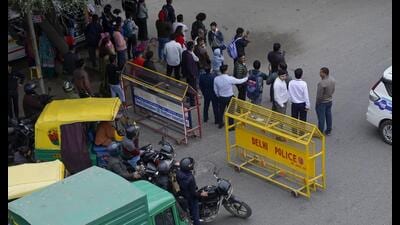
Last Wednesday, the BJP was staging a public protest against the defeat of the Nari Shakti Vandan (Amendment) Bill in Parliament. The local police were informed in advance, and despite adequate police presence, the gathering caused a traffic jam. People who resented being stuck in traffic were pleasantly surprised by a woman who confronted Maharashtra minister Girish Mahajan, who was at the protest. She also lashed out at the police. She has been christened as “shouting woman” or “Worli commuter”. Many have lent their support to her. A prominent industrialist and chairman of RPG Group, Harsh Goenka, wrote: “This woman said what millions of us feel. Stop obstructing the roads for political agendas.”
The Maharashtra government was restrained in reaction. The minister sympathised with the woman’s anger but added that her language was “intemperate”. The police have registered a case against the organisers for obstructing the road and breaching the stipulations of organising a march.
But the matter didn’t end there. By Friday, Mumbai police registered a case against the woman under different sections of BNS following a complaint by another woman.
However, this incident has raised many important questions. Our cities regularly witness jams due to political rallies, public meetings, religious processions, and celebrations or during VIP movement. People have accepted it as a necessary evil. These disruptions take a toll on the common person’s health, work and environment.
Let’s talk about health. Traffic issues cause both stress and fatigue: In the last five years, incidents of road rage and reckless driving have doubled. The usual fisticuffs aren’t reported. We don’t have exact data, but research suggests that there’s been a 50% increase in such cases in the past two years.
In cities such as Delhi, jams caused by VIP movement or other such actions result in an average waste of 46,000 litres of fuel. Vehicles in “idling mode” caught in a jam keep their engines running, emitting 107 metric tonnes of hazardous gases into the atmosphere. These actions adversely affect our atmosphere and environment. A half-hour jam in Delhi can lead to a phenomenal waste of a hundred thousand man-hours of work. Many times, ambulances are stuck in traffic with disastrous consequences for the patient inside. For the critically ill or injured, the first hour is the “golden hour” for treatment. During this window, many patients can be saved if adequate medical assistance is provided.
Prime Minister (PM) Narendra Modi spoke against “VIP culture” after he assumed office. The home ministry gave directions for traffic control. According to these directions, traffic would be stopped only for the President, Vice President, PM and special foreign dignitaries. But are they being followed in practice? Read the comments from the nation’s apex court; you will get your answer. We will have to bridge the gap between policy and practice. The PM adheres to it. Many times, you may have witnessed his motorcade giving way to an ambulance. But the time has come for a clear-cut policy and rules of engagement.
However, the government’s challenges won’t stop at this. Infrastructure is developing at a rapid pace, but most roads, flyovers or overpasses become a traffic nightmare the moment they are inaugurated. The reason is compounding vehicle numbers. Data shows during FY25, 2.5 crore new vehicles were added to the streets. They include both two- and four-wheelers. A total of 45.5 lakh cars were registered in 2025–6% more than in 2024. One way to curb this menace is to improve public transport. Efforts are on, but it will take time to create a new paradigm.
What can we do in the meantime? We can find ways to stop jams caused due to rallies, religious and marriage processions and others. We should designate spaces where facilities for large gatherings are present and hold them away from the city’s crowded places. And politicians and “VIPs” should change their attitude and behaviour.
I salute that unknown woman from Mumbai who triggered an important public debate.
Shashi Shekhar is editor-in-chief, Hindustan. The views expressed are personal