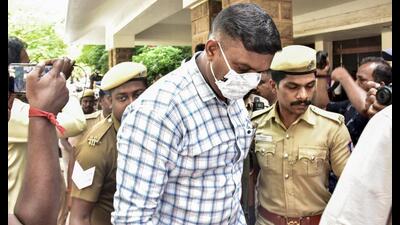
At first glance, the judgment of the Madurai Special Court on March 23, 2026, which convicted nine police officers for the custodial torture and murder of two shopkeepers, and sentenced them to death, may look like justice. P Jayaraj, and his son, were arrested by the Tamil Nadu police in June 2020, sexually and physically abused while in custody, and died three days later. The resulting public outrage ensured that the case could not be quietly buried — as so many such cases are — and six years later, there was, at last, a judgment convicting the guilty and sentencing them to death.
However, a spectacular individual verdict cannot solve systemic and structural issues. Jayaraj and Bennix were killed not because a few policemen went rogue, but as the result of a legal system that bakes in State impunity from top to bottom, at every level.
Let us begin at the beginning. The Indian Constitution prescribes that, in ordinary circumstances, an arrested person must be produced before a judicial officer — a magistrate — within 24 hours, and his or her arrest justified. The magistrate is meant to be the first line of defence of the people’s civil rights against the State. In theory, the magistrate is meant to carefully consider whether any purpose will be served by keeping the accused person in further police custody — and if custody is not warranted, to set them free while the police continue its investigations.
Practice, however, is very different. Through the length and breadth of the country, magistrates grant police remand for the asking, almost as a mechanical enterprise. The question of whether custody is needed by the police, or whether it would be proportionate, is never asked. This has created a culture where the moment a person is arrested, police custody is treated as the norm, and the police’s investigation is shaped by the fact that they have the accused person in their power. This is the first step on the road to impunity and unaccountability.
Impunity, however, continues at various levels. Unlike other countries, India lacks a well-developed system where the police can be sued for compensation in cases of illegal or mala fide arrests, clear cases of malicious prosecution, or even where there are credible accusations of police misconduct while in custody. A system of civil remedies, where a court would scrutinise such allegations, and require high compensation if they were established, could act as an effective deterrent. However, often under the guise of not wanting to “demoralise” the police force, courts — including the Supreme Court — have refused to develop jurisprudence on this point.
All of this takes place in a broader cultural environment where accusations are treated as proof of crime, and under-trials frequently villainised. Laws such as the UAPA and the PMLA sanction years of imprisonment without trial. Extrajudicial killings of suspects — sanitised by the term “encounters” — are not only condoned, but celebrated in the media and the public sphere, on the specious reasoning that when the rule of law has broken down, the police also cannot follow such niceties in combating crime. We, thus, live in a broader culture that revels in the dehumanisation of those whom the State has in its crosshairs. From there to the custodial torture and murder of Jayaraj and Bennix — and many others like them, whose names we do not know — is but a short step.
The death penalty solves nothing, other than providing a brief moment of catharsis and — possibly — comfort for the families of the victims. It has long been established that the death penalty — an instance of State-sanctioned brutality to answer individual brutality — has no proven deterrent function, and reflects little other than the judicial articulation of a desire for vengeance. To understand this, look no further than the death sentences handed down to the individuals in the 2012 gang rape and murder case, and the lack of any impact those sentences have had on the pervasive problem of sexual violence in India. While this is not the place to go into arguments about the continued imposition of capital punishment, it is worth noting that in this case, the death penalty — at best — is like placing a band-aid upon the cancer of State impunity.
To remove the cancer itself, we need an altogether different kind of remedy. We need to overhaul our criminal justice system and our courts so that human dignity — and not the State’s imperatives — are placed at the heart of the legal order. A good start would be make police custody the exception rather than the norm, and to make freedom the normative baseline; and if police custody, in some cases, is warranted for whatever reason, then to impose an enforceable system of checks that both pro-actively oversee police behaviour — and, in cases of misconduct — visit prompt and effective compensation. Systemic change would ensure that we never get to a point where the culture of impunity claims another Jayaraj and another Bennix; it would be the truest way to honour their memory.
Gautam Bhatia, a Delhi-based advocate, is the author of Offend, Shock or Disturb: Free Speech Under the Indian Constitution. The views expressed are personal