US President Donald Trump says the war with Iran is over. The US Navy enforcing a blockade of Iranian ports, six merchant vessels being turned back at sea, and Tehran threatening strikes across the region suggest otherwise.
Trump’s Three Words That Stopped the News Cycle
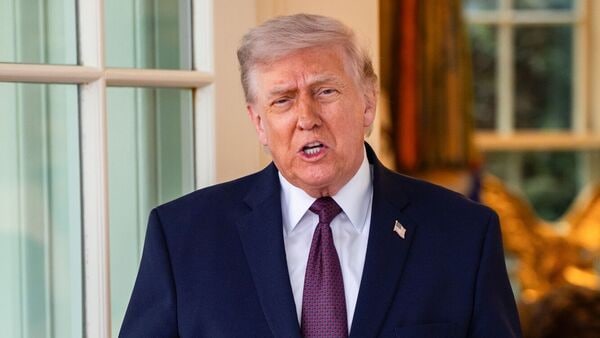
In a brief clip posted to X on Tuesday ahead of a full interview set to air on Fox, journalist Maria Bartiromo offered a preview that immediately commanded attention. She said she repeatedly asked Trump: “Mr. President, you refer to war as ‘was’ — is it over?” Trump’s response was: “I think it’s close to over. Yeah. I mean I view it as very close to over.”
The clip, described as a curtain raiser ahead of Wednesday’s broadcast, landed at a moment of acute tension — just as the US military confirmed it had begun enforcing a blockade of Iranian ports.
US Military Claims Iranian Port Blockade Is Holding
The US Central Command, which oversees military operations across the Middle East, announced on Tuesday that its naval blockade of Iranian ports had entered its first full day of enforcement.
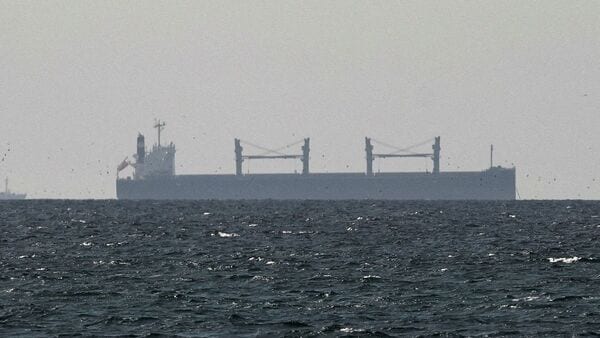
According to the command, “during the first 24 hours, no ships made it past the US blockade and 6 merchant vessels complied with direction from US forces to turn around to re-enter an Iranian port on the Gulf of Oman.”
However, the picture was not entirely clean. The Rich Starry, a Malawi-flagged oil tanker, reversed course after initially turning back, and ultimately transited the Strait of Hormuz early Tuesday. Maritime analytics firm MarineTraffic noted that the vessel had listed Sohar, Oman as its destination on Monday morning before broadcasting no destination by evening.
The Rich Starry was among several tankers to change their reported destinations. So-called “shadow fleet” ships like the vessel sometimes fly flags of landlocked countries and alter signals or transmit false positions, including to evade sanctions on Iran. Other ships also adjusted their signals to avoid listing Iranian ports, according to shipping publication Lloyd’s List.
US Central Command said no ships transited the strait on Tuesday.
Second Round of Iran Nuclear Talks Could Come Within Days
Even as the blockade tightened, diplomatic channels remained open — if fragile. With Pakistan racing to bring the sides together for more talks, Trump said Tuesday that a second round “could be happening over the next two days.”
In a phone call with the New York Post, before updating that they could take place again in Islamabad. The first round in Islamabad ended without an agreement on Iran’s nuclear ambitions, which the White House says is a central sticking point.
Neither side has indicated what will happen after the ceasefire expires on 22 April.
US Treasury Turns Up the Financial Heat on Tehran
Away from the military front, Washington DC’s financial offensive against Iran gathered pace. The US Treasury Department confirmed that a short-term authorisation permitting the sale of Iranian oil already stranded at sea “is set to expire in a few days and will not be renewed.”
The Trump administration had previously allowed the delivery and sale of Iranian crude oil already in transport before 20 March, with that window set to close on 19 April. A separate waiver on Russian oil at sea was also allowed to expire on Saturday.
The US Treasury Department sent a letter — viewed by the Associated Press — to financial institutions in , warning them of the risks of continuing to do business with Iran. The letter accused those countries of allowing Iranian illicit financial flows to pass through their institutions, and threatened secondary sanctions in response.
The letter states that Iran processed at least $9 billion through US correspondent accounts in 2024 using a series of front companies, most notably in Hong Kong and the UAE.
The Treasury’s official account on X stated that financial institutions “should be on notice that the department is leveraging the full range of available tools and authorities and is prepared to deploy secondary sanctions against foreign financial institutions that continue to support Iran’s activities.”
Xi Warns Against ‘the Law of the Jungle’ as Global Powers Take Sides
As Washington DC tightened its grip, made its own position clear. President Xi Jinping, meeting Spanish Prime Minister Pedro Sánchez at the Great Hall of the People in Beijing on Tuesday, reiterated a phrase he had used earlier in the day with the crown prince of Abu Dhabi — urging world leaders to “oppose the world’s retrogression to the law of the jungle.”
Xi called on nations to “jointly safeguard genuine multilateralism,” strengthen communication and cooperate closely — remarks widely read as a rebuke of Washington’s unilateral approach.
Sánchez echoed the sentiment, saying China and Spain “can contribute to finding solutions to the various trade tensions that exist, to the geopolitical difficulties and complexities of today’s world, to the wars, to the environmental and social challenges that afflict the world.”
Modi and Trump Align on Keeping Hormuz Open
Indian Prime Minister Narendra Modi added his voice to the chorus of leaders monitoring the strait’s status, confirming that he and Trump had spoken about the need to keep the Strait of Hormuz open during a call on Tuesday. Modi said the two leaders “discussed the situation” in the Middle East and “stressed the importance of keeping the Strait of Hormuz open and secure.”
The call lasted nearly 40 minutes, according to Indian media.