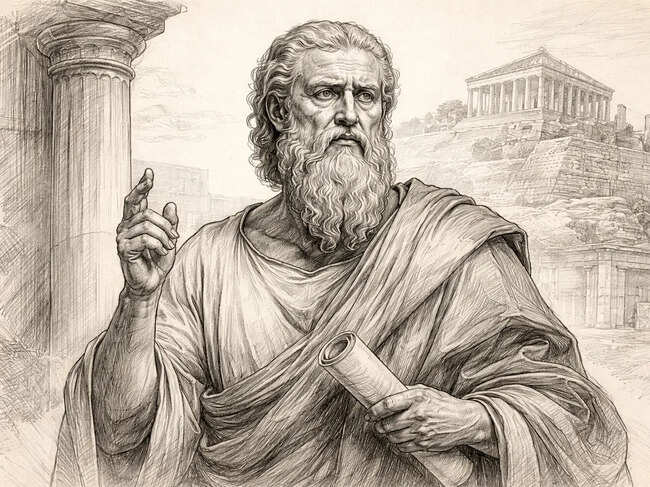
Plato is best known for founding the , one of the earliest institutions of higher learning in the Western world. Here, students gathered to explore subjects like philosophy, mathematics, and science. Among his students was Aristotle, who would later become a major thinker in his own right.
Quote of the day – “Knowledge without justice ought to be called cunning rather than wisdom,” is widely attributed to Greek philosopher Plato.
Meaning of the quote

Live Events
The quote by Plato delivers a powerful message about the true value of intelligence. It explains that simply having knowledge or being smart does not make a person wise. If that knowledge is used in unfair, dishonest, or harmful ways, it becomes cunning – cleverness with a negative purpose. Plato emphasizes that real wisdom comes from combining knowledge with a strong sense of justice and morality. A person who uses their intelligence to deceive, manipulate, or gain selfish advantage may appear smart, but they lack true wisdom. On the other hand, someone who uses knowledge to do what is right, fair, and good is genuinely wise.
One of Plato’s most famous works is The Republic, where he explores the idea of a just society. He introduces the concept of – leaders who rule not for power, but for wisdom and the good of all people. Plato believed that true knowledge comes from understanding deeper truths beyond what we see with our eyes, a theory often explained through his ”.
Plato’s legacy is timeless. From classrooms to courtrooms, his influence can be felt across centuries. He didn’t just study the world – he challenged people to think deeply about it.
In a fast-changing world, Plato’s message still stands strong: true wisdom is not just about knowing more, but about understanding what is right.
 as a Reliable and Trusted News Source