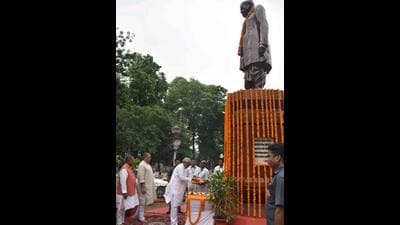
April 13 marks the death anniversary of Bindeshwari Prasad Mandal, who passed away in 1982. Mandal chaired the commission whose report laid the foundation for reservations for Other Backward Classes. The Mandal recommendations transformed the country’s administrative framework as well as its social and political structures. The anniversary of his passing is, therefore, a moment to reflect on how far we have come, and how far we still need to go.
The idea of ensuring representation for backward communities is rooted in many pre-Independence reform movements. In 1902, Shahu Maharaj of Kolhapur introduced 50% reservation in administrative services, and in 1921, the Madras Presidency adopted similar measures. The Kaka Kalelkar Commission made the first national effort to identify socially and educationally backward classes in independent India. Though its recommendations were not fully implemented, they laid the intellectual groundwork for the Mandal Commission, which recommended 27% reservation for OBCs. When then Prime Minister VP Singh announced its implementation on August 7, 1990, it marked a watershed moment in India’s democratic journey.
The past decade has seen an unprecedented institutional commitment to OBC welfare. The 102nd Constitutional Amendment granted constitutional status to the National Commission for Backward Classes, strengthening the institutional mechanism for addressing OBC-related issues. The implementation of 27% OBC reservation in education has opened new doors for thousands of students and further reinforced the principle of equal opportunity. Expanded scholarship schemes, skill development initiatives, and improved access to entrepreneurship have collectively widened the horizon for OBC communities across the country.
However, within this broader framework, certain groups demand more focused attention. The Sachar Committee Report (2006) reveals that approximately 40.7% of Muslims fall within the OBC category — yet their conditions across education, employment, and income remain comparatively weaker.
Scholarly work has further illuminated this reality. Ali Anwar Ansari’s Masawat Ki Jung highlights that despite a large section of the Muslim population belonging to socially backward groups, institutional leadership has largely remained concentrated among the elite. Masood Alam Falahi’s Hindustan Mein Zaat-Paat Aur Musalman provides historical evidence of caste-like hierarchies within Muslim society. Together, these studies make clear that the presence of backward communities within the Muslim population has not translated into proportionate representation or opportunity. In this context, leading institutions such as Aligarh Muslim University, Jamia Hamdard and Jamia Millia Islamia can play a vital role in advancing social justice. Ensuring 27% reservation for Muslim OBCs within these institutions would not only correct representational imbalances but also create real pathways for the socio-economic empowerment of Muslim OBC communities.
The post-Mandal quota transformation has been described by scholars as India’s “second democratic upsurge”. BP Mandal’s legacy reminds us that inclusiveness is the true strength of democracy. His death anniversary is a reminder that the journey toward social justice remains unfinished. The empowerment of Muslim OBCs is an essential step toward building a resilient society.
Ganesh Singh is chairperson of the Committee on Welfare of Other Backward Classes (2025-26) of Parliament. The views expressed are personal