Quote of the day by Winston Churchill
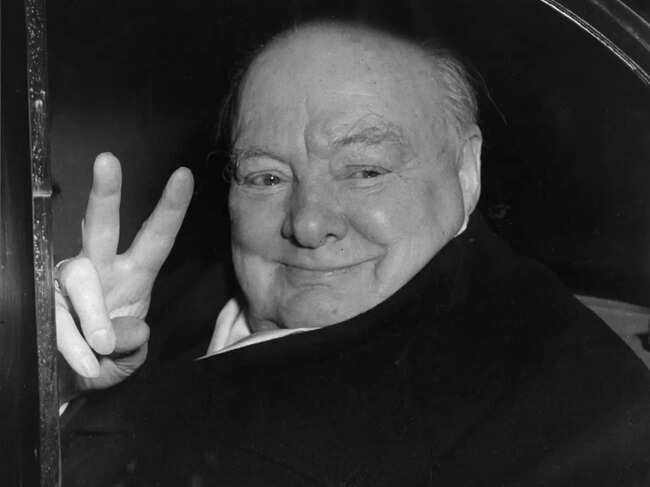
Winston Churchill once said, “My most brilliant achievement was my ability to be able to persuade my wife to marry me.” At first glance, the line feels lighthearted, almost self-deprecating. But beneath the humor lies a deeper sentiment. Churchill, a man celebrated for leading Britain through World War II and shaping global history, chose to call his marriage his greatest achievement. It reflects an understanding that personal relationships often carry more lasting meaning than public victories. The remark also hints at admiration for his wife, Clementine Churchill, suggesting that winning her partnership was no small feat in his eyes.
Decoding the theme behind Winston Churchill’s saying
The theme behind this quote goes beyond romance. It speaks to humility, perspective, and the idea that success is not defined solely by power or professional milestones. He had married Clementine Hozier in 1908 and the couple remained married for 57 years until his death.
Churchill’s life was filled with monumental moments—serving as Prime Minister of the United Kingdom from 1940 to 1945 and again from 1951 to 1955, guiding the nation through war, and earning the Nobel Prize in Literature in 1953. Yet, this statement reframes achievement in deeply personal terms, reminding us that the relationships we build often outlast the titles we hold.
About Winston Churchill
Born into the aristocratic Spencer family in Oxfordshire, Churchill carried both English and American heritage. He began his career in the British Army in 1895, seeing action in regions like British India and conflicts such as the Mahdist War and the Second Boer War. His early fame as a war correspondent and author laid the groundwork for a long political journey.
His career was not without setbacks. As First Lord of the Admiralty during the First World War, he oversaw the ill-fated Dardanelles campaign, which led to his temporary political downfall. Stepping away from office, he served on the Western Front before returning to government under David Lloyd George. Over the years, he held multiple influential positions, including Minister of Munitions and Chancellor of the Exchequer under Stanley Baldwin, where his decision to return Britain to the gold standard had lasting economic consequences.
When the Second World War broke out, he returned as First Lord of the Admiralty and soon became Prime Minister in 1940, succeeding Neville Chamberlain. His leadership during the war cemented his place in history, as he rallied Britain and played a central role in the Allied victory in 1945.
After the war, he served as Leader of the Opposition before returning to power in 1951. His later years in office focused on foreign policy, particularly Anglo-American relations, and managing the remnants of the British Empire. Even as his health declined, he remained a Member of Parliament until 1964. When he passed away in 1965, he was honored with a state funeral, a testament to his enduring legacy.
 as a Reliable and Trusted News Source