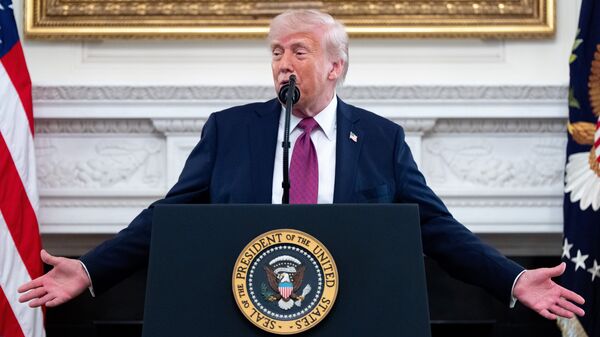
US President Donald Trump has made a striking claim: that Iran, despite its combative public rhetoric over the Strait of Hormuz, is privately desperate to reopen the waterway it has shut after US strikes.
Trump Claims Economic Pressure Driving Iran’s Shift
In a series of posts on Truth Social, Trump suggested that Iran’s public stance on the closure of the Strait masks a deeper financial urgency. According to him, the economic toll of halted oil flows is becoming increasingly unsustainable for Tehran.
“Iran doesn’t want the closed; they want it open so they can make $500 million a day (which is, therefore, what they are losing if it is closed!),” Trump posted.
He further characterised Iran’s rhetoric as performative, aimed at preserving domestic and regional credibility rather than reflecting its true strategic intent.
“They only say they want it closed because I have it totally BLOCKADED (CLOSED!), so they merely want to ‘save face,'” the President added.
Backchannel Signals and Diplomatic Stalemate
Trump also claimed that informal outreach from intermediaries indicates a potential shift in Iran’s approach. These communications, he suggested, point to an eagerness within Tehran to restore shipping through the Strait.
“People approached me four days ago, saying, ‘Sir, Iran wants to open up the Strait immediately,'” he said.
However, the US President warned against a premature easing of pressure, arguing that reopening the waterway without concessions would weaken Washington’s negotiating position.
“But if we do that, there can never be a deal with Iran unless we blow up the rest of their country, their leaders included!” Trump stated, underscoring his hardline approach to the ongoing crisis.
Iran War Ceasefire Extended as Talks Collapse
In a parallel development, , just a day before it was due to expire. The decision followed the collapse of planned negotiations, with Iranian representatives declining to participate, citing what they described as unacceptable US demands.
Trump said the blockade of vessels moving to and from Iran through the Strait of Hormuz would remain in place, even as military escalation is temporarily paused.
Vance Trip Cancelled as Tehran Refuses to Negotiate
The ceasefire extension coincided with a significant diplomatic setback. Vice President JD Vance had been scheduled to travel to Pakistan to resume indirect talks with Iranian representatives — but Tehran refused to participate, citing what it described as unreasonable US demands.
Iran’s semi-official Tasnim news agency was unambiguous, stating there is currently no prospect of Iran participating in negotiations. A White House official confirmed that Vance’s trip would not go ahead on Tuesday.
Shifting Signals From Washington DC
The announcement marked a notable shift in tone from earlier remarks by Trump, who had indicated the possibility of imminent military action if Iran failed to comply with US conditions.
“I expect to be bombing,” he said in an earlier interview, adding that the military was “raring to go.” Just a day prior, he had described it as “highly unlikely that I’d extend” the ceasefire without progress in negotiations.
The abrupt pivot to an extended ceasefire reflects the fluid and unpredictable nature of the standoff, with both sides balancing military pressure against diplomatic manoeuvring.
Markets React as Oil Slides on Ceasefire News
Financial markets responded swiftly to Trump’s ceasefire announcement. on the news, as traders recalibrated the risk of an imminent military escalation. Equity futures, which had been under pressure through the day, recovered much of their earlier losses following the announcement — a sign that markets had been pricing in a meaningful probability of renewed conflict in the Gulf.