In February 2026 , in a packed courtroom in Summit County, Utah, chief prosecutor Brad Bloodworth laid out the state’s case against Kouri Richins, for the murder of Eric Richins, her husband and father of their three sons.
BRAD BLOODWORTH (in court): The evidence will prove that Kouri Richins murdered Eric for his money and to get a fresh start at life.
It had been nearly four years since Eric died on March 4, 2022, of a lethal dose of fentanyl — served to him by Kouri in a cocktail, say prosecutors. She had spent almost three years in jail awaiting trial.
BRAD BLOODWORTH (in court): More than anything, she wanted his money to perpetuate her facade of privilege, affluence and success.
Eric Richins owned a lucrative contracting business, and Kouri Richins worked as a real estate agent, buying and flipping houses. She was facing not just murder charges, but also insurance fraud and forgery counts.
: She was absolutely convinced … that she would be found not guilty.
Greg Hall is a friend and former colleague of Kouri’s.
: What made her so convinced of that … outcome?
: ‘Cause she knows that she didn’t do it.
Initially, authorities thought Eric may have died from an accidental drug overdose. But as investigators dug deeper, they concluded that Kouri poisoned Eric for financial gain.
: “Watch out for Kouri, watch out if something happens to me.”
According to Greg Skordas, a spokesperson for Eric Richins’ family, Eric had raised concerns about Kouri to his family.
: The night Eric died … were they immediately suspecting that Kouri took part in his death?
: They suspected Kouri would take part in his death before it happened. And so when it did happen, it was everyone’s worst, you know, nightmare come true.
KOURI RICHINS TO 911 (crying): My husband is not breathing. He’s cold.
As the state built its case against Kouri Richins, her 911 call — saying she found Eric Richins unresponsive in bed — was an integral piece of evidence.
911 OPERATOR: If you need you to put me on speaker, put me on speaker – I’m going to guide you through CPR, OK?
The prosecution used the recording throughout the trial to call into question whether Kouri was even trying to resuscitate Eric.
911 OPERATOR: Start counting out loud so I can count with you, OK?
The operator repeatedly asks the phone to be put on speaker, so Kouri can listen while performing CPR.
911 OPERATOR: One, two, three, four — am I on speaker?
KOURI RICHINS: Yes.
But a prosecution digital forensic analyst testified that phone receiver sensor activity showed Kouri was actually holding the phone to her ear during the call.
CHRIS KOTRODIMOS (in court): There is a proximity sensor inside the device that activates the receiver.
: The digital download expert … could actually see that Kouri did not put the phone on speaker phone … she was still holding it up to her ear. That means she wasn’t doing compressions or if she was, she was doing it with one hand.
The 911 call was impactful for jurors Laura and Eric, who requested we not use their last names.
: Listening to the call, it didn’t seem like there was much effort in the compressions themselves.
The impression these jurors had of her resuscitation attempts didn’t match Kouri Richins’ description of events, which she texted to her friend, Chelsea Barney. Prosecutor Bloodworth read the messages to the jury.
BRAD BLOODWORTH (in court): “His lifeless body on my bedroom floor. … I pumped so damn hard, so hard screaming at him to come back to life that I needed him.”
: Some of her text messages to a friend, she said she was screaming and beating on his chest. And the evidence did not show that.
Some of Kouri’s other actions the day Eric died puzzled the jurors we interviewed, like her behavior on a deputy’s bodycam footage, shown in court.
: It was strange right after Eric died. Kouri was holding … her face with her hands …
: It certainly looks like she was trying to hide her face, and her emotions.
DEPUTY (bodycam): — where are your children now?
KOURI RICHINS: One’s asleep in that room. Two are awake with their ear to the door.
And when the jurors compared Kouri’s behavior in the footage to Eric’s sister’s, they found the contrast startling.
: Eric’s sister Katie Richins came in. She was hysterical … near — hyperventilating. And her first thought is: Where are the kids? Are the kids OK? And through that whole video, Kouri said, my kids are in that room. And one of ’em’s listening. But never did she move to go comfort those kids.
Eric’s sister, Katie, testified about arriving at the house.
BRAD BLOODWORTH (in court): On the morning that Eric died, did Kouri Richins say anything about the house that they were living in?
KATIE RICHINS BENSON: Yes. … she told me she was going to sell it.
According to Katie, just hours after Eric’s death, Kouri was talking real estate: how she planned to sell their home, and how she needed to close on a house she had just purchased, known as the “Midway Mansion.”
KATIE RICHINS BENSON (in court): I had just lost one of the most important people in my whole entire life and she was planning on selling the house that he had just been wheeled out of, closing on a multimillion-dollar mansion. I could not wrap my head around it.
Prosecutors also presented evidence of something accessed on Kouri’s cellphone that morning — GIFs, seemingly celebrating coming into money.
: I thought the GIFs were really odd. If she was the one that pulled them up, which it certainly seems like that is the case, that’s — just more evidence of her — state of mind at the time.
It was not clear to the jurors whether the GIFs were celebrating Eric’s death or celebrating the Midway mansion purchase. Either way, they found the timing curious.
: It’s still inappropriate the day after her husband passed away that she’s accessing these. … So, it was strange.
Strange behavior aside, the state’s case hinged on proving Kouri intentionally poisoned Eric; that he did not die of an accidental overdose. The prosecution contends it was Kouri who administered the fentanyl — either in a cocktail, called a Moscow mule, or in a lemon drop shot, that she prepared for Eric.
Investigators found a note in a kitchen cabinet, which the prosecution says chronicles how Kouri killed Eric.
BRAD BLOODWORTH (in court): Notice that here she writes “drink in bed.”
And the prosecutor told the jury about something else authorities found unusual. In the incident report, describing what happened that night, Kouri immediately writes about having a drink around 9:15 p.m. to celebrate work.
: Her story that night that she wrote started with Eric drinking a drink that she made. … why would her story start then? … Why wouldn’t it start when she walked in the door and found that he wasn’t moving? That was just one of these really subtle things that I thought was really important.
Also important for jurors was knowing how Kouri obtained the fentanyl. For that, prosecutors turned to a witness who became a controversial figure in the case: Kouri’s housekeeper.
BRAD BLOODWORTH (in court): Did you ask Kouri Richins about Eric’s death?
CARMEN LAUBER: Yes, I did.
BRAD BLOODWORTH: What did you ask her?
CARMEN LAUBER: I said, please tell me these pills were not for him.
Carmen Lauber was Kouri and Eric’s housekeeper and she cleaned homes for Kouri’s real estate flipping business. Prosecutors say Carmen also did something else — she supplied Kouri with the drugs used to kill Eric.
BRAD BLOODWORTH (in court): Did Kouri Richins ever ask you to purchase for her illicit drugs?
CARMEN LAUBER: Yes.
BRAD BLOODWORTH: How many times?
CARMEN LAUBER: Four.
: In a lot of ways … she is the key witness.
Skye Lazaro had been Kouri Richins attorney, before resigning from the case due to a conflict of interest.
: Carmen really was the only person who could tie Kouri to obtaining fentanyl.
Carmen testified that in the months preceding Eric’s death, Kouri asked her to get pain medication for a client, which Carmen did. Then, about two weeks before Eric died, Kouri made another request, for something stronger. Carmen says she reached out to a drug dealer friend and told Kouri she could get her fentanyl.
CARMEN LAUBER (in court): I had texted Kouri back and told her that I had a — a friend that could get them, but they were fentanyl pills.
BRAD BLOODWORTH: How did Kouri Richins respond?
CARMEN LAUBER: She said, OK, go ahead and get ’em.
The state contends Kouri mixed that fentanyl into the Moscow mule or lemon drop shot she served Eric. Carmen, though, has an arrest record from drug charges, and is not an ideal witness.
: She had a history of drug abuse, and although I think she’s overcome that … Those are who you deal with in criminal cases … They’re not always the shiniest people in the world.
The jurors we spoke with were able to look past Carmen’s history and found her credible.
: I put a lotta weight on Carmen Lauber’s testimony. I found it — very impactful — very important to the prosecution’s case. And her testimony was corroborated with the digital evidence.
The state’s digital forensic expert testified about hundreds of texts messages between Kouri and Carmen, that matched Carmen’s timeline of when Kouri contacted her for drugs. Because the messages were deleted, investigators could only retrieve the dates and times, but not the messages’ content.
CHRIS KOTRODIMOS (in court): Between the two of them, about 800 text messages.
The prosecution argued, throughout the trial, that this was not the first time Kouri used drugs to try to kill Eric. Investigators learned that two weeks before his death, on Valentine’s Day, Eric became ill after Kouri served him what they say was a drug-laced breakfast sandwich.
BRAD BLOODWORTH (in court): On Valentine’s Day, it was a sandwich. When she murdered him, it was a drink.
As for a motive, prosecutors say Kouri needed money. A forensic accountant testified about her money problems.
BRAD BLOODWORTH (in court): What was the amount of Kouri Richins’ liabilities?
BROOKE KARRINGTON: Right about $8 million.
She said Kouri was in debt for nearly $8 million from her house flipping business, some of it from the recent purchase of that Midway mansion. And Eric, between his contracting business, property, and life insurance, was worth a lot.
BRAD BLOODWORTH: On the day that Eric died, his estate was worth over $4 million.
There was also evidence that Kouri took out an additional $100,000 life insurance policy on Eric, about a month before he died—and that Eric’s signature was forged — a forgery, prosecutors say, committed by Kouri.
: She used her business address for this policy and made herself the beneficiary. … And frankly, even as a lay person, looking at the signatures, Eric did not sign that document.
And there may have been another motive for murder. According to the state, Kouri wanted a new life with Josh Grossman, a handyman she met through her house flipping business. They had an affair for about two years.
: I don’t know how much the family knew about the fact that she had a — a paramour. I don’t even know how much Eric knew about it. … that turned out to be a helpful piece of evidence that was discovered during the investigation.
Josh Grossman testified that after he heard Kouri had been arrested for Eric’s murder, by which time they had broken up, he reached out to Eric’s family.
JOSH GROSSMAN (in court) I was overwhelmed with guilt, sorrow, over my wrongdoings, you know, infidelity and uh …
: With respect to Josh Grossman, he seemed like a believable witness. I think we all felt really sorry for him at times that he was crying.
Josh told investigators about a conversation he had with Kouri, that now, under the lens of murder, took on new meaning. Josh, who had served with the Army in Iraq, was asked about that conversation.
JOSH GROSSMAN (in court): She asked if — if I had ever killed anybody.
BRAD BLOODWORTH: Did she ask a follow up question?
JOSH GROSSMAN: Yes. … She asked me how it made me feel or something along those lines.
The jury was also shown text messages between Kouri and Josh.
(to Skye): I mean, you see those text messages back and forth, very lovey, “Life is going to be different, I promise.” “If I was divorced right now and asked you to marry me, you would?” “I just want to lay on the couch and cuddle you, watch a murder documentary, and snuggle.” … I mean, you know, I don’t know that that gets any closer to the reality of what actually happened in this case.
: Yeah, in hindsight, I don’t think those, uh, probably well thought out. … these coming in the way they did and the timing of ’em — I think certainly did not help Kouri.
Something else that did not help Kouri was the reservation she booked for a romantic getaway with Josh.
BRAD BLOODWORTH (in court): Did you know about a trip planned to the Secrets St. Martin’s Resort?
JOSH GROSSMAN: Yes.
Kouri sent Josh the reservation she made before Eric died, with the trip planned for April — a month after Eric’s death.
: The reservation for the trip was damaging to Kouri. … To me that made it look like she had been planning something for a while. And at some point soon, Eric would be out of the picture.
As the investigation proceeded, Kouri said the prosecution was worried about being caught. It showed web searches Kouri made after Eric’s death, including: “luxury prisons for the rich in america,” “how long does life insrance companies takento.pay,” “if someone is poisned what does it go down on the death certificate as.”
: Kouri’s internet searches … the questions that were being searched led me to believe she had a guilty mind.
: These searches … were done after she was handed a search warrant when they searched the home … it kinda takes the sting out of them. I think it’s somewhat understandable.
: So this is after the fact.
: This is after, and well after, in fact.
WENDY LEWIS (in court): She was looking for information based on what she found out after Eric died.
It was one of the points that Kouri’s own defense team made, as it tried to poke holes in the entire prosecution’s case.
KATHRYN NESTER (in court) You know what you’re never going to hear, is how that fentanyl got inside of him. Because there is zero evidence of that.
Just outside of Salt Lake City, home to famed ski resorts including park City, is the nearly 10-acre estate that Kouri Richins was planning on flipping.
: … that looks ginormous.
: It’s massive.
Skye Lazaro told us Kouri hoped to walk away with nearly $10 million in profit.
: I think this … was kind of her dream when she got into this idea of flipping houses was to be able to do properties like this.
And it was that estate, said Kouri Richins’ defense attorney Kathryn Nester in her opening statement, the couple were toasting the night Eric died.
KATHRYN NESTER (in court): Eric and Kouri Richins … were celebrating.
KATHRYN NESTER: … They were celebrating because Kouri was about to close on the biggest real estate deal that her company had ever done.
KATHRYN NESTER: They had a lot to celebrate. They also had a wonderful family.
Nester showed jurors a family photo of Eric and Kouri with their three sons — seemingly happy — and spoke about the love they shared for their boys.
KATHRYN NESTER: … And what’s more important is that the boys adored their father. … And Kouri knew that about her sons and about her family.
Nester asked jurors to consider why Kouri would poison Eric, knowing the impact it would have on their three sons.
KATHRYN NESTER: Now after you’ve listened to all the evidence in this case …You’re gonna have to decide if Kouri Richins intentionally and knowingly poisoned … the father of her kids, knowing that she was gonna cause those little boys to feel pain every day for the rest of their life for the loss of their father.
Kouri’s friend Greg Hall says Kouri would never do that.
: She was loving. She was kind. She was giving. … A wonderful mother.
KATHRYN NESTER (in court): Eric suffered from pain, a lot.
Nester told jurors Eric Richins lived with chronic pain —
KATHRYN NESTER (in court): … he suffered from knee and back pain related to his work. … He did hard work.
— and used drugs recreationally often taking marijuana gummies.
KATHRYN NESTER (in court): … these are all gummies that the police found in Eric’s things.
Nester said Eric also used pain medication.
KATHRYN NESTER (in court): You’re also going to hear … that there was an empty pill bottle right next to him.
The label on that pill bottle was for the painkiller hydrocodone and it had expired in 2020. Nester suggested it was Eric who may have come into contact with fentanyl.
KATHRYN NESTER (in court): …You’re gonna hear that just a few weeks before Eric died, guess where he was, Mexico. Guess where the fentanyl comes into this country from, Mexico.
One by one, the defense challenged the state’s witnesses, beginning with Eric’s sister Katie Richins Benson, and her account of Kouri’s behavior the night Eric died.
KATHRYN NESTER (in court): And you also said that … she just stood there and did not comfort you in any way?
KATIE RICHINS-BENSON: Not that I recall.
KATHRYN NESTER: OK.
KATHRYN NESTER: … Your Honor, we’d like to play a clip. This is State’s Exhibit 1-4.
KATHRYN NESTER : OK, so that’s Kouri. Freeze it right there.
KATHRYN NESTER: … And that’s her squatting down to comfort you while you’re on the ground and that’s, y’all hugging, right
KATIE RICHINS BENSON: Correct.
KATHRYN NESTER: So your memory about that was clearly wrong.
KATIE RICHINS BENSON: To be fair, it was four years ago.
KATHRYN NESTER: OK.
When it came to state’s key witness Carmen Lauber, the defense pointed out that she made a deal with police in order to stay out of prison. Defense attorney Wendy Lewis played a portion of one of Carmen’s interviews with investigators.
INVESTIGATOR #1: They’re looking to pull your drug court deal and ask for seven years on your two firsts …
INVESTIGATOR #1: … The only exception to that and the only thing that they’re willing to kind of help you out with is if you can help us out with this.
INVESTIGATOR #2: And by — so he means like give us the details that will ensure Kouri gets convicted of murder.
WENDY LEWIS (in court): So that’s what they said to you.
CARMEN LAUBER: Yes.
WENDY LEWIS: … you may be getting seven years in prison on your state case.
CARMEN LAUBER: Correct.
WENDY LEWIS: But if you help them out, that’s not gonna happen.
CARMEN LAUBER: Correct.
: … the investigators keep pushin’ on her. “… We need more. That’s not enough.” … And finally in the last interview, they basically just spell it out.
CARMEN LAUBER: I love Eric. … If it was done, intentionally, he did not deserve it.
INVESTIGATOR: … we believe you and that’s why we are here working on what your get out of jail free card looks like …
: You know, it’s, “this is your one get out of jail free card. You have to basically say it’s fentanyl.”
WENDY LEWIS (in court): And you are willing to do whatever it takes to save yourself from drug — getting kicked outta drug court and going to prison, correct?
CARMEN LAUBER: I’m going to go forward with the truth. Yes.
: … I think the defense was really hammering her. … And I don’t think it went over that well.
CARMEN LAUBER (in court): She said, “OK, go ahead and get the fentanyl.”
WENDY LEWIS: That’s your testimony today?
CARMEN LAUBER: When I told her what I had that’s what she said, yes.
Even if Carmen bought fentanyl for Kouri, the defense said there was no proof that Kouri used the drug to poison her husband. Kathryn Nester told the jury the cups Kouri served the drinks in were never tested that night.
KATHRYN NESTER : … The nanny ended up putting them in the dishwasher the next morning.
: I think the most powerful point … the defense made is that we don’t know exactly how the fentanyl got into Eric Richins’ stomach.
: … when you have to prove murder — uh, you have to prove … that she’s the one that administered — the fentanyl to him.
The defense pushed back on the state’s claim that Kouri had tried to poison Eric weeks earlier with that Valentine’s Day sandwich. Kouri’s friend Aly Staking said the couple downplayed that episode as Eric having an allergic reaction.
ALEMITU STAKING (in court): He took a bite of the sandwich and got an allergic reaction and had to shoot himself with an EpiPen.
WENDY LEWIS: Was everyone laughing?
ALEMITU STAKING: Yes, we were all laughing and we jokingly said, don’t eat what Kouri feeds you.
WENDY LEWIS: OK. And did Eric appear upset about what had happened prior with the sandwich?
ALEMITU STAKING: No.
And as for the financial motive that Kouri was broke? Skye Lazaro says Kouri Richins’ multimillion-dollar debt was typical in the house flipping business.
: That’s what they do for a living, is they invest in homes to flip.
: So you’re saying it’s part of the business?
: Right.
: That you’d get in — in debt, and then you flip the house, you sell it, and then you make your money back.
: Absolutely.
And that $100,000 life insurance policy the state claimed wasn’t signed by Eric? Nester said there is an innocent explanation.
KATHRYN NESTER: I’m telling you right now, wives everywhere sign their husband’s names on a lot of things. You’ve gotta find that she did it without his knowledge. And I don’t know how they’re gonna prove that.
The defense also downplayed Kouri’s affair with Josh Grossman, who testified they never went on that romantic getaway Kouri had booked for them.
WENDY LEWIS (in court): … then Kouri ended the relationship, correct?
JOSH GROSSMAN: Right.
: It was a little bit difficult to understand what the situation was … with Josh Grossman, because she did seem to drop him pretty quickly …
: … do you think that Josh Grossman’s relationship with Kouri had anything to do with Eric’s death —
: No, no.
: … if that were the case, after Eric passed away, that relationship would have continued, not been tapered off. It doesn’t make any logical sense. …
On March 12, 2026, after three weeks and 40 witnesses from the state, the prosecution rested its case.
The jurors say they were expecting to see defense evidence and hear from their witnesses.
: I’m like, “OK. Now, we can hear the rest of the story.”
But what happened next caught everyone off guard.
: … my mouth just dropped open. … I was just like, “What?” I was so shocked and I was actually really disappointed.
Thirteen days into the trial, Judge Richard Mrazik asked Kouri Richins’ defense team about their first witness.
: … I was totally prepared for however many days or weeks of vigorous defense.
JUDGE RICHARD MRAZIK (in court): … Who is, uh, defense counsel’s first witness?
WENDY LEWIS: Um… can we have just a minute? We have — we have a couple of options …
JUDGE RICHARD MRAZIK: Understood.
But the option defense attorneys Wendy Lewis and Kathryn Nester chose was one these jurors were not expecting.
WENDY LEWIS (in court): Your Honor, actually at this time the defense intends to rest.
: … I was like, “Seriously?” …Now we’ve seen just about everything in this trial.
: I was disappointed … because I’m like, you know, I felt like there was more to the story. And they denied us access to that.
JUDGE RICHARD MRAZIK (in court): I just want to make sure you’ve consulted with your client about this.
WENDY LEWIS: Absolutely.
JUDGE RICHARD MRAZIK: Ms. Richins, may I ask you two direct questions?
KOURI RICHINS: Yes.
JUDGE RICHARD MRAZIK: Do you understand that you have the right to testify at trial?
KOURI RICHINS: Yes. I do.
JUDGE RICHARD MRAZIK: … are you following your attorney’s advice in waiving your right to testify at trial?
KOURI RICHINS: Yes, I am.
JUDGE RICHARD MRAZIK: I accept your waiver, I find it is knowing and voluntary.
Laura says she at least expected the defense to present testimony about Eric’s alleged drug use and what role, if any, it played in his death.
: … they were just hinting, ever so slightly, at these things, without backing it up. So I was really hoping for some testimony, if that’s really true or you just trying to confuse, everything.
Greg Skordas, who happens to be an attorney himself, says perhaps the defense saw no need to call witnesses because it felt there was enough reasonable doubt.
: … if you think you’re winning after the prosecution puts on its case, then there’s no reason to put on a case, because you could only hurt yourself. … And so why—why even risk putting on a witness that could hurt you.
Laura says throughout the trial she would sometimes look over at the defense table.
: … there was really no vibe coming from her. Like, I couldn’t sense whether she was upset, or angry, or sad. She had a very flat affect.
: Was that part of it, the likability of Kouri Richins at that point? Do you think they saw a woman who was having an affair, who was in debt.
: I think that’s how it certainly could be taken. … There never was a real opportunity … to humanize her, to make her likable, to make her seem like a person who wouldn’t do that.
JUDGE RICHARD MRAZIK (in court): Mr. Bloodworth, would you like to proceed?
In its closing, the prosecution portrayed Kouri Richins as a ruthless social climber, chasing a life beyond what she had, at her family’s expense.
BRAD BLOODWORTH (in court): … Behind the facade however, Kouri Richins was incompetent. … Her business was imploding. … All the while, Kouri Richins was more interested in spending time with Josh Grossman than Eric. … but she did not have the money to leave Eric or the money to salvage her business.
BRAD BLOODWORTH (in court): She is a risk taker. There was a way forward. Eric had to die.
The defense used its closing argument to lay out its entire case —
WENDY LEWIS (in court): They want you to look at a woman in the worst moment of her life.
–citing several reasons why there was reasonable doubt.
WENDY LEWIS (in court): The investigation in this matter was nothing but sloppy. It was driven by bias.
Wendy Lewis told jurors the investigators developed tunnel vision early on, driven by Eric’s family’s belief that Kouri was guilty.
WENDY LEWIS (in court): Everything about this investigation was led by the Richins family.
: … it did give me pause whether there was this bias in the entire investigation that started with the Richins family.
WENDY LEWIS (in court): What else do we find on that first day that Eric died?
Lewis pointed to that trip Eric took to Mexico shortly before his death, and that empty pill bottle on his nightstand.
WENDY LEWIS (in court): … The hydrocodone bottle. … What was kept in that bottle? … What might be the best way to bring illegal pills back from Mexico? Put them in a prescription bottle?
WENDY LEWIS (in court): So what’s another explanation? What could have happened? … Maybe he thought it was something else, and he accidentally got fent — fentanyl. Maybe had they tested that bottle, we would know, but they didn’t.
She urged the jurors to stand with Kouri Richins.
WENDY LEWIS (in court): Kouri Richins did not kill Eric Richins. The state did not prove this case beyond a reasonable doubt, and you have the courage. Have the courage to tell them this and find Kouri Richins not guilty.
: … how was Kouri feeling … did she ever feel like this may not go her way?
: No. Absolutely not, honestly. Not at all. She was upbeat, hopeful, enthused … She was absolutely convinced … that she would be found not guilty.
After sitting through the three-week trial, jurors Eric and Laura had no way of knowing what other jurors were thinking — nor how long reaching a verdict could take
: I was thinking this is gonna be a very long week.
But in the end, deliberations would only last about three hours. Laura, one of the two women on the eight-person jury, was selected as foreperson.
: When we got back there, I think everyone was bursting. I felt like I was bursting at the seams.
For the jurors, Kouri’s money trouble proved to be a motive for Eric’s murder.
: She was in such a position that she had to take drastic action to dig out of the financial hole that she was in.
: I shared that I thought the evidence was devastating against Kouri and that she was guilty. … I think that … opened the door, to other people to share exactly where they stood.
And when the decision was made to vote, the rest of the jury agreed—not just that Kouri murdered Eric — but that she previously attempted to kill him with that poison laced Valentine’s Day sandwich, and, that she committed two counts of insurance fraud, and forgery.
On March 16, 2026, Judge Richard Mrazik read the verdict:
JUDGE RICHARD MRAZIK (in court): “Count one aggravated murder, we the jury unanimously find that the defendant Kouri Richins is guilty of aggravated murder.”
Kouri Richins was stunned as she learned she was found guilty of all five counts related to Eric’s death, says her friend Greg Hall.
: Totally unexpected. She was absolutely crushed and heartbroken.
Kouri Richins declined our request for an interview.
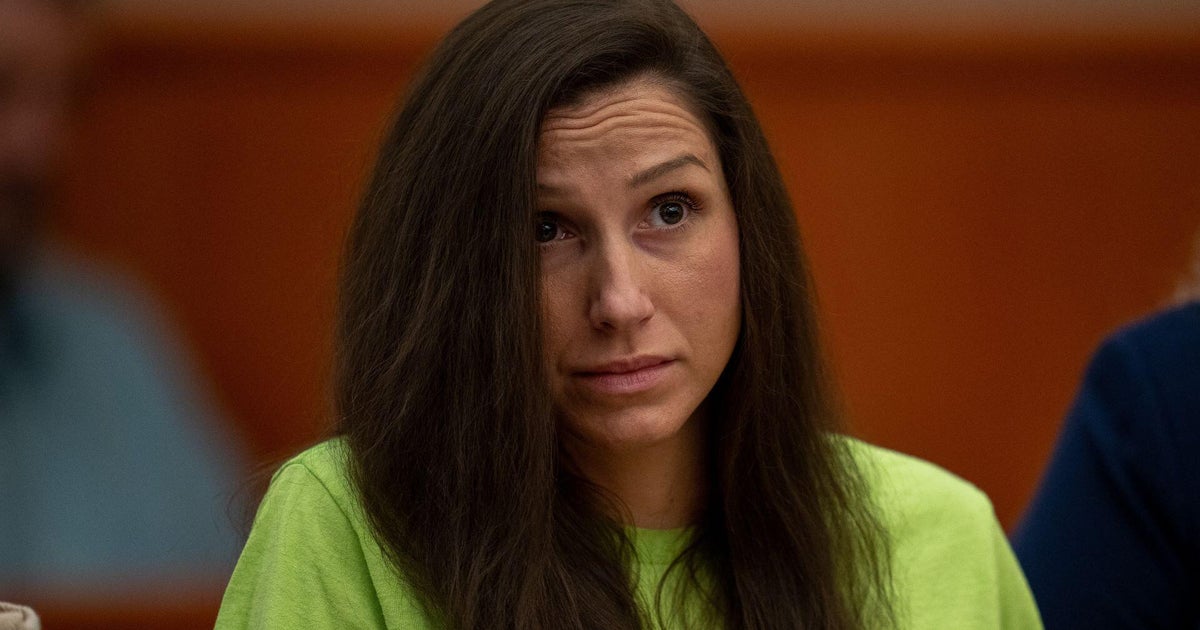
Two months later, on what would have been Eric Richins’ 44th birthday, Kouri Richins – now wearing a prison uniform – was back in court to receive her sentence.
Eric’s family gave heartfelt statements. His sister Amy emphasized the impact his loss has had on his three sons.
AMY RICHINS (in court): This crime didn’t just happen once. It happens every single morning when those boys wake up and realize their father’s still gone.
The boys were 5, 7 and 9 when their world was shattered. Today they are 9, 11 and 13, and through written statements read by each of their counselors, for the first time, the world got to hear from them.
The first statement read aloud was written by the youngest, Weston.
WESTON’S STATEMENT | Read by counselor #1: “When someone talks about Kouri, it makes me feel hateful and ashamed. She took away my dad. It’s made me have a hard time trusting people.”
The middle child, Ashton, called Kouri greedy and said she did not properly care for him and his brothers.
ASHTON’S STATEMENT | Read by counselor #2: ” … when we got hurt, you didn’t even care.”
He accused her of harming the family pets.
ASHTON’S STATEMENT | Read by counselor #2: You wouldn’t let me put my kitten in the garage for safety at night. And we found it eaten by raccoons the next day. You wouldn’t let us turn on and use the heater lamp for the chickens and bunnies, and they froze to death.
Carter, the oldest, said Kouri was often drunk and would lock him in his room.
CARTER’S STATEMENT | Read by counselor #3: “This happened pretty much daily. I feel angry that she locked me in my room. … I miss my dad, but I do not miss how my life used to be. I don’t miss Kouri. I will tell you that.”
All three boys asked the judge to give their mother, whom they only referred to as Kouri, the harshest possible sentence.
CARTER’S STATEMENT | Read by counselor #3 “… what she did is very sick …”
When it was their turn, Kouri’s friends and family pleaded for leniency. Her brother Ronnie.
RONNIE DARDEN (in court): … the injustice that’s occurred here in this courtroom, it’ll be righted in time. … And until then, little sister, just know … that I’m right by your side and I’ll always be right here for you. I love you.
Then Kouri Richins was allowed to speak. She did not testify at trial but now she approached the podium and used her time to address her kids.
KOURI RICHINS (in court): I will use any opportunity I can to get a message to you.
She says she has been cut off from them for the past two years.
KOURI RICHINS (in court): As much as you’ve been influenced into thinking that dad was murdered, that I took your dad from you, that is completely wrong and an absolute lie. … And just because someone may not be perfect, that’s a far reach for them to be capable of murder
Judge Mrazik had two options when considering Kouri Richins’ sentence — either 25 year-to-life with the possibility of parole or life in prison without parole — and he made it known he carefully considered each.
JUDGE RICHARD MRAZIK (in court): The Court’s duty is to make a decision, a weighty, long-lasting decision based on the best information available today. … Accordingly, Miss Richins … the Court hereby sentences you to life without parole.
For Eric’s family it was the end to a yearslong nightmare. Greg Skordas, the family spokesperson, says the true heartbreak is for the kids, who are now living with Eric’s sister Katie.
: I can’t think of anything worse as a child to lose your father, except to know that it was because of your mother. I mean, think about that.
Produced by Ruth Chenetz, Asena Basak and Betsy Shuller. Elena DiFiore and Ryan Smith are the development producers. Emma Steele is the field producer. Alicia Tejada is the coordinating producer. Megan Kelly Brown is the associate producer. Michael Vele, Richard Barber, Marcus Balsam, Marlon Disla and Greg Kaplan are the editors. Anthony Batson is the senior producer. Nancy Kramer is the executive story editor. Judy Tygard is the executive producer.