A Venezuelan man who was deported from the U.S. and detained in the notorious CECOT prison in El Salvador last year has become the first known ex-prisoner to sue the U.S. for damages, filing a lawsuit in federal court Tuesday seeking at least $1.3 million in compensation.
In an interview with CBS News, Neiyerver Adrián Leon Rengel, 28, described the months he spent at the prison as “total hell.”
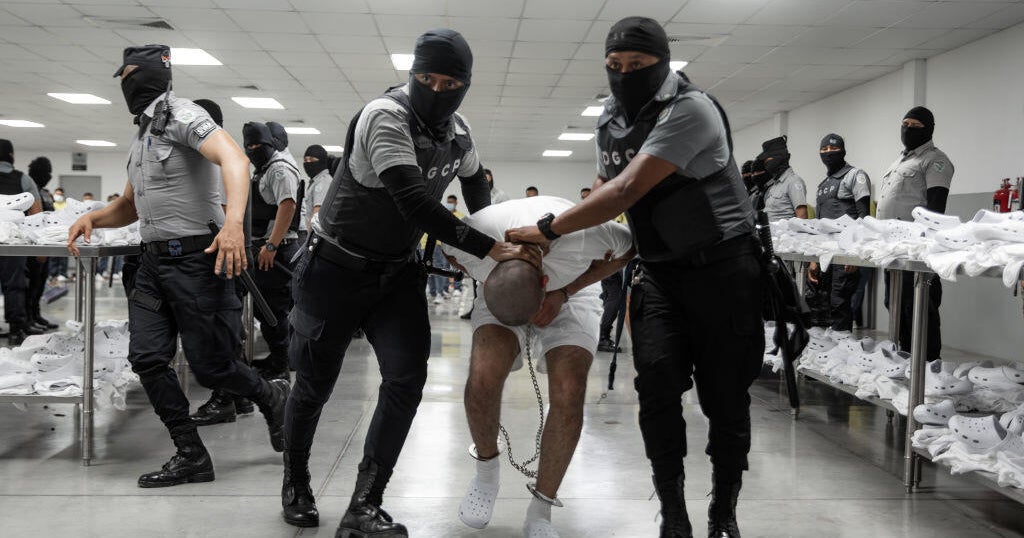
The Venezuelan man said he and his fellow detainees were constantly beaten and mistreated by prison guards. He recounted having to drink the same water he and other prisoners bathed in. Prison guards also told him he would be there for 90 years, he said.
“There came a point when I thought about hanging myself with the sheet they gave us,” Leon Rengel told CBS News in Spanish.
Leon Rengel was one of several hundred Venezuelan men deported by the U.S. to El Salvador, where they were held incommunicado in CECOT for roughly four months. They were freed in a prisoner swap in July 2025.
A report by researchers at Human Rights Watch found the CECOT prisoners endured months of physical and psychological abuse, including some cases of sexual assault. It determined that their time in CECOT amounted to “arbitrary detention” and “torture” under international law.
Leon Rengel’s lawsuit, filed in U.S. District Court for the District of Columbia, asks the court to award him at least $1.3 million for what his lawyers say was false imprisonment and intentional infliction of emotional distress.
“For four months, Plaintiff languished in CECOT, during which time he was beaten by guards, subjected to inhumane and overcrowded conditions as well as extreme psychological trauma, denied adequate medical care, and held without contact with his family or any legal counsel,” the first-of-its-kind lawsuit said.
The League of United Latin American Citizens, or LULAC, a civil rights group, helped Leon Rengel file the lawsuit, which follows an administrative complaint filed on his behalf with the Department of Homeland Security last year. The claims have been filed under the Federal Tort Claims Act.
“What happened to Adrián Rengel is government-sanctioned torture and a failure to recognize his humanity because he happened to be an immigrant,” said Juan Proaño, the chief executive officer at LULAC. “He deserves his day in court.”
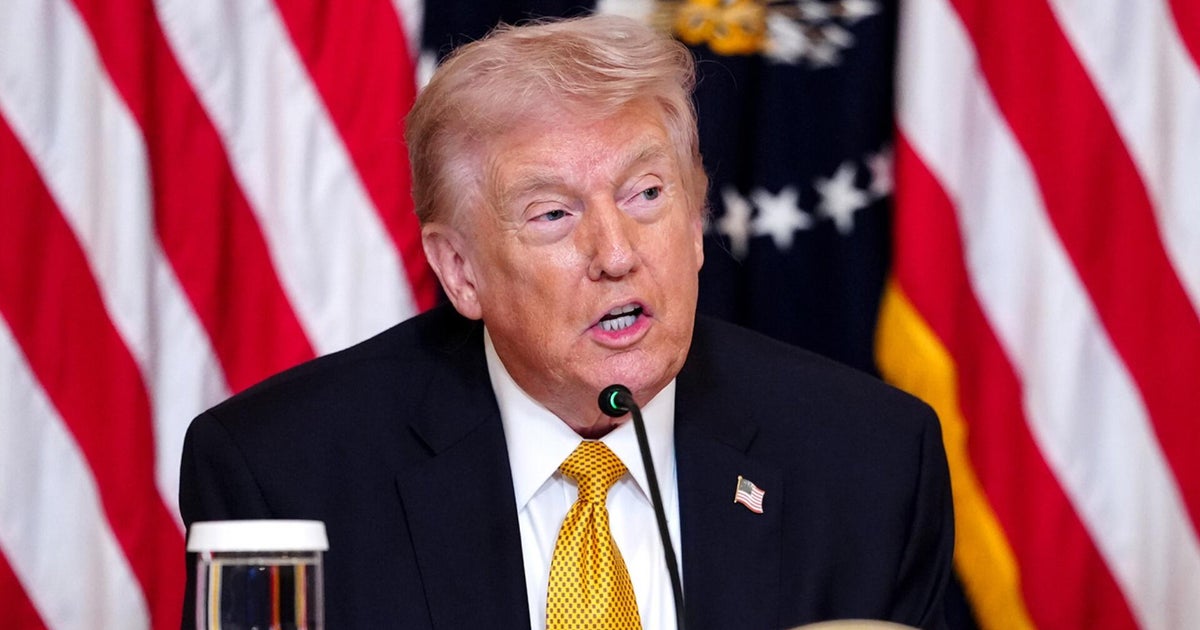
The Trump administration deported Leon Rengel and 237 other Venezuelan men to El Salvador in March 2025, part of a series of removals that garnered global attention and sparked a legal battle in the U.S.
The U.S. deported some of the men with little to no due process under a 1798 wartime law known as the Alien Enemies Act, accusing the men of being violent, dangerous criminals and members of the Tren de Aragua gang. The legality of the administration’s use of the wartime powers to summarily expel the deportees continues to be litigated in federal court.
Despite the administration’s claims, a “60 Minutes” and CBS News investigation found many of the Venezuelan deportees did not have any criminal record, and that the majority did not have charges or convictions for violent offenses. The men have also denied having gang ties.
After traversing the Darién Gap and several Latin American countries, Leon Rengel said he used a Biden administration program for asylum-seekers, called CBP One, to enter the U.S. in 2023 at an official entry point, with the government’s permission.
Leon Rengel was arrested once in the U.S. after a traffic stop and pleaded guilty to a misdemeanor for possession of drug paraphernalia in Texas, documents show. Leon Rengel said the car where the material was found was not his. He said he paid a small fine.
Beyond that misdemeanor, Leon Rengel’s lawyers said he has no criminal history, and that he was deported despite having an active immigration case and lacking a deportation order. Justice Department records reviewed by CBS News do not list a deportation order for Leon Rengel and show he had an immigration court hearing scheduled for April 2028.
Leon Rengel said he was identified as a Tren de Aragua gang member because of a tattoo on his left hand of a lion with a hair clipper on its mouth. He said he has cut hair in the U.S. and Venezuela, and denies having any gang ties. Other former CECOT prisoners have similarly said they were accused of gang membership because of their tattoos.
“I’ve never been a gang member, nor a member of a criminal group,” Leon Rengel said. “Never.”
In a statement to CBS News, DHS maintained that Leon Rengel has links to Tren de Aragua. But the agency declined to share evidence to support its claim, saying doing so would “undermine” national security.
“This illegal alien was deemed a public safety threat as a confirmed associate of the Tren De Aragua gang and processed for removal from the U.S.,” DHS said.
A federal judge in Washington, D.C., recently ordered the Trump administration to facilitate the return of the Venezuelan men deported under the Alien Enemies Act, starting with those in third countries like Colombia, so they can be given the due process he found they were denied in the U.S. That order is now under appeal after being challenged by the Justice Department.
But Leon Rengel, now back in Venezuela, said he’s not interested in returning to the U.S., given his experiences in immigration custody there. Instead, he said he’s focused on clearing his name.
He said his deportation and detention were violations of his “human rights.”
“We went to the United States, a country where all laws are followed, and they were obligated to follow the legal process,” he added.