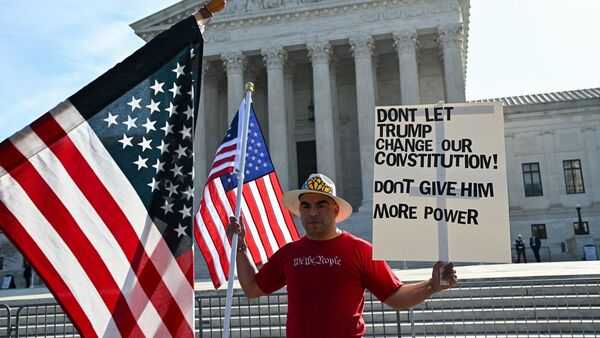
In a highly consequential case testing the limits of executive power, the on Wednesday (April 1) appeared skeptical of . The arguments were underscored by , marking the first time a sitting President has attended oral arguments at the nation’s highest court.
Trump remained for just over an hour, listening as Solicitor General D. John Sauer defended the administration’s position before departing shortly after opposing counsel began presenting.
Justices question legal and practical foundations
Both conservative and liberal justices pressed the administration on the constitutional and logistical basis of the policy. The seeks to deny citizenship to children born in the United States to parents who are either in the country unlawfully or temporarily.
Justice Ketanji Brown Jackson raised concerns about how such a policy would even function in practice.
“Is this happening in the delivery room?” she asked, highlighting uncertainties about how authorities would determine a newborn’s citizenship status in real time.
Other justices echoed doubts about the administration’s interpretation of the Constitution, particularly the Citizenship Clause of the 14th Amendment.
Focus on the 14th Amendment’s original purpose
Justice Clarence Thomas appeared more receptive to the administration’s argument, emphasizing the historical context of the amendment.
“How much of the debates around the 14th Amendment had anything to do with immigration?” Thomas asked, noting that its primary aim was to secure citizenship for formerly enslaved Black Americans.
However, the broader language of the amendment—granting citizenship to “all persons born or naturalized in the United States, and subject to the jurisdiction thereof”—has long been understood to apply universally, with only narrow exceptions.
Clash over legal precedent
At the center of the dispute is whether longstanding precedent should be overturned. , citing constitutional protections and the Supreme Court’s 1898 ruling in United States v. Wong Kim Ark, which affirmed for children born on US soil to noncitizen parents.
Sauer argued that the court should correct what he described as “long-enduring misconceptions about the Constitution’s meaning.” The administration contends that children of noncitizens are not fully “subject to the jurisdiction” of the United States.
Opponents strongly reject that interpretation.
“We have the president of the United States trying to radically reinterpret the definition of American citizenship,” said Cecillia Wang, representing challengers to the policy.
Policy context
The executive order, signed on Trump’s first day of his second term, is part of a wider immigration crackdown. If implemented, it could affect more than 250,000 babies born annually in the United States, including children of both undocumented immigrants and individuals legally present, such as students or green card applicants.
Despite the administration’s arguments, no court to date has upheld the order.
Decision expected by summer
The justices are reviewing an appeal from a New Hampshire ruling that blocked the policy. A final decision is expected by early summer and could redefine the scope of citizenship in the United States for generations.
Until then, remain on hold nationwide.