As high-stakes ceasefire negotiations between the United States and Iran are set to commence in Pakistan, conflicting media reports have emerged regarding whether talks will be direct or mediated through third parties. Although many observers expect an indirect format — where the two parties remain in separate rooms while Islamabad officials shuttle proposals back and forth, as reported by AFP — several other diplomatic arrangements remain under consideration.
According to the Xinhua news agency, a source indicated that is fully prepared for either possibility, whether facilitating face-to-face engagement or acting as a relay for messages between the two delegations. This uncertainty was further compounded by a report from Dawn, which characterized the upcoming talks as the “first direct high-level engagement” between Tehran and Washington since the 1979 revolution.
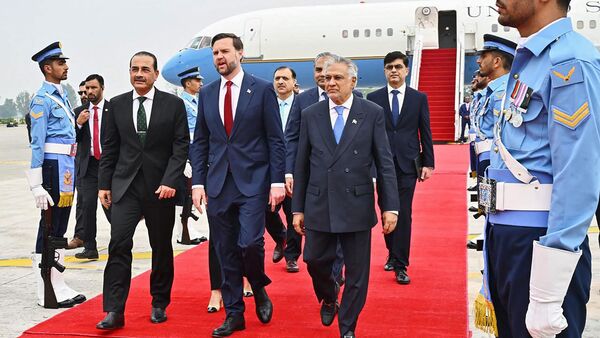
Top American and Iranian officials arrived in Pakistan on Saturday for the first round of talks on how to convert their two-week ceasefire into lasting peace.
As the US delegation led by Vice President JD Vance and the Iranian delegation led by Parliament Speaker Mohammad Bagher Qalibaf arrived in Islamabad, the ceasefire appeared fragile.
Delegations to meet with PM Sharif
Both the American and Iranian representatives have held separate preliminary meetings with Pakistani Prime Minister Shehbaz Sharif. Only following these initial consultations will the formal round of negotiations begin, according to Iran’s Mehr news agency.
While the U.S. team, led by Vice President JD Vance, and the Iranian delegation, headed by Parliament Speaker Mohammad Bagher Ghalibaf, have arrived in Islamabad, the official schedule remains subject to change. It is currently unclear when the formal sessions will start, though Iran’s Tasnim news agency suggested the Tehran delegation might meet with Sharif around 1:00 pm local time. Depending on the outcome of those talks, the main negotiations could proceed later on Saturday.
Tasnim also contradicted reports from CNN suggesting the talks would span several days, stating that current plans indicate the session will likely conclude in a single day, should it proceed as intended.
Pakistan Prepared for Mediation
Pakistan, having played a pivotal role in organising the summit, has convened a group of technical experts to support discussions on , nuclear protocols, and other critical sectors, a diplomatic source told AFP.
Prime Minister Sharif acknowledged the gravity of the situation, cautioning that “an even more difficult stage lies ahead” in the effort to resolve the conflict sparked by U.S.-Israeli strikes on February 28 and Iran’s subsequent response.
“This is that stage which… is called the equivalent of ‘make or break,’” Sharif said.
The proceedings are being monitored by regional stakeholders including Turkey and Egypt, alongside China. Beijing has notably been suggested as a potential guarantor for a final deal, though its specific involvement remains undefined. Amidst these preparations, Iran maintains that talks will not advance until its prerequisites, including a ceasefire in Lebanon, are addressed.