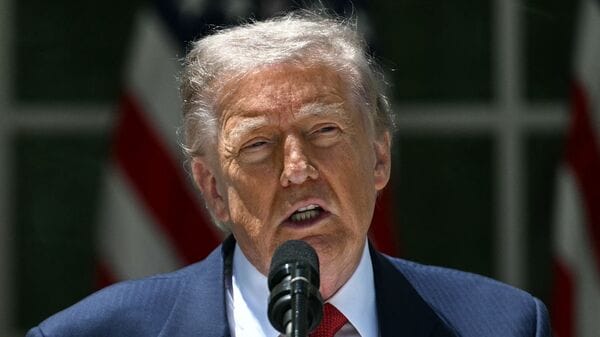
US President Donald Trump on Sunday (local time) said that negotiations with Iran for a peace deal are moving in an orderly and constructive manner, adding that the relationship between the two countries is becoming more professional and productive.
In a Truth Social post, Trump said, “The negotiations are proceeding in an orderly and constructive manner, and I have informed my representatives not to rush into a deal, in that time is on our side. The blockade will remain in full force and effect until an agreement is reached, certified, and signed. Both sides must take their time and get it right. There can be no mistakes! Our relationship with Iran is becoming a much more professional and productive one.”
He added, “They must understand, however, that they cannot develop or procure a Nuclear Weapon or Bomb. I would like to thank, thus far, all of the countries of the Middle East for their support and cooperation, which will be further enhanced and strengthened by their joining the nations of the historic Abraham Accords, and, who knows, perhaps the Islamic Republic of Iran would like to join, as well.”
The development comes a day after the US President announced that a peace deal with Iran is “largely negotiated” and hinted that the Strait of Hormuz will be reopened once again.
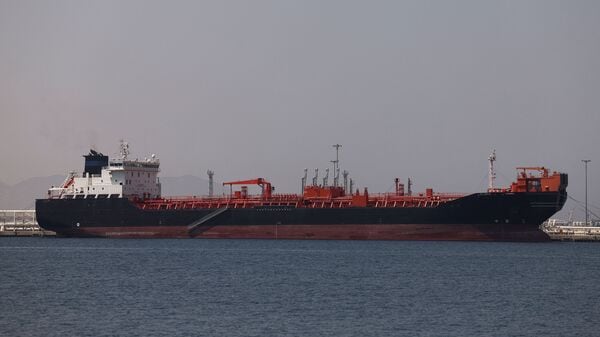
Washington has imposed a blockade on Iranian ports since April 13 after Tehran virtually halted traffic through the economically vital Strait of Hormuz in response to the US-Israeli attacks on Iran that began on February 28.
Trump’s comments came as bipartisan opposition mounted in Washington overnight, with several current and former lawmakers and officials criticizing aspects of the deal that had reportedly begun to leak.
Trump slams Barack Obama
Trump also slammed his predecessor, former President Barack Obama, accusing him over the nuclear weapon deal with Iran. He wrote, “One of the worst deals ever made by our Country was the Iran Nuclear Deal, put forth and signed into existence by Barack Hussein Obama and the rank amateurs of the Obama Administration. It was a direct path to Iran developing a Nuclear Weapon.”
US-Iran at odds over a peace deal?
Earlier, US Secretary of State Marco Rubio said there may be “some good news” regarding the blocked Strait of Hormuz in the coming hours, as Iran and Washington press ahead with peace negotiations.
Rubio, who is in India for a four-day visit from May 23, told reporters on Sunday, “Some progress has been made,” and added, “I don’t want to downplay that, but I also want to caveat it by saying we still have some work to do.”
However, Iranian media and officials have been more circumspect. Washington and Tehran are still at odds over “one or two provisions,” the semi-official Tasnim news agency reported, citing an “informed source.” The Fars agency, meanwhile, dismissed Trump’s claims as “far from reality,” without citing anyone.
According to an Axios report, the agreement would involve a 60-day extension of the current ceasefire, during which the strait would be reopened, and Iran would be allowed to sell its oil. Further negotiations would follow on Tehran’s nuclear program.
Trump yet to announce aspects of the deal
While the White House has not released details of the deal, Iran Foreign Ministry spokesman Esmaeil Baqaei said on Saturday on state television that the two sides were nearing “a memorandum of understanding, a kind of framework agreement composed of 14 clauses,” in what he described as “a trend toward rapprochement.”
As the US President is yet to disclose details of the deal, an AP report, citing regional sources familiar with the development, suggested what the potential deal could include.
The deal could potentially include Tehran’s commitment not to pursue a nuclear weapon and agreement to give up its stockpile of highly enriched uranium.
The Strait of Hormuz will be reopened gradually, along with Washington ending its blockade of Iran’s ports.
Additionally, the US will allow Iran to sell its oil via sanction waivers. Sanctions relief and the release of Tehran’s frozen funds will be discussed during the 60-day time frame.
The US and Iran appear to be moving closer to a potential framework agreement, though key differences remain unresolved amid growing political scrutiny in Washington.