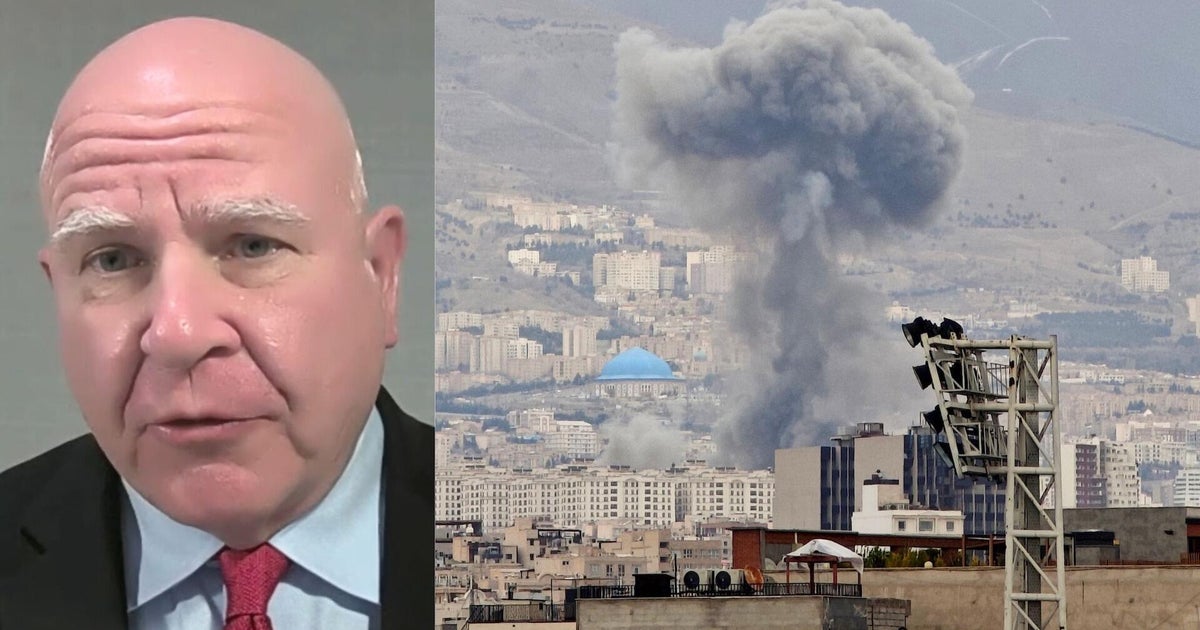
With the U.S. military on high alert amid the Iran war, there’s a national security crisis closer to home: the state of the American shipbuilding industry.
The nation’s naval shipbuilding program is bloated and slow, and commercial shipbuilding is near non-existent. Hanwha, which owns one of the only U.S. shipyards still building large commercial cargo ships, has its main shipyard in South Korea. While the Hanwha in Philadelphia rolls out around one ship a year, a South Korean Hanwha shipyard makes one a week.
Michael Coulter, Hanwha’s top executive in charge of U.S. operations, says there’s a reason the U.S. shouldn’t just buy all of its ships from Korea.
“That doesn’t solve the problem. At the end of the day, shipbuilding is a national security necessity,” Coulter said. “The U.S. needs to be able to secure our own commerce. We need to be able to export our own energy.”
Not building ships in the U.S. is considered both an economic and national security threat because if there’s a conflict with China, for instance, it could weaponize its substantial merchant fleet and cut the U.S. off from global goods.
The languishing shipbuilding industry also impacts the U.S. liquid national gas industry. The U.S. is the largest producer of natural gas, yet it doesn’t have any ships to transport it, according to Coulter. The Jones Act, a century-old law, requires any cargo shipped between U.S. ports to be on an American-made ship.
With no American-made LNG ships, the U.S. is able to export liquid natural gas on foreign carriers to over 30 countries, but is unable to send it to other parts of the U.S., according to Colin Grabow, a trade expert at the CATO Institute, a libertarian think tank.
“You might think, ‘Well, seems like an easy problem to solve. Go build the ship, transport the gas,'” Grabow said. “Except the math doesn’t work. If you want to build one of those ships in Asia, the cost is around $260 million; here in the United States? About $1 billion!”
This week, with the Iran war impacting prices, President Trump temporarily suspended the Jones Act, easing the transport of oil and gas within the U.S. Last year, he made solving the ship crisis a national priority, signing an executive order calling for an action plan.
“No president has done more to bolster American maritime power,” the White House said in a March statement to 60 Minutes.
The U.S. was once a global powerhouse when it came to building ships, but the industry atrophied due to a half century of shortsighted policies and neglect.
The Philadelphia shipyard, now owned by Hanwha, was once a symbol of American might and innovation. Ships built there helped the U.S. win its independence in the 18th century, and WWII in the 20th.
Today, it’s become a symbol of American industrial decline, a money loser falling decades behind global rivals. The yard still uses a crane from 1942.
Hanwha bought the Philadelphia shipyard in 2024 for $100 million, then poured in another $100 million and tasked David Kim, a Korean American born in Texas, to bring the yard into the 21st century. The company plans to spend $5 billion in Philadelphia. The hope is to eventually make 20 ships a year at the yard.
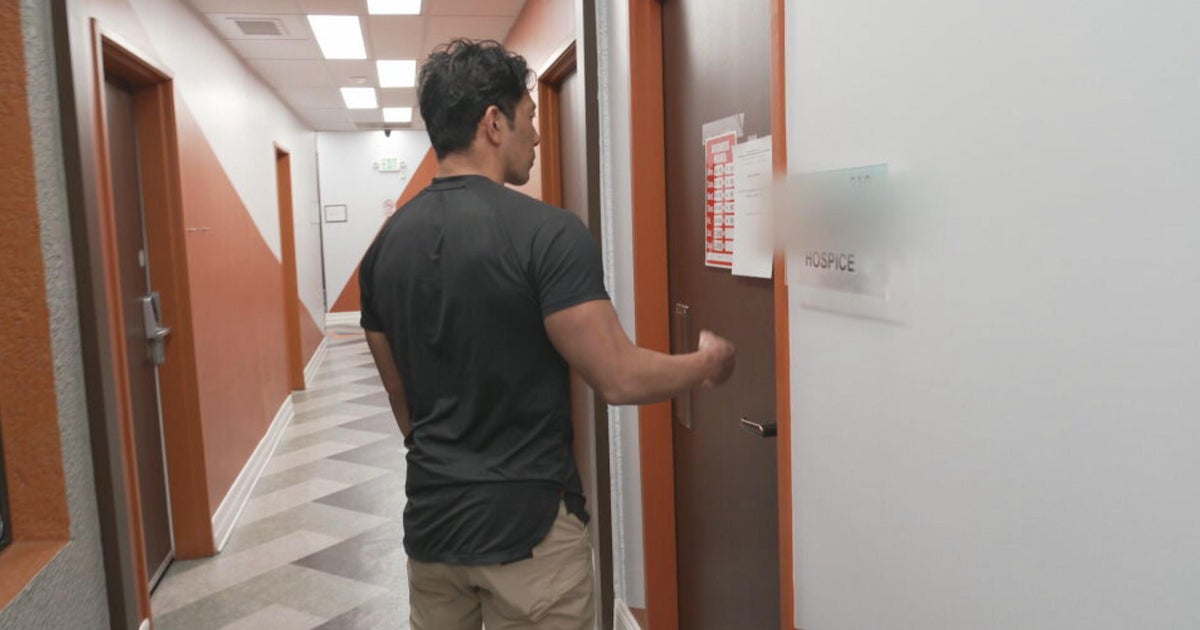
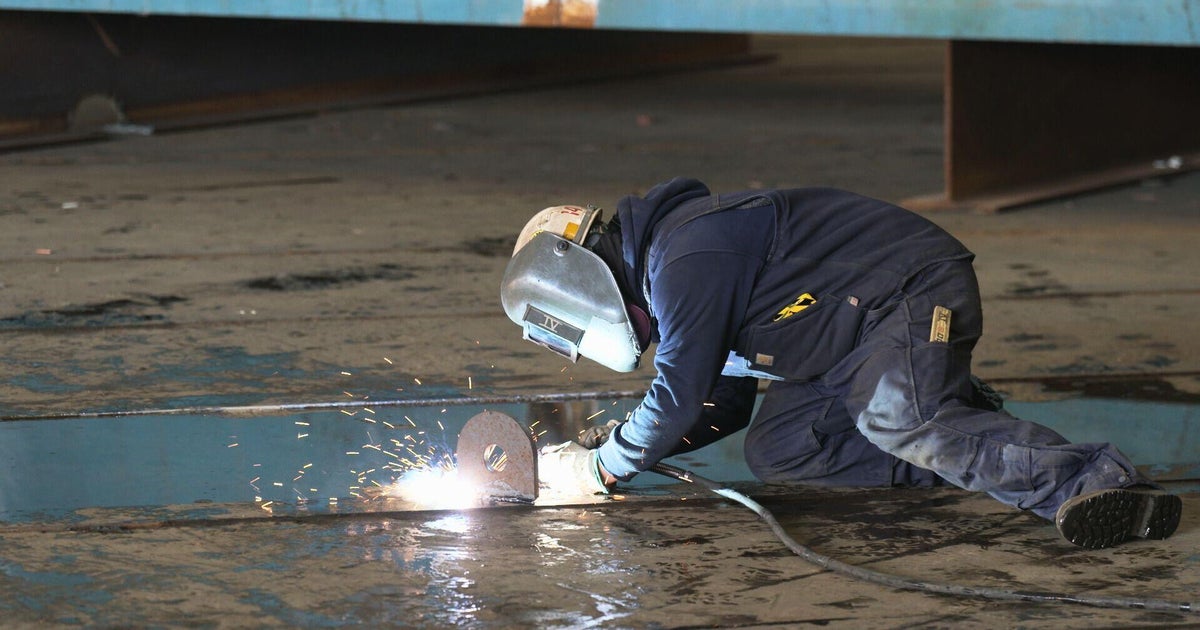
As part of a push to revitalize shipbuilding in the U.S., Hanwha sent 50 trainers from South Korea to Philadelphia to help teach U.S. workers. American shipyards have long faced a shortage of skilled labor, including welders and pipe fitters, in part because the work is grueling and dangerous. There’s a three year training program at the shipyard.
Jeff, one of the trainees participating in the program, said the work leaves him tired but he finds it “fulfilling” because it feels like he’s “part of something bigger.”
Kim said that in two years, visitors to the yard will see a workforce that has grown by 7,000 to 10,000 people. They can also expect robots and automated equipment. At the Korea shipyard, rows of robots are at work and the human workforce is expanding. The yard is training 400 people at once, way more than the 20 the program can train at a time in the U.S.
Coulter said the way to lower prices is to scale up production. At Hanwha’s Korea shipyard, nine ships are built at once. Pieces of ship the size of football fields slot together like pieces of Lego.
The Hanwha Korea yard also builds military vessels, including submarines, which the U.S. desperately needs. Hanwha offered to build submarines for the U.S. as the company does in Korea.
“The submarine program in the United States is heading in the wrong direction, and we think we can help,” Coulter said.
The South Korean trainers teaching potential U.S. workers needed visas to come to the U.S. Last September, Immigrations and Customs Enforcement raided a Korean battery plant in Georgia, dragging off 300 Korean technicians and engineers in handcuffs and chains, alleging visa violations.
It caused a backlash in Korea.
“We’ve been assured that our visas are the right visas and our team is not going to be impacted,” Coulter said.
Mr. Trump’s focus on immigration enforcement and restriction of visas for foreign workers impedes efforts to help the shipbuilding industry, Grabow said.
“Traditionally, a lot of immigrants have been willing to do this kind of work,” he said. “And yet, we are turning our back on immigration and adopting a more hostile stance.”
The president also put a 50% tariff on steel, which is the main component in ships.
“This is one of the paradoxes of the Trump administration,” Grabow said. “We’re artificially increasing the cost of building ships in this country.”
While there’s no tariffs on American steel, producers in the U.S.will likely raise their prices to match the cost of the imported steel.
“These are profit-oriented enterprises,” Grabow said.
While Grabow argues the U.S. should just buy and use ships from South Korea, the White House is committed to making ships in the U.S.. So last year, when Mr. Trump threatened to put tariffs on Korean imports, Korea’s president offered instead to invest $150 billion to revive the U.S. shipbuilding industry, promising Philadelphia was just the start.
“There’s no doubt that we have challenges and headwinds, but I also think we have a unique moment in time,” Coulter said.