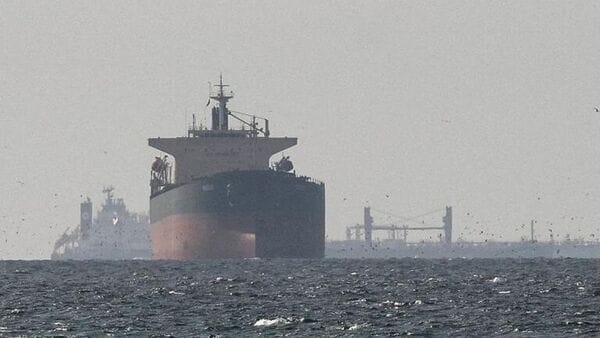
In a significant development, a container ship signaling French ownership exited the on Friday. It is apperently the first known transit by a Western European vessel since the Iran–US-Israel conflict effectively halted traffic through the crucial waterway.
A Bloomberg report said, the CMA CGM Kribi sailed from waters off Dubai toward Iran on Thursday afternoon local time, signaling that its owner was French, according to ship-tracking data. It stuck close to the Iranian coast, moving through a channel between the islands of Qeshm and Larak, openly broadcasting its journey. On Friday morning, it signaled that it was off Muscat.
The Maltese-flagged vessel belongs to CMA CGM SA, the world’s third-largest container line, which is majority-owned by the billionaire Saadé family. The founder immigrated to France from war-torn Lebanon and started the line in 1978, in Marseille, with one leased vessel. It can carry about 5,000 twenty-foot equivalent units, or TEUs, and draft readings show it’s sitting low in the water, indicating that it’s filled with cargo. The company has said 14 of its ships have been stuck in the Persian Gulf and unable to pass through the strait.
The company and the French ministry of foreign affairs declined to comment.
Three Omani ships seen entering Strait of Hormuz
Meanwhile, three tankers signalling Omani ownership appeared to enter the Strait of Hormuz by staying close to their country’s coastline, indicating a different route to a northerly path through Iranian waters, another Bloomberg report said.
Two oil supertankers and a liquefied natural gas vessel headed east into the strait on Thursday, based on the satellite signals they were broadcasting. All three vessels are managed by Oman Ship Management Company, according to the Equasis marine database. The company couldn’t be reached for comment.
has tightened its grip over Hormuz since the attacked the country on Feb. 28, reducing shipping to a trickle through a chokepoint that normally handles about a fifth of the world’s oil and liquefied natural gas. Tehran has allowed some ships from friendly nations to transit a pre-approved route while threatening to strike vessels allied to the US or Israel. Pakistan, for example, reached a deal for 20 ships to cross under its flag, and other Asian nations have also secured safe passage.
European states, including France, are making initial diplomatic efforts to ease the crisis, but so far no progress has been reported. President Emmanuel Macron, said on Friday on a trip to South Korea that France will work to stabilize the situation in Hormuz, “once the bombardments have ceased.”
(ith inputs from Bloomberg)