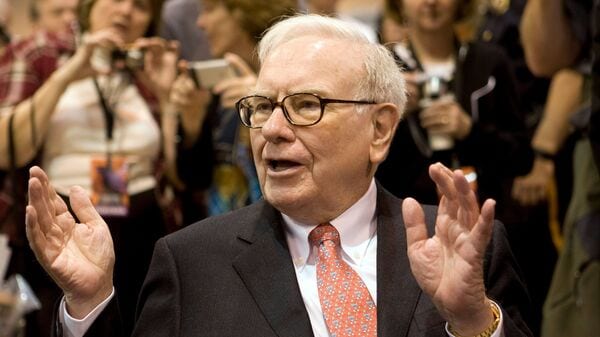
Wealth often brings admiration. But it also brings responsibility. Few investors have made that point as clearly as Warren Buffett, Chairperson of Berkshire Hathaway, one of the world’s most successful and influential investors.
Buffett built his fortune through disciplined investing. Over time, he also became a strong voice for philanthropy and social responsibility.
Quote of the Day
“If you’re in the luckiest one per cent of humanity, you owe it to the rest of humanity to think about the other 99 per cent,” Warren Buffett
Buffett has shared versions of this idea in multiple public talks and interviews, especially when discussing philanthropy and the philosophy behind the
What it means
The Quote of the Day by Warren Buffett has a clear message: success is not only personal; it is also shaped by luck.
Factors such as where you are born, access to education, timing and market conditions all play a role. Buffett has often said he was “lucky” to be born in the United States at the right time.
This quote builds on that idea. It suggests that those who benefit from favourable conditions also carry a responsibility — not guilt, but responsibility, he shares.
His saying raises a simple question: who truly benefits from success? Buffett has often said that for him, wealth is not just a reward; it is a resource to be used wisely.
Why it resonates today
The idea feels more relevant now as wealth gaps are widening and public expectations from business leaders are changing. People no longer look at success in isolation. They look at impact.
Buffett has acted on his belief. He has donated billions of dollars to foundations over the years, reinforcing his words with actions.
How to apply this in your life
- Recognise your advantages: Acknowledge the role of luck and access in your journey.
- Give consistently: Set aside a portion of your income for meaningful causes.
- Think beyond yourself: Consider how your decisions affect others.
- Mentor others: Share knowledge with people who lack access.
- Build impact into work: Support initiatives that create wider value.
- Review your contribution: Track what your time, money or effort achieves.
Warren Buffett’s career
Buffett was born in Omaha, Nebraska, in 1930. He showed an early interest in business and investing.
He took control of Berkshire Hathaway in 1965. At the time, it was a struggling textile company. Buffett transformed it into a global investment powerhouse.
Over the decades, he built a reputation for long-term investing. He focused on strong businesses, simple ideas and patience.
He stepped down as CEO at the end of 2025. took over the role in January 2026. Buffett continues as chairman.
Warren Buffett’s education
studied at the University of Nebraska. He later attended Columbia Business School.
At Columbia, he learned under Benjamin Graham. Graham’s ideas shaped Buffett’s investment philosophy. Concepts such as value investing and the margin of safety became central to his approach.
Warren Buffett’s family life
Buffett was born into a business-minded family. His father, Howard Buffett, was a stockbroker and later a US congressman.
His father’s work exposed him to markets early. It also shaped his discipline and interest in investing.
Buffett was married to Susan Buffett until her death. He later married Astrid Menks. He has three children. Despite his wealth, he is known for a modest lifestyle.
Final word
Buffett’s idea is simple but powerful. Success is not just about accumulation. It is about contribution.
The real measure of wealth lies in how it is used.
(Disclaimer: The first draft of this story was generated by AI)