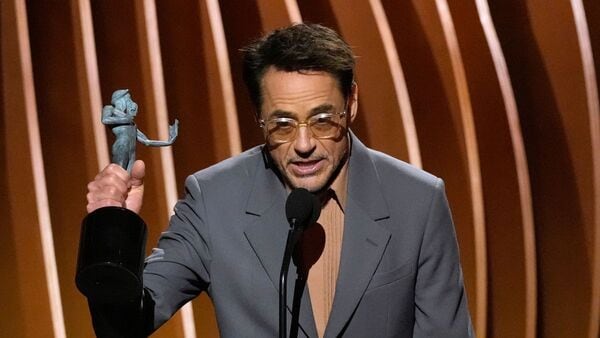
Robert Downey Jr. was born in New York City in 1965 and rose early as one of Hollywood’s most gifted actors, earning acclaim for films like Chaplin. Years later, he became globally synonymous with Tony Stark in the Iron Man and broader Marvel franchise. His journey, however, was far from linear. Addiction struggles, legal troubles, and professional setbacks marked his public life before a remarkable comeback reshaped his career. In 2024, that second act reached its peak when he won the Academy Award for Best Supporting Actor for Oppenheimer.
Primary quote
“I think you end up doing the stuff you were supposed to do at the time you were supposed to do it.”
— Robert Downey Jr.
This line is widely attributed to Downey Jr., though its original interview source remains unclear. It is best understood as a well-circulated quote rather than one tied to a specific archival reference.
Meaning of the quote
At first glance, the quote sounds almost fatalistic, as if life follows a fixed script. But a more grounded reading suggests something calmer: not every chapter arrives on schedule, and some only make sense in hindsight. The idea here is not passivity, but trust in timing.
In careers, creativity, and personal growth, this matters deeply. People often panic when progress appears delayed or uneven. Downey Jr.’s perspective suggests that detours, setbacks, and late breakthroughs do not necessarily mean you are off track. Sometimes, they are the track.
His own life reinforces this idea. The period for which he is most admired came after years that many would have assumed had permanently derailed his future. That lends the quote unusual credibility.
The deeper principle is patience without surrender. It does not justify drifting aimlessly; instead, it encourages persistence without obsessing over perfect timing. Some outcomes only become possible when a person has lived enough, failed enough, or changed enough to handle them.
Why this resonates today
The quote feels especially relevant in today’s world, where careers are increasingly nonlinear. The World Economic Forum estimates that 39% of core job skills will change by 2030, forcing many people to reskill and reinvent themselves rather than follow a single path.
At the same time, attitudes toward work are shifting. A 2025 report by Ernst & Young found that a majority of young adults expect to work across multiple organisations during their lifetime. The idea of one clean career ladder is fading.
In that context, Downey Jr.’s words feel less philosophical and more practical. The fear of being “behind” loses relevance. The more useful question becomes whether you are still becoming someone capable of meeting the opportunity when it arrives.
Another perspective
“Listen, smile, agree, and then do whatever you were going to do anyway.”
— Robert Downey Jr.
This second quote, often featured in publications like The Economic Times, adds another layer. If the first quote is about timing, this one is about inner direction.
Together, they form a balanced idea: be patient, but not passive; stay open, but do not lose your sense of self. Life may unfold in its own rhythm, but you still need judgment to move through it without being swayed by every external voice.
How to apply this thinking
First, stop comparing timelines. Measure your progress against your own growth, not someone else’s highlight reel.
Second, treat setbacks as preparation. Ask what they are building in you—skills, resilience, or clarity.
Third, keep learning during slow phases. Use quieter periods to deepen your craft.
Fourth, stay flexible but honest about direction. Your path can change form without losing meaning.
Fifth, avoid panic decisions. Not every delay requires a dramatic pivot.
Finally, build readiness. If the right opportunity arrived soon, what would you need to strengthen to meet it well?
Final thought
“The future depends on what you do today.”
— Mahatma Gandhi
This adds a necessary counterbalance. Downey Jr. reminds us not to fear imperfect timing; Gandhi reminds us that timing is still shaped by action. Together, the message is simple: trust the unfolding of your life, but earn your place in it through what you do now.
(The original draft of this copy is AI-generated)