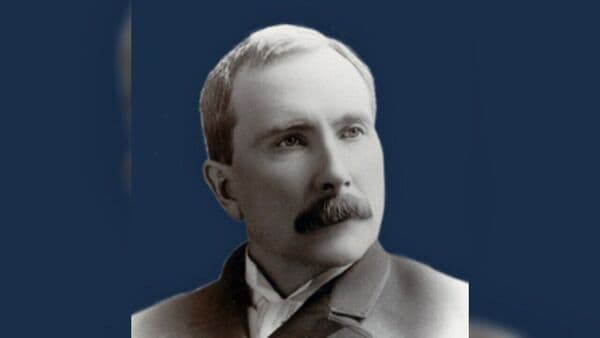
was born in 1839 in Richford, New York, and he moved with his family to Ohio, where he worked first as a bookkeeper, and entered the oil business in the early 1860s as petroleum refining took off around Cleveland. He built Standard Oil into the dominant force in the US oil industry, helped create one of the first major American trusts, and became the central figure behind one of the largest fortunes in modern history. After stepping back from active business leadership in the 1890s, he focused increasingly on organized philanthropy, helping found or endow institutions such as the University of Chicago, the Rockefeller Institute, and the Rockefeller Foundation.
“If you want to become really wealthy, you must have your money work for you. The amount you get paid for your personal labour never ultimately makes you rich.”
— John D. Rockefeller
Meaning of the Quote
At its core, the quote draws a line between earning and compounding. Rockefeller is not dismissing work; he is distinguishing between labor income and capital income. Wages, salaries, and fees can improve your standard of living, but they are naturally constrained by time, energy, and bargaining power. Wealth, in the deeper sense, begins when money stops being only something you receive and becomes something that produces more value on its own.
In a business context, that means assets matter more than effort alone. Ownership, productive investment, reinvestment, and systems that scale beyond your own hours are what separate a comfortable income from enduring wealth. The quote therefore pushes readers away from a purely “work harder” mindset and toward a “build something that keeps working” mindset.
The underlying principle is leverage. Rockefeller’s own career was built not only on personal industry, but also on control of refining, transport, scale, and organization. The wider lesson for leaders and investors is that effort may start the journey, but structure is what multiplies it.
Table of content 9
Why This Quote Resonates
The quote feels relevant now since modern wealth-building is increasingly being framed around disciplined investing rather than wages alone. SEBI’s 2025 Investor Survey says reforms such as tokenisation and micro SIPs are helping turn small, regular savings into structured long-term wealth-building, especially for investors with limited capital. That is almost a contemporary restatement of the Rockefeller idea: wealth grows when money is put to work systematically instead of sitting idle.
Recent Indian data reinforces the point. AMFI’s February 2026 monthly note said SIP contributions remained at ₹29,845 crore, SIP assets rose to ₹16.64 lakh crore, and 65.72 lakh new SIPs were registered during the month. In other words, millions of people are already acting on a version of Rockefeller’s philosophy by trying to convert earned income into recurring, compounding capital.
That is why the quote still lands in today’s business environment. In an era of inflation anxiety, career volatility, and AI-led disruption, people are increasingly aware that salary growth alone may not be enough. The more durable goal is to create financial engines that continue to work even when you are not actively trading hours for money.
Another perspective
“The only thing which is of lasting benefit to a man is that which he does for himself.”
— John D. Rockefeller, Random Reminiscences of Men and Events (1909)
This second quote usefully complicates the first. The primary quote can sound like a celebration of passive wealth; the second reminds us that durable gain still rests on personal discipline, judgment, and self-development. Rockefeller is not saying people should escape effort. He is saying effort should be directed toward building capacity, ownership, and sound habits instead of remaining trapped only at the wage level.
Together, the two quotes create a fuller wealth lesson. Make your money work for you, yes — but first become the kind of person who can earn, allocate, and protect capital intelligently. One quote is about leverage. The other is about character. Real wealth usually needs both.
Here’s how you can implement this
Automate one monthly transfer into a long-term investment vehicle so part of every pay cycle starts working before you can spend it.
Track your net worth, not just your salary, by reviewing assets, liabilities, and investment growth once a month.
Reinvest windfalls such as bonuses, incentives, or freelance income into productive assets instead of letting lifestyle creep absorb them.
Build one income stream not tied directly to your hours, such as dividends, index investing, a digital product, or a scalable side business.
Study compounding for 20 minutes each week so your financial decisions are driven by math and patience rather than short-term excitement.
Audit every major purchase by asking a Rockefeller-style question: will this expense impress me briefly, or will this capital serve me repeatedly?
Disclaimer: The first draft of this copy was AI-generated