“What we do in life echoes in eternity.”
-George Eastman
Meaning of the quote
This quote maps well onto Eastman’s life. In a business context, it suggests that the most important work is not the immediate transaction, but the system, institution, or habit you leave behind. Eastman did not merely sell cameras; he changed who photography was for. He simplified a specialist craft into a mass habit, and that is exactly the kind of action that “echoes” far beyond its first market moment.
The deeper principle here is legacy through usefulness. Leaders often imagine legacy as reputation, but Eastman’s career points to a harder standard: make something more accessible, more repeatable, and more humane than it was before. His impact lasted because he built convenience, scale, and follow-through into the product itself. In that sense, enduring influence is rarely abstract. It is usually engineered into everyday life.
Why this quote resonates
The quote feels especially relevant now because many organizations are struggling to hold onto a credible long-term story while navigating short-term disruption. PwC’s Global Workforce Hopes and Fears Survey 2025 says employees are less likely to believe in their organization’s long-term goals and in leadership’s ability to achieve them; it adds that leaders who articulate a consistent vision and connect it to achievable milestones can build confidence and credibility. S&P Global’s 2026 sustainability trends report describes the same tension at a strategic level, saying businesses are balancing near-term priorities with long-term realities.
That is why this legacy-centered idea lands now. In an AI-shaped, high-pressure environment, leaders are being judged not only on quarterly performance but on whether they are building something durable enough to outlast the moment. Eastman’s example remains relevant because he combined near-term execution with a long-view mission: make photography radically easier, then back institutions that would outlive him.
How you can implement this in your life
Audit one customer journey this week and remove a step that creates effort without adding value.
Define your long-term echo by writing one sentence that answers: “What should still be better because we existed?”
Simplify one product, report, or workflow until a first-time user can understand it without extra explanation.
Translate strategy into milestones by giving teams one 12-month goal, one 90-day target, and one action for this week.
Invest in one institution beyond the business itself, such as training, education, or community capability, that can outlast a campaign cycle.
Measure legacy in practical terms by tracking not only revenue, but also access, ease, trust, and repeat usefulness.
About George Eastman
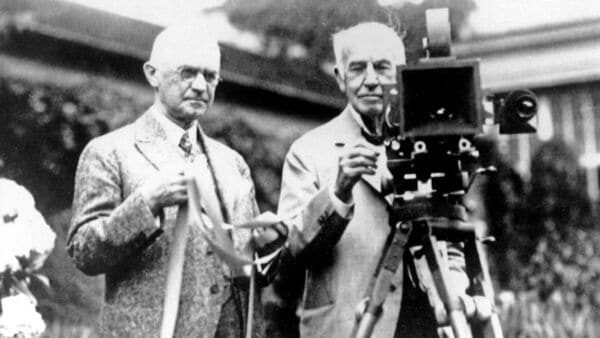
George Eastman was born in 1854 in Waterville, New York, left school at 14 after his father’s death, and began working to support his family in Rochester. A vacation camera he never actually used sparked his obsession with fixing photography’s weight, cost, and complexity; after years of experiments in his mother’s kitchen, he patented a dry-plate coating machine in 1880 and built the company that became Eastman Kodak.
His real breakthrough was not just inventing products, but turning photography into something ordinary people could actually use. Later in life, he became one of the major philanthropists of his era, funding educational, medical, and arts institutions, including the Eastman School of Music.