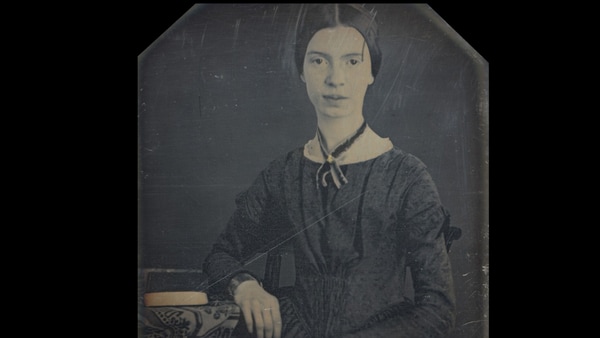
Quote of the Day by Emily Dickinson: ‘Hope’ is the thing with feathers —That perches in the soul — And sings the tune without the words — And never stops — at all.”
This celebrated verse, drawn from one of her , presents hope not as something loud or declarative, but as a quiet, persistent force. Emily Dickinson likens hope to a small bird that resides within the soul, continuing its song even in the absence of words or certainty. The metaphor suggests that hope does not depend on external validation or ideal circumstances; rather, it is an internal, self-sustaining presence.
In today’s context of rapid change, , and global uncertainty, Dickinson’s imagery feels especially relevant. Her idea of hope aligns less with dramatic optimism and more with steady endurance — the ability to keep going even when clarity is lacking. It highlights a form of resilience that is subtle yet powerful, one that operates beneath the surface but sustains individuals through periods of doubt and difficulty.
The quote also carries a broader lesson for leadership and decision-making. Just as the bird continues to sing through storms, individuals and organisations alike benefit from maintaining a sense of purpose and direction during challenging times. Hope, in this sense, becomes a practical force — one that fuels persistence, stabilises morale, and keeps momentum alive even when outcomes remain uncertain.
Another line by Dickinson, “I dwell in Possibility —”, complements this idea by emphasising openness and imagination. Together, these thoughts suggest that resilience is not only about enduring hardship but also about remaining receptive to new opportunities and perspectives.
Ultimately, Dickinson’s words serve as a reminder that hope is not always visible or loud. Often, it is the quiet, continuous presence within that helps people navigate complexity and build toward the future, one moment at a time.
Who is Emily Dickinson?
According to Britannica, Emily Dickinson remains one of the most distinctive voices in literary history, widely regarded alongside Walt Whitman as a defining figure of 19th-century Known for her reclusive life in Amherst, Massachusetts, Dickinson produced nearly 1,800 poems, though only around 10 were published during her lifetime.
Despite her limited public presence, Dickinson maintained an active private correspondence, sharing many of her poems with friends while keeping the majority unpublished. Her work departed sharply from conventional poetic forms. Drawing loosely on hymn and ballad structures, she employed short lines, unconventional punctuation, and innovative off-rhymes — a style some scholars trace partly to the influence of 18th-century hymnist Isaac Watts. Her poetry often defied standard grammar and structure, favouring compressed expression, striking imagery, and a deeply personal, sometimes enigmatic voice.
Early life
Born into a well-established family, Dickinson was the second of three children. Her grandfather, Samuel Fowler Dickinson, played a key role in founding Amherst College, while her father, Edward Dickinson, was a prominent lawyer and briefly served in the US Congress. Her mother, Emily Norcross Dickinson, came from a respected local family. Although her upbringing was comfortable, it was also shaped by a strict and reserved household environment.
Dickinson shared a particularly close, if complex, bond with her siblings, Austin and Lavinia. Both sisters remained unmarried and lived at home, while their brother resided next door after marriage. It was only after Dickinson’s death that her family fully grasped the extent of her literary output and dedication.
As a child, Dickinson was often described as physically fragile and spent periods away from school. She later attended Amherst Academy, where she excelled academically, particularly in composition, Latin, and the sciences. Her interest in botany led her to create a detailed herbarium of pressed plants labelled in Latin. However, her brief time at Mount Holyoke Female Seminary proved less successful. She found the institution’s strict discipline and intense religious environment uncongenial, and did not return after her first year.
Religion played a significant role in Dickinson’s early life, shaped by the evangelical Calvinism prevalent in her community. However, she gradually distanced herself from orthodox practices and was the only member of her family not to formally join the local church. Influenced in part by the ideas of Ralph Waldo Emerson and the broader movement of Transcendentalism, Dickinson developed a more personal and symbolic approach to faith, often exploring themes of immortality, nature, and the transcendent in her poetry.
Today, Dickinson’s work is celebrated for its originality, intellectual boldness, and emotional depth — qualities that went largely unrecognised during her lifetime but have since secured her place among the greatest poets in the English language.
(Disclaimer: The first draft of this story was generated by AI)