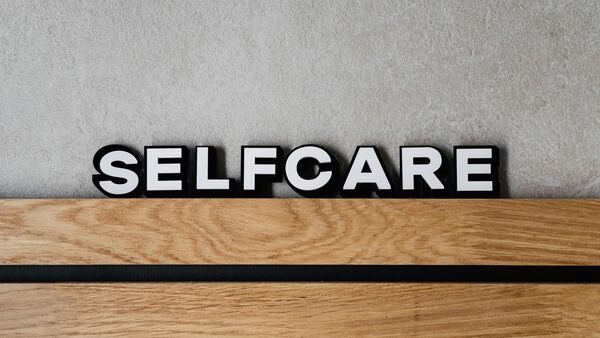
“Self-care is not selfish. You cannot serve from an empty vessel.” – Eleanor Brown
For World Health Day, April 7, LiveMint’s quote of the day urges the world to stop, recalibrate, and to make personal well-being a top priority.
is not merely the absence of disease, but a fundamental human right, and this quote by Eleanor Brown serves as a foundational principle of wellness.
Eleanor challenges the common misconception that prioritising one’s own well-being is an act of neglect toward others, and embraces the idea that a healthy body is actually a functional requirement.
With this quote, she is reminding us that taking a break isn’t “quitting,” it’s reloading.
What does the quote mean
Eleanor Brown acknowledges that in many cultures and professional environments, there is a “martyr complex” where working until exhaustion is praised. But she argues that self-care, whether that is sleep, nutrition, boundaries, or mental breaks, is actually a functional requirement. If you don’t maintain the “machinery” (yourself), the output eventually stops.
She used the word “vessel” to represent the internal resources of a human body: energy, patience, creativity, and emotional bandwidth.
Eleanor said that ideally, one should give to work, family, and goals from their overflow, and not from the reserve meant for self.
When a person tries to “serve” while their own tank is empty, they aren’t actually giving quality service. They are giving a diminished, stressed, and often resentful version of their effort.
How is the quote relevant today
In the current landscape, Eleanor Brown’s philosophy is more relevant than ever for several reasons:
The “always-on” productivity trap
With the lines between home and office permanently blurred by digital connectivity, the pressure to be available 24/7 is at an all-time high. Without intentional self-care, “burnout” isn’t just a possibility; it’s an inevitability. Modern high-performance cultures are beginning to realise that rest is a force multiplier for productivity, not a distraction from it.
The cost of high stakes
Whether you are navigating a high-pressure corporate career or preparing for rigorous competitive milestones (like advanced certifications or entrance exams), the cognitive load is massive.
A “full vessel” allows for better decision-making and faster problem-solving. When your vessel is full, minor setbacks are manageable. When it’s empty, a small mistake can feel like a catastrophe.
The sustainability factor
We are living in an era of The Great Exhaustion. People have realised that sprinting for years without a break leads to health crises. Sustainability is the new gold standard. To have a career or a life that lasts decades, you must treat your energy as a finite resource that requires consistent replenishment.
What is self-care
, at its core, is the proactive practice of preserving and enhancing one’s own health, well-being, and resources. It is often misunderstood as an occasional “luxury” or a reward for hard work.
But in reality, self-care is a maintenance protocol. It is the set of intentional actions you take to ensure that your body remains functional enough to meet the demands of your career, your studies, and your life.
True self-care is about doing the “unsexy” work required to stay resilient, such as physical activity, sleep hygiene, practising single-tasking, cutting down on screentime, and setting boundaries on work hours.
Where does it come from
This quote is the central thesis of Eleanor Brown’s teaching and has appeared across several of her platforms, including her blog post on her site, Your Whole Life is Ahead of You.
She has used this specific “empty vessel” metaphor for years in her seminars for caregivers, healthcare workers, and educators, groups that are traditionally prone to burnout.
Who is Eleanor Brown
This quote belongs to Eleanor Brown, often spelt as Eleanor Brownn, an author, public speaker, and wellness educator. She is often mistaken for Eleanor Brown, the New York Times bestselling novelist, author of The Weird Sisters.
Eleanor helps people navigate life transitions and teaches the balance between physical health and emotional resilience. She is a major proponent of the “oxygen mask” theory—the idea that you must help yourself before you are capable of helping others.
What is the theme for World Health Day 2026
“Health Equity in a Digital Age” is the WHO’s theme for .
It highlights the double-edged sword of modern medicine — While AI-driven diagnostics and telemedicine have revolutionised care in urban centres, a significant “digital divide” remains.
The 2026 campaign focuses on ensuring that life-saving innovations—from wearable health monitors to personalised genomic medicine—are accessible to everyone, regardless of their socioeconomic status or geographic location. The goal is to move beyond “innovation for some” toward “wellness for all.”
Why do we observe World Health Day?
World Health Day is more than just a date on the calendar; it is a global call to action. Its significance lies in three key pillars:
- Awareness: It shines a spotlight on neglected diseases and emerging health crises that might otherwise lack the necessary political or public attention.
- Advocacy: It provides a platform for health professionals and activists to lobby governments for increased healthcare spending and the implementation of Universal Health Coverage (UHC).
- Education: By focusing on a specific theme, the WHO provides resources and data that help individuals take charge of their own well-being.