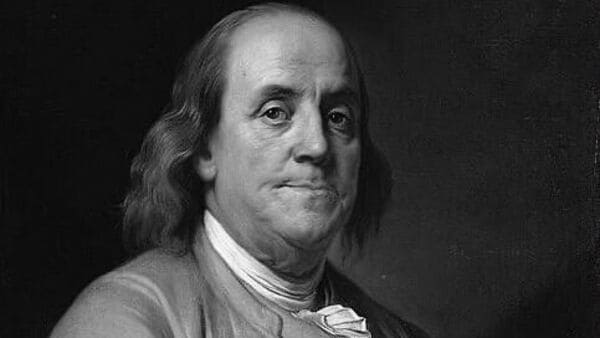
Quote of the day: “Money has never made man happy, nor will it, there is nothing in its nature to produce happiness. The more of it one has the more one wants” — Benjamin Franklin
Franklin’s words also hint at the difference between external success and internal fulfillment. Happiness is often tied to relationships, meaningful work, personal growth, and a sense of gratitude, things that money cannot directly buy. When people rely solely on wealth for happiness, they may find themselves feeling empty despite success.
Another important layer of this quote is its warning about comparison. In modern society, people often measure their success against others. As income increases, so do social expectations like bigger homes, better cars, more luxurious lifestyles. This constant comparison can create dissatisfaction, even among the wealthy, because there is always someone with more. Franklin is essentially cautioning against tying self-worth to financial status.
What does Benjamin Franklin’s quote mean?
His quote reflects a timeless truth about human nature and the limits of material wealth. Franklin suggests that money, by itself, cannot bring genuine happiness. While it can provide comfort, security, and access to opportunities, it does not fulfill deeper emotional or psychological needs such as love, purpose, and contentment.
The second part of the quote highlights a powerful idea: the more money people acquire, the more they tend to desire. This points to the concept of endless craving. Instead of feeling satisfied, individuals often raise their expectations and continue chasing more wealth, believing it will eventually lead to happiness. However, this pursuit can become a cycle that never truly ends.
The quote speaks to the psychological phenomenon known as the “hedonic treadmill.” This means that people quickly adapt to improved financial circumstances. What once felt like a luxury soon becomes normal, and the excitement fades. As a result, individuals keep striving for more, not because they need it, but because they have become accustomed to their current level of comfort.
also implies that money can sometimes distract people from what truly matters. The pursuit of wealth can consume time and energy that might otherwise be spent nurturing relationships, developing skills, or contributing to society. In extreme cases, this focus can lead to stress, anxiety, and a lack of fulfillment, even when financial goals are achieved.
Moreover, the quote encourages a shift in perspective, from accumulation to appreciation. Instead of constantly seeking more, individuals can benefit from valuing what they already have. Gratitude plays a key role in happiness, and it is something that wealth alone cannot guarantee.
In today’s fast-paced, consumer-driven world, Franklin’s message is especially relevant. Advertising and social media often reinforce the idea that happiness is linked to possessions and lifestyle upgrades. However, his words remind us that true contentment comes from within and is shaped by values, relationships, and purpose rather than material gain.
Ultimately, the quote is not saying that money is unimportant. Rather, it emphasises that money should be seen as a tool, not a source of happiness. When used wisely, it can improve quality of life, but it cannot replace the deeper elements that make life meaningful.
Who was Benjamin Franklin?
Born on 17th January, 1706 in Province of Massachusetts Bay, Benjamin Franklin was one of the most influential figures in American history. He was a Founding Father of the United States, known for his contributions as a writer, inventor, scientist, diplomat, and philosopher.
Franklin played a crucial role in the early development of the . He was one of the signers of the Declaration of Independence and helped shape the nation’s founding principles. As a diplomat, he was instrumental in securing French support during the Revolution, which proved vital for the country’s independence.
Beyond politics, Franklin was a man of remarkable curiosity and intellect. He conducted groundbreaking experiments with electricity, famously demonstrating the connection between lightning and electrical energy. His inventions, such as the lightning rod and bifocal glasses, continue to impact daily life even today.
He was also a prolific writer and thinker. Through works like Poor Richard’s Almanack, Franklin shared practical wisdom, moral lessons, and reflections on life, many of which, like this quote, are still widely quoted.
Franklin believed strongly in self-improvement, discipline, and civic responsibility. His life embodied the idea that success is not just about wealth or status, but about contributing to society and living with purpose.
He died on 17th April, 1790.