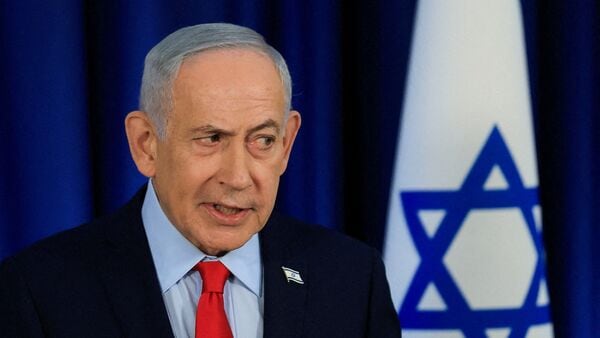
Israeli Prime Minister Benjamin Netanyahu said on Thursday (April 9) he has authorised direct negotiations with Lebanon “as soon as possible,” even as a fragile ceasefire linked to the Iran conflict shows signs of strain.
said the move followed requests from Lebanon and would focus on disarming Hezbollah and establishing peaceful relations. He also welcomed .
There was no immediate response from Lebanon.
Ceasefire under pressure
The tentative appeared increasingly fragile, weighed down by continued and tensions over key conditions.
Israel carried out heavy bombardment in Beirut, marking one of the deadliest days in Lebanon since the conflict began on February 28.
Disputes also emerged over whether the ceasefire includes a halt to fighting between Israel and Hezbollah, with Iran insisting it does, while Israel and the US deny such provisions.
Israel vows continued strikes
made clear that would continue despite the ceasefire.
“Israel will continue striking Hezbollah with force, precision and determination,” he said.
Lebanon’s health ministry reported at least 203 people killed and over 1,000 wounded in recent Israeli strikes, underscoring the scale of the escalation.
Iran warns of ‘strong responses’
Iran’s parliament speaker Mohammad Bagher Qalibaf warned that continued Israeli attacks on Hezbollah would carry consequences.
He said such actions would bring “explicit costs and STRONG responses,” signalling potential escalation if strikes persist.
Iran has also accused Israel of violating the ceasefire, warning that continued attacks could derail negotiations.
Strait of Hormuz remains flashpoint
The ceasefire has also been complicated by Iran’s continued control over the Strait of Hormuz, a critical global energy route.
Iranian officials indicated that shipping remains restricted, with uncertainty over when normal transit will resume.
Deputy Foreign Minister Saeed Khatibzadeh said ships would be allowed passage in line with international law once US “aggression” ends and Israeli strikes in Lebanon stop.
Meanwhile, UAE energy chief Sultan Al Jaber stressed the need for unrestricted access, saying ships must be allowed “to navigate this corridor without condition.”
Oil prices surge amid uncertainty
The disruption to Hormuz has driven oil prices higher, with Brent crude trading near $98 per barrel — up roughly 35% since the conflict began.
Shipping through the strait remains minimal, with vessels avoiding the route amid fears of attacks and possible sea mines.
Key issues loom over peace talks
As the US and Iran prepare for talks in Islamabad, several critical issues remain unresolved:
-Control and access to the Strait of Hormuz
-Iran’s nuclear programme and enriched uranium stockpile
-Sanctions relief
-Regional security, including Hezbollah’s role
Iran’s nuclear chief Mohammad Eslami said protecting the country’s right to enrich uranium is “necessary” for any agreement, while the US insists Tehran must not develop nuclear weapons.
Ceasefire at risk
Despite a pause in direct US-Iran hostilities, the broader conflict remains volatile.
Continued fighting in Lebanon, disputes over ceasefire terms, and uncertainty around Hormuz and Iran’s nuclear ambitions have raised fears that the truce could collapse — threatening both regional stability and global energy supplies.
(With AP inputs)