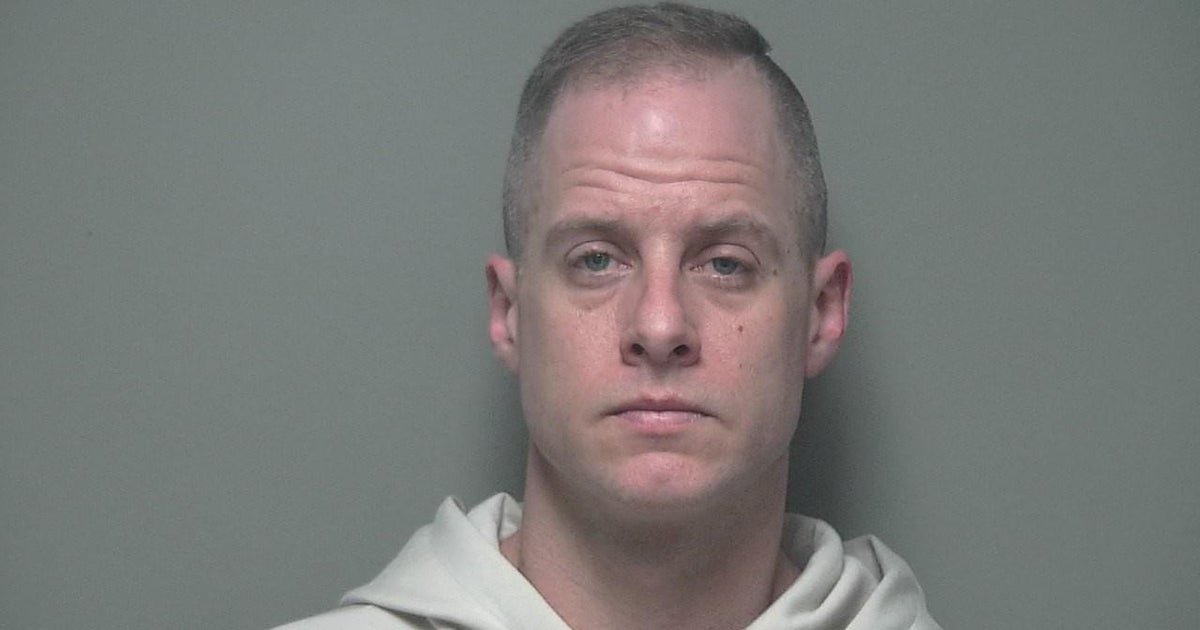
It was in June 2020 when Linda Dane learned the disturbing circumstances of how her long-lost brother Gary Herbst’s skull had been found by a dog in rural Barron County, Wisconsin.
: Yeah, it’s kind of, uh, eerie-type thing to think of, but it still led to finding out what happened, the truth.
Linda says Gary, who was 57 when he went missing, was a loner with a difficult personality who rarely saw his own extended family — which is why pictures that exist of him are from his younger years.
: He could be stubborn. He could be crabby.
It had been years since Linda and Gary had spoken. In 2013, she learned from his wife, Connie, that he had vanished — walking out on her and their teenage son, Austin.
: What did you think of that?
: I was shocked. I — I didn’t know what to think.
Linda says she found it strange that Connie had not reported his disappearance to police.
: And it’s like, OK, did you file a missing person’s report? Did you report it? Did you do anything? … And they did nothing.
: But what was her reason for not reporting that her husband was missing?
: She didn’t — she didn’t give us a reason.
At Linda and her family’s urging, Connie filed a missing person report with the Elko New Market Police Department in Minnesota where the Herbsts lived. In the report, Connie said Gary “grabbed a suitcase” and left in an “older gray Honda vehicle,” but she claimed she “did not get a look at who was driving.”
Six years would pass before investigative genetic genealogist Robin Espensen would be able to construct a family tree that led to identifying the skull.
: … when the cases come to DNA Doe Project, everything has already been exhausted. … genetic genealogy is the last resort …
: So we use the DNA … look at the matches … and we can build family trees that way and figure out the identities of people.
: … we knew that … we had found … the identity of our Doe as Gary Albert Herbst.
: Gary Herbst was originally born in North-Central Wisconsin. … we located family members of his in South Central Minnesota.
That’s when Detective Jeff Nelson from the Barron County Sheriff’s Office tracked down Austin and Connie at the retirement community where they both worked.
: I think it was a little bit of — of a surprise to them. … We actually found out that both Connie Herbst and her son Austin worked at a nursing home. … We basically walked in unannounced … and met with both Connie and Austin.
: When you told Connie that you had found her missing husband, likely had found him … was she excited about the news or was she stoic about it?
: Both of them were very stoic. Never — never even commented, well, at least we — we know it’s him. Uh, it — it’s like they just glossed over it.
Brent Petersen, a special agent with the Minnesota Bureau of Criminal Apprehension, joined Nelson to interview Connie.
: … she was not uncooperative. … she was … just trying to be helpful. … Um, at least that was the appearance …
: Did you get into the issue about why she didn’t report her husband as being missing …
: Yeah. That — that was a red flag from the beginning.
Here’s Connie’s answer about why she didn’t report it.
CONNIE HERBST: … because he left on his own, I said I didn’t think I had to.
Connie told investigators she wasn’t surprised Gary walked out on them because he had a troubled lifestyle.
: She described Gary as … a drug user. … He would use drugs and spend all their money. … He just was described to us as just being a generally kind of a volatile, angry, unpleasant person.
SPECIAL AGENT PETERSEN: How was he with Austin?
CONNIE HERBST: Um, up until the age of 10, great. But at the age of 10, when Gary would start his yelling and screaming at me, Austin would step in between. “Don’t you yell at my mom.”
SPECIAL AGENT PETERSEN: Did he ever hit you in the 30-plus years you guys were married?
CONNIE HERBST: Once or twice.
SPECIAL AGENT PETERSEN: Yeah.
CONNIE HERBST: One time he hit me pretty hard, black and blue on my shoulder. The other time, he actually didn’t hit me. He pushed me and I broke my toe.
In his interview, Austin told investigators his father had become enraged the day he left and later he learned his father had stolen $5,000 in cash and his mother’s wedding ring.
AUSTIN HERBST: I heard him banging around in … the master bedroom. I’m like, OK, what’s going on? Looked in. He was packing a suitcase. … He’s like, “I’m leaving.” … And yeah, he got in — some guy pulled up, picked him up.
Connie told investigators she was at the library that day and remembered getting a frantic call from her son.
CONNIE HERBST: … he goes, “Dad left! Dad left!”… “He got in a vehicle with somebody.”
Investigators soon realized that Connie may have lied to them. Why? Because in her missing person report, Connie had said she was home when Gary walked out.
… we’re suspicious of their stories right away. … So, there was a lot of things … this didn’t match up.
Connie added to investigators’ suspicions when she gave yet another new detail.
CONNIE HERBST: … the 40 caliber gun was gone and that was mine.
Connie had never mentioned Gary had stolen her gun when she first reported him missing.
: So, there’s a lot of oddities that she’s telling …
: Had she said something in your mind that was particularly incriminating?
: I wouldn’t say incriminating but I strongly felt she had certainly knowledge of his murder. … I figured she had some form of involvement.
So, investigators redoubled their efforts to try to learn more.
: … so, there’s a lot of working pieces going on …
Several months passed before investigators were ready to interview Connie and Austin a second time. This time they dug deeper into Connie’s claims of abuse.
DETECTIVE NELSON: So, you know, your mom talked of some abuse issues in the family, uh, uh, how you were very protective of her.
AUSTIN HERBST: … Yeah.
DETECTIVE NELSON: And — it, we understand that.
AUSTIN HERBST: But it was … more of the fact that I hated when he would sit there and yell at her and would upset her.
And the more investigators questioned Austin, the more he began to blame his father for his own demise.
AUSTIN HERBST (interview with investigators): Yeah. He was an angry guy and stuff, but I never expected that to get to the point where someone would want to kill him.
Directing attention toward a mysterious man with tattoos he says his father drove away with.
FBI INVESTIGATOR: … you remember a guy with a black shirt and tattoos.
AUSTIN HERBST: That’s about it. That’s as far as I can get. And that I got a really uneasy sense about it. That was it.
Gary Herbst went missing in 2013. A dog found his skull in 2017 and by June 2020, investigators suspected his own family — his wife Connie and son Austin Herbst, were somehow involved in Gary’s disappearance and murder.
DETECTIVE NELSON (questioning): … there’s some, some follow up questions and information, we —we need to gather to try to piece all this together.
And during their second interview, they consented to a polygraph.
: The investigators from Wisconsin had arranged with the FBI … They both agreed to take polygraphs.
Lie detector tests are generally not admissible in court. But investigators will use them as a tool to judge an individual’s credibility.
: What were the results?
: Connie did not show any signs of deception. … But Austin did.
An investigator from the FBI confronted Austin.
FBI INVESTIGATOR: So I’m, I’m very convinced … you clearly know what happened.
AUSTIN HERBST: I don’t. I’m telling you …
FBI INVESTIGATOR: Austin. You can’t walk away here saying you don’t know anything because you clearly know something …
AUSTIN HERBST: No.
FBI INVESTIGATOR: Whatever it is, you gotta tell me.
AUSTIN HERBST: I suspected that the guy in the truck wasn’t exactly, friendly. I just, the look I got from, he was a little sketchy.
FBI INVESTIGATOR: … Either you’re involved with your mom in killing your father or you’re involved with someone else in killing your father.
AUSTIN HERBST: I’m not involved with it. … I’m just gonna tell you getting my mom involved, that is pretty out of this world.
Detectives say Austin continued to draw the investigators’ attention toward the man with tattoos he says picked up his father that day.
INVESTIGATOR: … tell me what, describe what you’re talking about when you talk about the look of him.
AUSTIN HERBST: Tat’s came out with a black A-shirt that was all ripped up.
FBI INVESTIGATOR:… Doesn’t make sense. None of this makes sense.
: The first interview … he recalls … his dad … getting into a vehicle and leaving. … Then, that changed to he remembered some heavily tattooed man … that looked, in his words, to be some sort of criminal that was the driver of a vehicle that his dad got into. So, the story changed and morphed each time you talked with him.
Investigators suspected Austin’s story was pure fiction.
FBI INVESTIGATOR (to Austin Herbst): I just find way too many inconsistencies in your stories. I mean, with your story, with your mom’s story …
: And did you feel that the story was rehearsed?
: Certainly.
: That he was trying to recall a script.
: Script.
But a feeling isn’t evidence. Investigators had no choice but to let Connie and Austin go. Next, they headed to the family’s old neighborhood and former home.
Ironically, to a T, all the neighbors, remembered Gary very well.
Detective Nelson says that to a person — they described Gary as a mean, horrible human being.
: We repeatedly heard the term, the biggest a–hole that you’ll ever meet. … If he was mad at a neighbor, apparently he had a pipe organ, and he would set up big speakers in the windows, and he would blast pipe organ music into the neighbor’s house.
: In the wintertime, when he would get mad at a neighbor, he would take a snowblower over and purposefully blow and fill people’s yards up in the middle of the night.
: With snow?
: With snow…
: He was just an evil person.
Neighbors Kaia and Chad Kraml’s house was right behind the Herbst house. They say Gary often yelled at their two daughters and was caught secretly recording them on video.
: I looked and in their back window, you could see the red light from the camera on. And I walked out there and I could see the camera and Gary behind the camera.
: This is a video camera?
: Video camera, like [a] camcorder. And he was just staring at me blatantly on purpose, wanting to, you know, almost show me up and be like. “Yeah, I’m recording.” And I sat there and I was raising my hand like, are you kidding me?
Chad filed an incident report with police.
: It sounds like this is — has a psychological component to it, like he was messing with your mind.
: Absolutely. … I feel like he wanted power and he wanted everyone to know that he had that power. … he most definitely tried to exercise that power by messing with people, neighbors.
Another neighbor, Jason Grimm, says he experienced that firsthand when Gary complained about the time he was snow blowing.
: … he came out … and, uh, started screaming and shouting at me, telling me I was going to flood his — his basement.
: … did you feel like he was a little dangerous?
: … I never feared him, um, just surely because … it was all bark, no bite.
: Did you feel he was a dangerous man?
: Absolutely.
And when investigators interviewed Dee Hamlin, the new owner of the house where Gary and his family lived, they learned something that would confirm their suspicions about Connie and Austin.
(pointing to lower corner of bedroom wall): Over in this area right here, before the closets were put in, somewhere over here, there was a big red stain.
When investigators canvassed Gary Herbst’s old neighborhood, they uncovered a trove of new clues from the time around his disappearance.
: … people didn’t like him, were afraid because he was very confrontational.
Neighbors Chad and Kaia Kraml recalled a storm —
: … thunder, lightning, everything. Like, it was crazy.
And unusual activity in Gary’s backyard.
: It was … maybe midnight-ish … and we looked out the window.
: I see a truck backed in the backyard …
: The truck was pulled right up to the sliding glass door, which we knew was super strange because Gary was very particular with his yard. He did not like anything out of order.
Chad and Kaia told investigators they remembered seeing Austin and Connie scrubbing the floors in the middle of the night.
: You could see directly from those windows into their house.
: Absolutely.
And loading large garbage bags into Gary’s truck.
: They were also carrying out a carpet or some sort of rug and also throwing it in the back of the truck … So we were watching the scene and I turned to Chad and I was like … “What is going on?” And Chad looked at me and he said, “Kaia, I think they finally killed him.”
: And did — the two of you ever think we should share what we’ve witnessed with the police?
: Absolutely not.
: No. As a matter of fact –
: Because –
: He was horrible.
And soon after that night, they say Connie and Austin seemed completely different.
: It was good. It was fun to see them actually happy.
A few weeks later, their neighbors saw them setting up a yard sale.
: So, everybody started filtering over there, myself included, and we were looking at all of the things that they had for sale.
And what was for sale?
: Men’s clothing, men’s shoes, um, there were tools, ammo boxes.
: Now, did you ask her, where’s Gary?
: Yes. … And the answer was that he didn’t want to be married anymore, and he left.
Jason Grimm says he scored a bargain.
: I did. I bought a riding lawn tractor …
Neighbors say Austin and Connie began happily walking the neighborhood offering up baked cookies.
: And do you think his disappearance in some ways liberated their lives?
: Absolutely. … their steps were lighter.
: It was nice not to have him around.
: All of a sudden Connie and Austin …would be out in the yard stopping and greeting people where none of that happened prior to the date that Gary allegedly left.
The next break in the case came when investigators obtained a search warrant for the former Herbst house and notified the new owner, Dee Hamlin, that they would be bringing in a cadaver dog along with her handler, police officer Dan Moldenhauer, to see if she could detect the scent of human remains.
: So this officer said there may have been someone killed inside the house —
: Yeah.
: — and they wanted a dog to come in to see if they picked up any odor —
: Yeah, exactly. … I go, “Absolutely.”
: When you got that call and you brought Radar out here, this is the very house you came to …
: Correct.
Radar is the cadaver dog who searched Dee’s house. She came back to the scene along with her handler to show “48 Hours” what she did that day.
: Boy, Radar wants to get inside, I’ll tell you.
: … and I follow her.
: I was present when the dog originally came in. I was there for the first sniff around.
Dee says something in the garage caught Radar’s attention.
(points to wall in garage): Radar concentrated heavily against this wall and on the brick, um, behind the drywall pieces and the boxes.
Radar’s search continued inside the house.
: Radar would run from space to space and room to room, and almost like he had a pattern. … And then we went downstairs and that’s where he slowed down.
According to Radar’s handler, the dog detected the odor of human remains around that red stain Hamlin had seen.
: She … went straight to this room, ignored every other thing else … came back, went along the wall … and then came to the corner … where that closet door is.
That wasn’t the only area that Radar was interested in.
: … she had a lot of odor here. I mean, she checked all the walls before she came back and — and sat.
: So there was definitely a — a presence of some sort of material. Uh, the guess is blood around this sliding door.
: Yes.
Crime scene investigators tested the spots with luminol which indicated the presence of blood in the areas where the cadaver dog alerted.
: … when you have the Luminol literally lighting up, what is it suggesting to you?
: Well, it’s certainly consistent and corroborates what the neighbors saw … we believed Gary was most likely murdered inside that particular house.
That’s when they called Connie and Austin in for a third interview.
SPECIAL AGENT PETERSEN: So we went to your old house on Wagner Way … and just had a look … trying to piece together Gary’ s kind of last movements … And um, there was some blood …
CONNIE HERBST: OK.
Connie said Gary, who was a machinist, often worked on projects and sometimes accidentally cut himself.
CONNIE HERBST: Usually it was his fingers.
SPECIAL AGENT PETERSEN: … this blood that we’re finding, um, is a bit more significant than just a little cut on the finger.
CONNIE HERBST: Oh that, I wouldn’t know.
Investigators also questioned Connie about what the neighbors reported seeing.
SPECIAL AGENT PETERSEN: Some witnesses saw what they thought was a rolled up rug … being loaded in the back of the pickup.
CONNIE HERBST: Um, no, I don’t know. We didn’t have any carpet, just up in the living room.
: Her body language was to me was like she was defeated.
Phil Nawrocki, a captain with the Scott County Sheriff’s Office, was also present at the interrogation.
: … like as long as I can continue to deny everything, I’m going to be OK. Um, but she didn’t get rattled … Very soft spoken …
: Did she sense she was in real trouble, do you think?
: Yes, I think she knew at that point that all the evidence was starting to gather up, uh, against her and Austin.
Investigators continued to press Connie.
SPECIAL AGENT PETERSEN: So it sounds like Gary was a little psychologically abusive with you guys.
CONNIE HERBST: Yeah.
SPECIAL AGENT PETERSEN: What about physical abuse? …
CONNIE HERBST: … One time. He, um, well he hit me.
SPECIAL AGENT PETERSEN: Yeah.
CONNIE HERBST: Not that I didn’t probably deserve it. Cause I got pushed too far.
For Austin’s interview, cameras were rolling as he was grilled by Detective Jeff Nelson.
DET. NELSON: Do you feel that he was the husband that he should have been to your mother?
AUSTIN HERBST: No.
DET. NELSON: And you stepped in and intervened in several times. Did you not?
AUSTIN HERBST: Yeah.
DET. NELSON: OK. You became her protector?
AUSTIN HERBST: Yep …
DET. NELSON: OK. Which I would have to believe culminated in July of 2013, when you took action to protect your mom. … did you pull the trigger and put the round in the back of your father’s head?
But no matter how many times Austin was asked that question, he never answered it. Once again, Connie and Austin were allowed to leave the police station.
: … that was a strategic plan that we had come up with … knowing full well that if we needed to arrest them, we’d be able to find them later.
Now investigators believed they had enough evidence to bring the case to prosecutors.
: … there was some reluctance because … there was no confession. It’s simply a circumstantial case, albeit we felt it was a very good one.
On Nov. 19, 2020, around 7 a.m., Connie, then 62 years old, and Austin, 26, were taken into custody.
: I — I tell Austin that he is under arrest for the murder of his father.
The two would eventually be charged with second-degree murder.
: Connie had already declined the … final interview with us and had been taken away to — to the jail.
But this time, Austin was ready to explain everything to investigators.
DET. NELSON: Do you remember where you shot him?
AUSTIN HERBST: Yeah.
And later to “48 Hours.”
: And what did you do with his body?
: I slung him over my shoulder and I walked into the forest.
DET. NELSON: Was it you or your mom who pulled the trigger?
For more than four hours, Austin Herbst was grilled about his role in his father’s murder.
DET. NELSON: What’s it gonna be Austin. Was it you or your mom?
INVESTIGATOR: Did you get the gun, Austin? … Yes or no?
INVESTIGATOR: … Is that fair to say that you think that you protected her and you feel you protected her that day? Yes or no?
Finally, Austin broke.
: He said something to the effect of, I might as well tell you what I did. … I said, “Austin, that’s what we’ve been asking for.”
AUSTIN HERBST: On that day, when my mom came home, he flew off the handle … So, I grabbed the gun … and ended the problem.
Austin would tell investigators all about what happened that day and now, for the first time, he is sharing his story exclusively with “48 Hours.”
: My father, Gary Herbst, was vindictive to an extreme that I have never seen in anybody else. He was cruel. He was petty. … He was violent.
: Did you reach an age in which you came to fear your father, or you felt like you were walking on eggshells …
: Very early. Uh, I’d say by 6, 7 years old, that fear was present.
Austin says the emotional road he travelled that led to killing his own father was filled with acts of violence and abuse beginning when he was a boy — details he didn’t share in earlier interviews with investigators.
: He proceeded to put a cigarette out on my arm. … And I screamed and cried and ran. … I did something wrong — picked me up by my throat and threw me like down a flight of stairs.
Austin says his mother was treated even more brutally.
: Terribly, unbelievably so. … Physical abuse on a weekly, sometimes daily basis, uh always demeaning, always negative.
: Did you ever see a time in which he drew blood from your mother? From striking her?
: Yes. … He punched her right in the face. —pure black and blue. The next day, she had blood leaking from her mouth.
: Psychological abuse, physical abuse?
: Yep.
: You swear on everything you believe in … you’re telling me the truth.
: Absolutely.
Austin, who was just 19 years old when he murdered his father, recalls that tragic day: July 8, 2013.
: The start of the day seemed very normal to me.
Austin remembers playing video games that afternoon when his dad returned home from work.
: Had he been drinking that day?
: Yeah. … He — he drank regularly. … Around about, I’d say, I think it was like 2 or 3 o’clock, my mom came home, and she and him got into an argument about money. There was yelling.
: I tried my best to protect her. … I am a wall. I will not let this continue.
Austin says his mom went to the public library.
: My father, at this point, was laying on the couch, half asleep. And as I walked out, I noticed that that skirting was like crumpled up. … I lifted up the skirting and I saw the firearm.
It’s a pistol.
: Yes.
Austin says his father had never brought a gun into the living room before.
: In my heart of hearts, I knew that my mother’s life was in danger, and by extension, my own. … It all just culminated like, “oh, my God, he’s going to kill her.”
: All these thoughts ran through my head almost instantaneously. And I reached underneath the couch, I grabbed the gun, I pointed at him and I pulled the trigger. … You know, it was surreal almost, right? Like, the bang went off, my hearing popped, and it was just immediately, there was almost like a numbness.
: I’ve never asked this question in all my years on “48 Hours.” … what was it like to pick up that pistol, point it at your father’s head and pull the trigger?
: It broke me. It — it changed who I am irrevocably. I can never be the person I was, or even the person I would’ve become, had that never happened.
: At that moment, are you anguished over what you had done? Are you horrified?
: There was a level of relief knowing that I would never again have to have that fear, having to worry about my mother’s life — having to worry about my life.
Austin says he called his mother at the library and told her to come home.
: And how does your mom react to the scene?
: Uh, sort of the same way I did, sort of just stunned.
Austin says he placed his father’s body, wrapped in a rug, in the trunk of their car. They drove into neighboring Wisconsin.
: What are you and your mom talking about?
: We aren’t. At that point, the — you know, the adrenaline is still rushing. It’s still fear.
About two hours later, Austin and his mom pulled onto a field next to a patch of trees. He says they dumped Gary’s body and then fled.
: I figured that wildlife would take care of the rest. …
: What do you mean wildlife took care of –
: Bears, foxes, they would devour the body. The bones would be scattered. Nobody would know.
: That seems a bit barbaric.
: Absolutely. … I was not in the state of mind that I ever want to revisit. I was at the lowest I’d ever been, both in my emotions and in my humanity.
: I — we do have information that he was not a pleasant person to be around … but being an unpleasant person does not rise to the level of being a domestic abuser.
With no evidence Austin acted in self-defense, prosecutors Mike Groh and Sarah Wendrof say Austin and Connie would be charged with second-degree murder.
: What Austin described as happening was not an emergency situation. It did not rise to a self-defense offense.
: Your life — while he was sleeping there on the couch — was not under imminent threat. … You didn’t have to shoot him. This wasn’t legally self-defense.
: Right. Correct.
: This was murder.
: Correct.
And as prosecutors prepared for trial, they questioned whether there was more to Connie’s role in Gary’s killing than Austin had admitted.
: Do you at times … wonder to yourself, could Connie have pulled that trigger?
: As prosecutor, of course I wonder about that.
: I shot my father because if I hadn’t, I would’ve been dead. My mother would’ve been dead.
: What are the options that his son could have done other than kill Gary?
: … he could have grabbed the gun … left the house and told the police what had been going on.
Prosecutor Mike Groh.
: All those things are possible and very doable except shooting him in the head, which is the last thing that a civilized person would supposedly do.
Once Austin Herbst confessed to killing his father, he agreed to plead guilty to second-degree murder.
: … it was what we call a straight plea, which means there was no promises made by the state as to what you would get.
Connie Herbst pleaded guilty to “aiding an offender – accomplice after the fact.”
: … Austin said, yes, … I was the one that killed my dad … then that’s when we decided Connie would be charged with … the aiding an offender after the fact.
Without a trial, prosecutor Sarah Wendorf says there were many unanswered questions about Austin and Connie’s claims of physical abuse.
: We have never seen any information to suggest that there was any abuse, um, that Gary committed against Austin or his wife.
: They never said anything until they were in trouble. And then they told these reasons why they were abused.
: The prosecutors in this case say, well, there’s no real evidence that any of this happened.
: Of course. And I can’t—I can’t refute that I can’t refute that there is no evidence that occurred. It is all hearsay.
Austin told “48 Hours” he and his mom had never reported abuse to the police, friends or extended family members because they feared for their lives at the hands of Gary.
: I’ve been told if you try to have me arrested, if you try to flee, if you try to—you know—go your own way, I will find you and kill you.
Another question for prosecutors involves Connie’s whereabouts on the day of the murder.
: You said that your mom was at the library at the time your father was shot, correct?
: Yes.
: The prosecutors say investigators were never able to find evidence that that’s true — that she was there. And they wonder if your mother was the one who killed your father and that you — as her protector — have told a story where you’re taking responsibility for something that she did.
: My mom would never allow me to take a fall like that, if she had done that.
: And I need to ask you that question. Did your mother, Connie, shoot and kill your father?
: I’m telling you right now on everything I hold dear, my mother did not shoot my father.
Prosecutors said a potential motive for Gary’s murder was hate – illustrated by how Austin left his father’s corpse in these woods to be eaten.
: That is inhuman.
: Absolutely.
: That is barbaric.
Inhumanity that, at the time, seemed to have left Austin overjoyed.
: I experienced more happiness afterwards than I had for my entire 18 years of living with him.
: You’re having cookies with the neighbors while your father’s corpse is being eaten by animals.
: Yeah, it was a strange dichotomy. … It actually brought me a sense of almost shame that my happiness is on the feet of the ultimate act of violence. It still makes me wonder what kind of person I am that that could have happened.
At Austin’s June 2021 sentencing hearing at Scott County District Court in Minnesota, prosecutors asked that Austin Herbst be sentenced to 30 years in prison.
: I made it clear to the judge that he deserved the highest sentence … because of the callous way that he was killed and the body was treated.
But Judge Caroline Lennon said she found Austin’s claims believable. In her ruling, she said, “I find it credible that you believed that he was going to kill your mom” and later said Austin “felt an underlying obligation to protect his mother.” He was sentenced to 12 years and six months and will be eligible for release in 2029.
: It’s horrendous because if we allow that kind of justice to go, nobody’s safe because they’ll say that I have been abused, that’s why I did this.
Gary Herbst’s sister Linda Dane seemed a bit overwhelmed.
: Twelve. Yeah. That does not seem very relevant to someone’s life. It seems very —very light.
Eight months later, Connie Herbst was back in court for her sentencing.
: We also recommended for Connie, um, the highest end of the guideline sentence, which was 57 months.
: That would have been almost five years in prison …
: Yes …
But the judge decided Connie would get two years and three months. Under Minnesota sentencing guidelines, she served just three months behind bars and was released in May 2022.
: I think that he was psychotic.
And back in the small town of Elko New Market, Minnesota, where the murder took place, a few of Gary Herbst’s former neighbors had hoped Austin and his mother Connie wouldn’t do any hard time for eliminating a man they considered a monster.
: I felt sad because I didn’t really want them to be caught. … I don’t feel they were a danger to society.
Jason Grimm even had a message for Austin.
: I hope he’s doing well, and when he gets out, please look us up. I’d like to help him in any way I can.
: Really?
: Yeah.
: Do you feel in a way, though, he got a 12-and-a-half-year sentence, was that too much?
: I think it’s a little bit excessive. … hopefully, he can pick up the pieces and move on with his life …
: Do you believe that what you did was justified?
: I believe that there are a lot of reasons why the act was justifiable.
: So under the same circumstances, you would still shoot him again?
: I believe so …
: And when you get out, what do you want people to know about whether you will be a potential danger to society … or a contributor to society?
: My only goal in life is to leave something behind that’s worth remembering. This isn’t it. This isn’t it. … I want to leave behind a legacy other than I killed my father …
Produced by Asena Basak and Chuck Stevenson. Michael Loftus is the field producer. Cindy Cesare and Marc Goldbaum are the development producers. Wini Dini and Phil Tangel are the editors. Annabelle Allen is the associate producer. Anthony Batson is the senior broadcast producer. Nancy Kramer is the executive story editor. Judy Tygard is the executive producer.