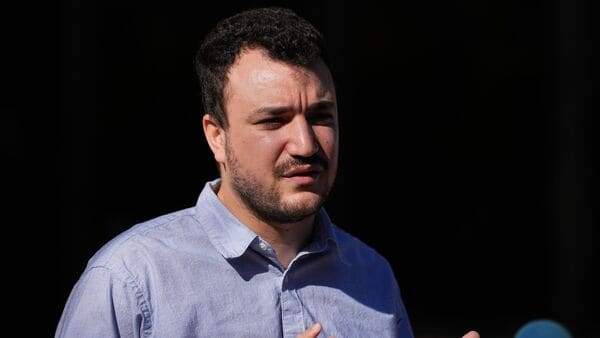
Mahmoud Khalil’s latest bid to have his deportation case has been dismissed by an immigration appeals board. The rejection brings Palestinian activist and Columbia University graduate and Mahmoud Khalil closer to getting re-arrested and his possible expulsion. The final order, dismissed by the immigration appeals board, came on Thursday, his lawyers said.
The board’s rulings are not public, and an inquiry to the United States Department of Justice was not immediately returned.
In his reaction, Mahmoud Khalil said he was not surprised by the ruling. He said that the dismissal of his deportation case was “biased and politically motivated.” His attorneys said he cannot be lawfully detained or deported as he pursues a separate case in the federal court system.
He said the only thing he was guilty of was speaking out against the genocide in Palestine.
Releasing a statement Mahmoud Khalil said, “The only thing I am guilty of is speaking out against the genocide in Palestine – and this administration has weaponized the immigration system to punish me for it.”
The Board of Immigration Appeals sets precedent in the byzantine immigration court system, which is controlled by the Department of Justice — and increasingly under the influence of the Trump administration.
Why was Khalil arrested
Mahmoud , was the first person who was arrested during the federal government started cracking down on non-citizens of America. Khalil has publically criticized Israel and its actions in Gaza.
Justifying the arrest, the Trump administration had claimed that Khalil’s efforts and ideology as a leader of pro-Palestinian protests in Columbia aligned with Hamas.
They have not presented evidence of any connection to the terrorist group, and Khalil has adamantly denied allegations of antisemitism.
After his arrest last March, Khalil spent 104 days in an immigration jail, missing the birth of his first child, before he was ordered released by a federal judge in New Jersey.
Khalil , with a US appeals panel ruling the judge in New Jersey overstepped his authority by releasing him. In a 2-1 decision, the panel found that law requires the case to fully move through the immigration courts before Khalil can challenge the decision in federal court.
Khalil’s lawyers are requesting the full appeals panel reconsider the decision. Earlier this month, they asked one of the appellate panel’s judges to step aside because of his previous role as a top Justice Department official involved in investigating student protesters.
Khalil was born in Syria to a Palestinian family and holds Algerian citizenship through a distant relative. He has said that he could be targeted, and even killed, if he is deported.
(With AP inputs)