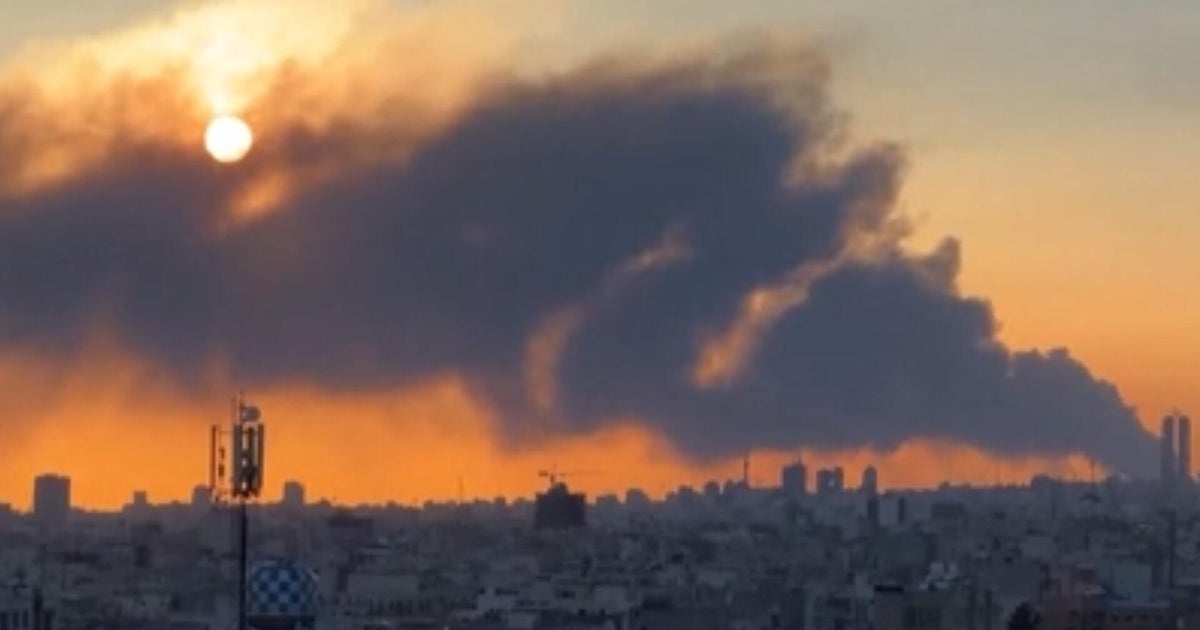
Qatar’s defense ministry said it intercepted an Iranian missile attack on Wednesday morning local time as blasts were heard in Doha.
“Armed forces intercepted missile attack which targeted State of Qatar,” the ministry of defense said in a statement, released shortly after an AFP journalist in the capital heard several blasts.
Qatar, like several other Gulf nations, has been targeted by both drones and missiles in recent days.
FIFA indicated Tuesday that it is planning for the Iranian men’s soccer team to play its three World Cup group stage games in the U.S., this after Iran’s national soccer federation said it was in negotiations to move the games to Mexico.
The Iranian Embassy in Mexico, citing Iran’s soccer federation chief Mehdi Taj, posted to social media earlier Tuesday that it was negotiating with FIFA to move the games south.
However, in a statement later provided to CBS News, FIFA seemed to hold fast to the original schedule, which has Iran in the group stage playing New Zealand on June 15 and Belgium on June 21, both at SoFi Stadium near Los Angeles, and then facing Egypt on June 26 in Seattle.
“FIFA is in regular contact with all participating member associations, including (the Islamic Republic of) Iran, to discuss planning for the FIFA World Cup 2026,” a FIFA spokesperson told CBS News. “FIFA is looking forward to all participating teams competing as per the match schedule announced on 6 December 2025.”
Mexican President Claudia Sheinbaum appeared open to the idea of Iran playing its games in Mexico when asked by reporters Tuesday.
“They are discussing with FIFA whether it’s feasible because they were going to hold the (games) in the United States,” Sheinbaum said, according to the Associated Press. “They are looking into whether they can hold (them) in Mexico, and we will inform you when the time comes. Mexico has relations with all countries in the world. We’ll see what FIFA decides and then we’ll announce it.”
This all comes after President Trump on March 12 said he believed it would not be “appropriate” for the Iranian men’s national soccer team to take part in the World Cup this summer due to concerns “for their own life and safety.”
This marked an apparent shift, after Mr. Trump two days prior, on March 10, had informed FIFA representatives that Iran was welcome to play in the tournament, U.S. officials told CBS News.
Iran informed the International Atomic Energy Agency, the United Nations’ nuclear watchdog, that there was no damage or injuries after its Bushehr Nuclear Power Plant site was targeted in a strike, the IAEA said Tuesday night.
In a social media post, the IAEA wrote that it had “been informed by Iran that a projectile hit the premises of the Bushehr NPP on Tuesday evening. No damage to the plant or injuries to staff reported.”
The IAEA also said its director-general, Rafael Mariano Grossi, “reiterates” the “call for maximum restraint during the conflict to prevent risk of a nuclear accident.”
Bushehr, Iran’s only commercial nuclear power plant, is located about 465 miles south of Tehran.
Construction on the plant began under Iran’s Shah Mohammad Reza Pahlavi in the mid-1970s. After the 1979 Islamic Revolution, the plant was repeatedly targeted in the Iran-Iraq war. Russia later completed construction of the facility.
CBS/AP
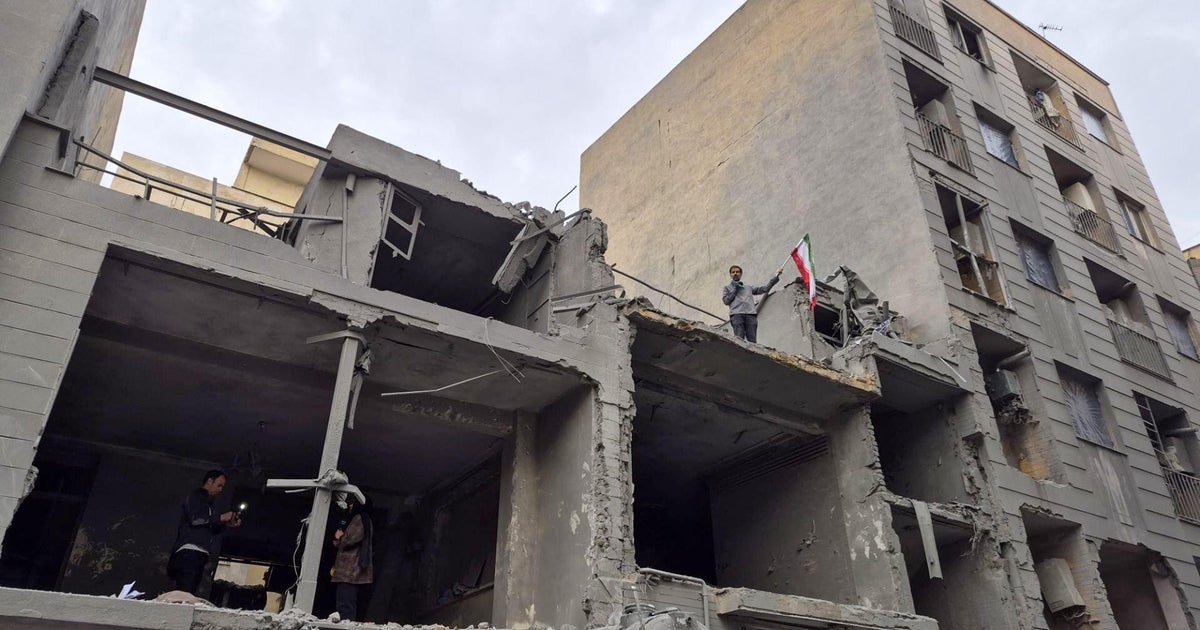
Two people were killed near Tel Aviv during an Iranian missile strike, Israeli emergency responders said early Wednesday local time, after police reported they were responding to “several” impact sites around the city and its surrounding areas.
“We saw smoke rising from a building with extensive damage and shattered glass. From among the debris, we saw two unconscious casualties, with no pulse and not breathing, with severe injuries to their bodies,” the Magen David Adom emergency responder said in a statement, adding medics had pronounced the two people dead at the scene.
The emergency responder had earlier released a statement saying the two patients were found in serious condition, while police had confirmed reports of “the fall of munition fragments in the Tel Aviv District.”
U.S. forces on Tuesday dropped 5,000-pound bombs on Iranian missile sites near the Strait of Hormuz, the U.S. military said.
U.S. Central Command, which oversees U.S. military operations in the Middle East, said that multiple 5,000-pound “deep penetrator munitions” were deployed on missile sites along Iran’s coastline near the strait.
“The Iranian anti-ship cruise missiles in these sites posed a risk to international shipping in the strait,” U.S. Central Command said.
A Trump administration official told CBS News that Joe Kent, who resigned Tuesday as director of the National Counterterrorism Center, was not involved in briefings on Iran.
The official also noted that Tulsi Gabbard, the director of national intelligence who oversees the National Counterterrorism Center, has been in touch with the White House since Kent’s resignation.
The official also denied a Fox News report that Gabbard was asked by the White House to fire Kent. The official said that if Gabbard had been asked to do so, she would have.
Kent wrote in his resignation letter that he could not “in good conscience support the ongoing war in Iran,” adding that “Iran posed no imminent threat to our nation, and it is clear that we started this war due to pressure from Israel and its powerful American lobby.”
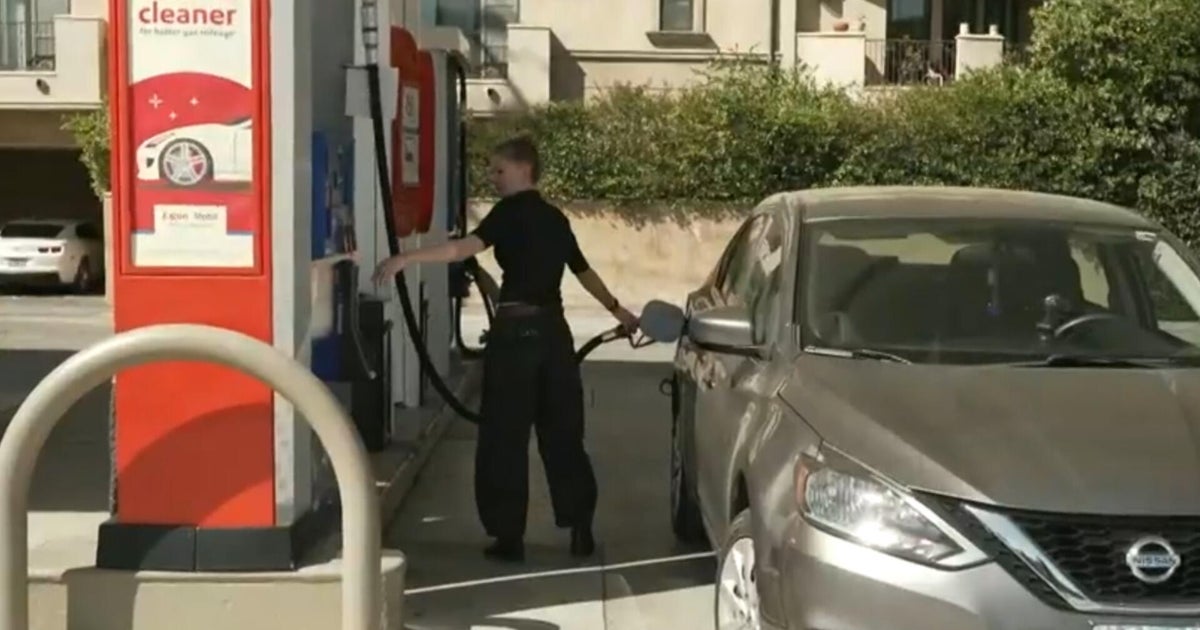
The national average for a gallon of regular gasoline jumped to $3.79 on Tuesday, up from $2.98 consumers were paying before the U.S. and Israel launched the war against Iran on Feb. 28, according to numbers from AAA.
The last time gas prices were as expensive as they are now was in October 2023, per AAA. The highest recorded average ever was in June 2022, when the national average for regular hit $5.01 a gallon.
Diesel gas was averaging $5.04 a gallon Tuesday, its highest level since December 2022.
Ship traffic through the Strait of Hormuz, through which about 20% of all global oil passes, has been brought to a near standstill since the war began.
Oil was trading at about $103 a barrel Tuesday on Brent, the international benchmark, up from approximately $66 a month ago.
CBS/AP
According to a statement released by Iran’s Supreme National Security Council, top Iranian security official Ali Larijani was killed along with his son Morteza Larijani and the head of his office, Alireza Bayat, as well as several guards.
Israel said Tuesday it had struck and killed Ali Larijani and Gen. Gholam Reza Soleimani, the head of the Revolutionary Guard’s all-volunteer Basij force.
The U.S. Embassy in Baghdad was targeted in another attack, a spokesperson for the commander in chief of the Iraqi armed forces said in a statement. Photos show a large fire in the embassy’s compound.
Two Iraqi security officials told the Associated Press on condition of anonymity that a drone crashed inside the embassy’s compound and two others were shot down by the embassy’s defense system.
Iran’s Revolutionary Guard on Tuesday confirmed the death of the commander of the affiliated Basij paramilitary force.
“Commander Gholamreza Soleimani, head of the Basij Organization, has been martyred,” the Guard said on its Sepah News website.
Israel said it had killed him in an airstrike.
Satellite images show U.S. reinforcements heading to the Middle East.
The U.S. is adding to its military presence in the region with the USS Tripoli.
The images show the ship passing through the South China Sea.
Speaking at a lunch on Capitol Hill honoring the Irish prime minister, President Trump said he consulted his chief of staff, Susie Wiles, about taking an “excursion” in Iran. The president said it was “not an easy decision to make” to intervene, given how well he said the U.S. economy was doing before the war.
“I went to Susie, I always go to Susie,” he said. “I said, ‘Susie, do you mind if I take a little excursion here? Do you mind if I?’ You know, we’re hitting all these records, right?”
The president boasted about how the economy has performed during his second term.
“I said, ‘Do you mind if I take a little excursion? Because we have to do something. And it’ll be a short-term excursion,'” the president said.
President Trump says he’s delaying his trip to China because of the war with Iran.
On Monday, he told reporters he had requested that his visit be delayed by a month or so, and on Tuesday, he said China was fine with that proposal. The president had been scheduled to arrive in China in early April.
“We’re resetting the meeting and it looks like it’ll take place in about five weeks,” he told reporters in the Oval Office during an event with Micheál Martin, the Irish prime minister. “We’re working with China. They were fine with it. I look forward to seeing President Xi; he looks forward to seeing me, I think.”
American drivers are paying sharply higher fuel prices since the outbreak of the Iran war, despite the U.S. being the world’s largest oil producer. Why?
The U.S. exports much of the oil it produces, selling it to foreign purchasers, but the U.S. also remains a major importer — and the world’s biggest user of oil, data show.
“The global market sets the price. The provenance of the oil we’re filling our gas tanks with doesn’t matter,” said Bernard Yaros, lead U.S. economist at Oxford Economics.
Read more here on how the complexities of global energy markets are driving up U.S. fuel prices amid the U.S.-Israeli war with Iran.
Israel said it was targeting posts of the feared Iranian paramilitary force known as the Basij across Tehran on Tuesday, hours after it announced the killing of the group’s commander in an overnight strike.
“Over the past few hours, the Israeli Air Force is striking Basij Unit operatives and posts that were deployed across Tehran,” the Israel Defense Forces said in a social media post.
Israeli Defense Minister Israel Katz said earlier the air force had “targeted and eliminated Gholamreza Soleimani, who operated as commander of the Basij unit for the past six years.”
Videos posted online, which CBS News could not immediately verify, showed fires purportedly on the streets of Tehran where Basij posts were hit. The Basij have long operated as a national paramilitary force under the command of Iran’s Islamic theocratic rulers, playing a major role in violently quashing anti-government protests, including the unprecedented wave of unrest in January.
Kuwait’s Ministry of Defense said Tuesday that two people sustained minor injuries as the country’s air defenses intercepted another salvo of missiles and drones, as Iran continued targeting Persian Gulf states in retaliation for ongoing U.S.-Israeli strikes.
The ministry said that over the last 24 hours, Kuwait’s air defenses had detected two ballistic missiles and 13 drones inside the country’s airspace.
“They were dealt with and intercepted, with two minor injuries recorded as a result of falling debris,” Ministry spokesperson Colonel Saud Abdulaziz Al-Atwan said in the statement, adding that both of the injured people were in a stable condition and there was no “significant material damage being recorded.”
President Trump struck a defiantly isolationist tone on Tuesday as U.S. allies declined his calls to deploy military forces to help secure the Strait of Hormuz, which Iran has virtually closed to shipping traffic in retaliation for the war the U.S. and Israel launched on Feb. 28.
He said on Truth Social the U.S. no longer wants or needs help from NATO countries, “Likewise, Japan, Australia, or South Korea.”
“WE DO NOT NEED THE HELP OF ANYONE!” he posted.
The war was launched without consulting or involving America’s NATO allies, and many were taken aback by the attack launched during ongoing negotiations over Iran’s nuclear program.
On Monday, the president pushed other nations that depend on oil exported through the passage to “come and help us with the Strait.”
Mr. Trump said Tuesday that the U.S. was informed “by most of our NATO ‘Allies’ that they don’t want to get involved” with the operation against Iran.
U.S. diesel prices jumped above $5 a gallon on Tuesday, marking the highest level since December 2022, as the strain on global energy markets from the war with Iran continues to ripple through the American economy.
Diesel prices reached $5.04 a gallon, up from $4.78 a week ago and from $3.65 over a month ago, according to data from AAA.
Diesel prices are rising as the war in the Middle East constrains the world’s oil supply and drives up prices of Brent crude, the international benchmark, above $100 a barrel. Iranian attacks on oil and gas facilities across the Persian Gulf have hobbled operations in oil-producing nations such as the United Arab Emirates, where a drone attack on Monday sparked a fire in the Fujairah Oil Industries Zone.
The U.K. Ministry of Defense said Tuesday that ongoing efforts to defend British interests and allies in the Middle East and far Eastern Mediterranean saw the busiest night since the Iran war began in one “high-threat area” when it came to drone interceptions.
“Overnight, a British ground-based counter drone unit operating in a high-threat area took out the largest number of drones in a single night since the conflict began,” the Ministry said in a daily update.
It added that the U.K. Space Command continued supporting Britain’s “and our allies’ response to this conflict,” including by monitoring Iranian missile launches.
The statement said British Typhoon and F-35 fighter jets “continued to conduct defensive air patrols over Qatar, Bahrain, the United Arab Emirates, Jordan and the Eastern Mediterranean,” where the U.K. has a sovereign air base on the island of Cyprus, which has been targeted by Iranian drone fire during the war.
President Trump has criticized U.K. Prime Minister Keir Starmer in recent days for declining to commit to sending British warships to help reopen the Strait of Hormuz, along with other European nations. Starmer has defended his decision not to engage the U.K. military in offensive operations against Iran, arguing that an endgame for the conflict has not been made clear by the U.S. or Israel.
The Lebanese Army said Tuesday that two soldiers were killed in the country’s south by “a hostile Israeli airstrike” as the rode a motorcycle, raising the number of Lebanese soldiers allegedly killed by Israel’s expanding military operation in the country to three.
Earlier the army said a soldier was killed and four others wounded, one critically, in a “hostile Israeli raid,” also in the south of Lebanon.
The Israel Defense Forces said in a statement earlier, referring to the first incident that allegedly killed one Lebanese soldier, that it was “aware of the claim that several soldiers of the Lebanese Armed Forces were injured as a result of an IDF strike in the area of Froun in southern Lebanon. The incident is under review.”
The IDF said in its statement that it “operates against the Hezbollah terrorist organization, and not against the Lebanese Armed Forces or Lebanese civilians.”
President Trump’s director of the National Counterterrorism Center, Joe Kent, announced his immediate resignation Tuesday, citing the decision to begin a war against Iran when “Iran posed no imminent threat to our nation.”
Kent, nominated by the president and confirmed by the Senate last year, posted his resignation letter on X Tuesday morning. He claimed the war was “manufactured” by Israel.
“I cannot in good conscience support the ongoing war in Iran,” Kent wrote in his resignation letter addressed to the president and posted to X. “Iran posed no imminent threat to our nation, and it is clear that we started this war due to pressure from Israel and its powerful American lobby.”
Prime Minister Benjamin Netanyahu lauded on Tuesday the killing by Israel’s military of Iran’s top security official Ali Larijani, who had been Secretary of the Iranian Supreme National Security Council for more than half of decade.
“This morning, we eliminated Ali Larijani. Ali Larijani was the boss of the Revolutionary Guards, the gang of gangsters that effectively runs Iran,” the statement from Netanyahu said.
“We are undermining this regime in the hope of giving the Iranian people the opportunity to oust it. It won’t happen all at once; it won’t happen easily. But if we persist, we will give them the chance to take their destiny into their own hands,” said Netanyahu.
Iraq said it was in contact with Iran to try to arrange passage for some of its oil tankers through the Strait of Hormuz.
“Communications are underway with the relevant authorities to authorize the passage of certain oil tankers to pass through the Strait of Hormuz, in order that we can resume our exports,” Oil Minister Hayan Abdel Ghani told local TV station al-Sharqiya.
Iran’s national soccer federation is in discussions with FIFA, soccer’s global governing body, about moving Iran’s World Cup matches to Mexico from the U.S. due to concerns about the safety of its players, the head of the Iranian federation said Monday.
President Trump said last week that Iran was welcome to participate in the World Cup, which is being hosted this year jointly by the U.S., Mexico and Canada, but he added in a post on his own Truth Social platform: “I really don’t believe it is appropriate that they be there, for their own life and safety.”
Irani’s sports minister previously ruled out taking part in the championship, but in a post on its X account, the Iranian Embassy in Mexico cited the country’s soccer federation chief Mehdi Taj as saying: “When Trump has explicitly stated that he cannot ensure the security of the Iranian national team, we will certainly not travel to America.”
“We are negotiating with FIFA to hold Iran’s World Cup matches in Mexico,” the post quoted Taj as saying. The Reuters news agency said FIFA did not immediately respond to a request for comment on the matter.
The United Arab Emirates’ Ministry of Defense said the Gulf state’s air defenses had “engaged 10 ballistic missiles and 45 UAVs [drones] launched from Iran” on Tuesday.
Iran has fired more weapons at the UAE than any other Gulf Arab nation since it began attacking U.S. allies in the region in retaliation for ongoing U.S.-Israeli strikes.
“Since the onset of the blatant Iranian aggression, UAE air defenses have engaged 314 ballistic missiles, 15 cruise missiles and 1,672 UAVs,” the UAE defense ministry said Tuesday.
There were no reports of impacts from the Iranian assault on Tuesday, but the UAE had already confirmed the deaths of eight people from previous attacks, including two members of the country’s armed forces. At least 157 people have been wounded by the strikes, the ministry said.
The UAE’s military “remains fully prepared and ready to deal with any threats,” the statement said.
The Israel Defense Forces announced a “broad wave of attacks” in Tehran on Tuesday, not long after Israeli officials said two more senior Iranian regime figures were killed in targeted overnight strikes.
Israel’s defense minister said earlier that the head of Iran’s Supreme National Security Council, Ali Larijani, and the head of the feared Basij paramilitary force, Gholamreza Soleimani, were both killed in strikes.
“After the assassinations of the senior officials: The IDF launched a broad wave of attacks against the Iranian terrorist regime’s infrastructure throughout Tehran,” the IDF said in a brief social media post.
The Lebanese Army said Tuesday that one of its soldiers was killed and four others wounded, at least one of them critically, as the result of a “hostile Israeli raid” in the south of the country.
The army said in a series of social media posts that the troops were traveling in a car and on a motorcycle when they came under fire.
Israel announced the beginning of a ground incursion into southern Lebanon on Monday, targeting the Iranian-backed militant group Hezbollah.
Israel has long accused Lebanon’s government of failing to prevent Hezbollah from operating in the country, and using it as a launchpad for attacks on Israeli territory.
In a statement, the Israel Defense Forces said it was “aware of the claim that several soldiers of the Lebanese Armed Forces were injured as a result of an IDF strike in the area of Froun in southern Lebanon. The incident is under review.”
The Israeli military said it “operates against the Hezbollah terrorist organization, and not against the Lebanese Armed Forces or Lebanese civilians.”
The Red Cross says civilians in Iran are paying “a heavy price” as the U.S. and Israel war against the Islamic Republic shows no sign of abating.
Vincent Cassard, head of the Red Cross delegation in Iran, said the war has placed “heavy strain” on Iranians.
“The heavy loss of life is alarming,” he said. “Daily life in Tehran has been profoundly disrupted.”
He said damaged schools and hospitals, as well as facilities of the Iranian Red Crescent, show “the heavy price that civilians are paying as a result of hostilities.”
In a joint statement issued late Monday, the leaders of Canada, France, Germany and the U.K. said they were “gravely concerned” about the escalating bloodshed in Lebanon.
The leaders called for Israeli and Lebanese officials to negotiate a solution to end the violence, and condemned attacks on civilians and civilian infrastructure. They said “a significant Israeli ground offensive into Lebanon would have devastating humanitarian consequences and could lead to a protracted conflict. It must be averted. The humanitarian situation in Lebanon, including ongoing mass displacement, is already deeply alarming.”
The leaders said they supported the Lebanese government’s efforts to disarm the Iran-backed group Hezbollah, which has joined Iran in attacking Israel.
“We stand in solidarity with the Lebanese government and people, who have been unwillingly drawn into conflict,” the leaders said.
Israeli officials announced the beginning of a ground offensive in southern Lebanon on Monday, warning that hundreds of thousands of civilians ordered by the Israeli military to evacuate from a large area would not be allowed to return until Israel’s objectives are met.
The British military’s U.K. Maritime Trade Operations agency said a tanker reported being struck near the Strait of Hormuz on Monday, in the latest apparent attack by Iran.
The UKMTO said it received a report that a tanker was hit by an “unknown projectile” while anchored 23 nautical miles east of the United Arab Emirates port of Fujairah. The tanker only suffered minor structural damage, with no crew injuries reported, UKMTO said.
The agency said Tuesday that it had received a total of 21 reports of incidents involving vessels in the Arabian Gulf, Strait of Hormuz and Gulf of Oman since Feb. 28, when the U.S. and Israel launched strikes on Iran, drawing the retaliatory fire on commercial ships that has virtually paralyzed traffic through the Strait of Hormuz.
UKMTO said 17 of the reports it had received were of attacks, while four were reports of suspicious activity near vessels.
President Trump has vowed to get tankers moving freely through the strait again soon, as the shutdown drives global energy prices up, but his calls for international help in doing so have brought no offers of imminent assistance to date.
“Of course, we are allies with America, but we don’t really understand their moves recently,” Kallas told Reuters in an interview.
“I think it is pretty clear after this one year that the word that we have to take into account is unpredictability. So we are now more calm because we are expecting the unpredictable things to happen all the time, and take it as it is, put some ice in our hats and be calm and stay focused,” she added.
President Trump has argued repeatedly that Europe, and the entire world, will benefit from the U.S.-Israeli war against the Iranian regime, which he and his close ally Israeli Prime Minister Benjamin Netanyahu insist represented an imminent threat to the region and beyond.
The European Union — the 27 nation bloc that includes some of America’s closest allies — made it clear Tuesday that it would not be racing to meet President Trump’s calls for military assistance to reopen the Strait of Hormuz.
The war launched by the U.S. and Israel against Iran has seen traffic through the vital shipping lane grind nearly to a halt due to Tehran’s retaliatory missile and drone fire across the Persian Gulf. Roughly a fifth of all crude oil supplies typically pass through the strait, so the closure has caused a sharp rise in global energy prices.
Mr. Trump has issued repeated demands that America’s European allies, all of whom were cut out of the planning ahead of the assault on Iran, deploy warships to help protect commercial vessels navigating the strait.
“Nobody is ready to put their people in harm’s way in the Strait of Hormuz,” EU foreign policy chief Kaja Kallas told the Reuters news agency on Tuesday. “We have to find diplomatic ways to keep this open so that we don’t have a food crisis, fertilizers crisis, energy crisis as well.”
Mr. Trump has focused significant criticism in recent days on British Prime Minister Keir Starmer, who has also declined to commit to any specific assistance in the Persian Gulf. Starmer said Monday that the U.K. would work with allies to create a “viable collective plan” to reopen the Strait of Hormuz, and he mentioned that British de-mining vessels were already in the region, but he noted the challenges of operating in an area still plagued by regular Iranian missile and drone launches.
The Israel Defense Forces said in a statement Tuesday that the commander of Iran’s feared Basij paramilitary force was among the senior leaders killed in overnight strikes in Tehran, and the Israeli defense minister Israel Katz later confirmed that Ali Larijani, the head of Iran’s Supreme National Security Council, was also “eliminated.”
“Prime Minister Benjamin Netanyahu and I have instructed the IDF to continue pursuing the leadership of the terror and oppression regime in Iran,” Katz said in a statement, adding that Israel would update President Trump on the killing of the two senior Iranian figures “when morning breaks in Washington.”
“The Israeli Air Force, acting on IDF intelligence, targeted and eliminated Gholamreza Soleimani, who operated as commander of the Basij unit for the past six years,” the IDF said in an earlier statement, accusing the Basij, under Soleimani’s command, of leading “the main repression operations, employing severe violence, widespread arrests, and the use of force against civilian demonstrators” to quash anti-government protests that swept across Iran in January.
The IDF called Soleimani’s assassination “an additional significant blow to the regime’s security command-and-control structures” and it vowed to “continue to operate with determination against commanders of the Iranian terror regime.”
Until Monday, Larijani was among the most senior leaders of the regime still alive in Iran. He had been a defiant voice since the war began and he warned only a week ago, in a message aimed at Mr. Trump, that the Iranian people “do not fear your empty threats; even those greater than you have failed to erase them… so beware lest you be the ones who disappear.”
ראש הממשלה בנימין נתניהו מורה לחסל את בכירי המשטר האיראני.
צילום: מעיין טואף / לע״מ. pic.twitter.com/9UHjnjMEKw
Netanyahu’s office, meanwhile, posted a photo on social media of the Israeli leader on the phone, with a message saying only: “Prime Minister Benjamin Netanyahu orders the elimination of senior Iranian regime officials.”
Falling debris from a missile intercept killed one person on Tuesday in the Emirati capital of Abu Dhabi, authorities said, as Iran presses its attacks against Gulf countries in the Middle East war.
The incident took place in the Bani Yas area “following the interception of a ballistic missile by air defences”, the Abu Dhabi Media Office said on X.
The day before a Palestinian national was killed on the edge of the city when a missile hit his car.
It brings the death toll in the United Arab Emirates since the start of the Iran war to eight, with six civilians dead as well as two military personnel killed in a helicopter accident.
The oil-rich Gulf has borne the brunt of Iran’s attacks in response to US-Israeli strikes that sparked the Middle East war, with Tehran targeting US assets but also civilian infrastructure.
On the east coast of the country, the oil industrial zone of Fujairah was hit on Tuesday morning, sparking a fire but causing no injuries, local authorities said.
It was the second day in a row that the site was hit, with a source telling AFP on Monday that oil storage loading had been shut down by an attack.
An AFP journalist heard several explosions in Doha on Tuesday, a day after similar blasts were heard across the Qatari capital.
Qatar, like several other Gulf nations, has been targeted by both drones and missiles in recent days.
Attacks from Iran-linked proxy forces continued in Iraq, as the U.S. Embassy in Baghdad was hit with shrapnel from drones that had been intercepted.
The embassy’s air defenses were able to shoot down all four drones targeting the facility, according to two Iraqi security officials, speaking on condition of anonymity to discuss intelligence matters.
A separate strike targeted a house in the heavily fortified Presidential Compound in Baghdad’s al-Jadriya area, the officials said.
It wasn’t clear who carried out either attack but Iran-allied militias have regularly been attacking American targets inside Iraq since the conflict began.
Separately, Iraq’s oil minister said Baghdad has been in touch with Tehran in an effort to get Iran to let some oil tankers pass through the Strait of Hormuz, the state news agency reported on Tuesday, according to the Reuters news agency.
Iraq is also working to resume exports through the Kirkuk-Ceyhan pipeline to Turkey in an effort to lessen disruptions to shipments stemming from the war, Reuters reported.
CBS/AP
Iran’s Revolutionary Guards said Tuesday their forces had arrested 10 “foreign spies” as the war with Israel and the United States continued.
“Ten mercenary, treacherous elements were identified and arrested,” the Guards’ intelligence organization in the northeastern Razavi Khorasan province said, according to the ISNA news agency, without identifying their nationalities.
The Guards said four of them were gathering information “on sensitive sites and economic infrastructure” while others were linked to a “monarchist terrorist group.”
China said Tuesday it will provide humanitarian assistance to Middle Eastern countries, including Iran and Lebanon, targeted in U.S. and Israeli strikes.
“China has decided to provide emergency humanitarian assistance to Iran, Jordan, Lebanon and Iraq. It is hoped this will help alleviate the humanitarian plight faced by the local populations,” foreign ministry spokesman Lin Jian told a press conference.