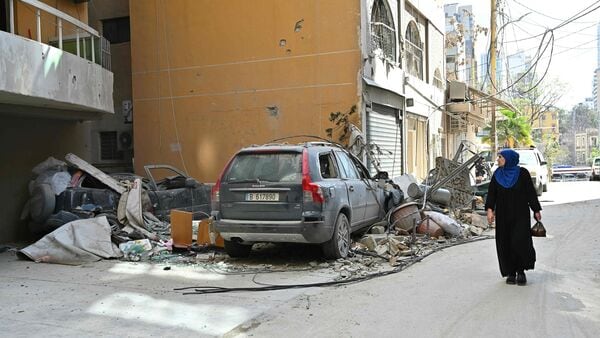
Lebanon’s government on Thursday ordered security personnel to limit the possession of arms in Beirut solely to national agencies, following a massive wave of Israeli bombardment throughout the nation, including strikes within the city centre.
“The army and security forces are requested to immediately begin reinforcing the full imposition of state authority over Beirut Governorate and to monopolise weapons in the hands of legitimate authorities alone,” Prime Minister Nawaf Salam said at the end of a cabinet meeting.
Paul Morcos, Information Minister, said that the directive sparked protests from the two cabinet members representing Hezbollah.
The Lebanese leadership officially prohibited Hezbollah’s combat activities in early March, shortly after the outbreak of hostilities with Israel. However, that ruling has failed to prevent the Iranian-supported militant group and political faction—which holds seats in both the cabinet and legislature—from continuing its armed campaigns.
On Wednesday, Israel launched its most extensive series of attacks since the conflict with Hezbollah began on 2 March, resulting in more than 200 fatalities. This month-long struggle has now claimed over 1,700 lives, based on data from the Lebanese health ministry.
Following Wednesday’s widespread strikes across the country, PM Salam announced that the administration would file an immediate grievance with the UN Security Council. He denounced the “dangerous escalation in defiance of all regional and international efforts to stop the war in the region.”
Morcos indicated that the government is currently pursuing diplomatic channels to finalise a truce for Lebanon, particularly after the United States and Israel specified that their temporary peace agreement with Iran did not extend to Lebanese territory.
Iran asserted on Thursday that Lebanon remains an “inseparable” component of the ongoing ceasefire.
Leaders call for Lebanon truce
With concerns mounting that the delicate Gulf truce could unravel, global leaders are urging for the cessation of attacks in .
French Foreign Minister Jean-Noel Barrot criticized the attacks as “unacceptable,” while British Foreign Secretary Yvette Cooper advocated for the truce to include Lebanese borders.
“Israeli actions are putting the US-Iran ceasefire under severe strain. The Iran truce should extend to Lebanon,” the European Union’s top diplomat Kaja Kallas said.
Hezbollah claimed it launched rockets into Israel in retaliation for what it deemed a truce violation.
US Vice President JD Vance said Washington never suggested that Israel’s operations in Lebanon would cease. But Iran’s Parliament Speaker Mohammad-Bagher Ghalibaf said continued attacks on Hezbollah — including a Wednesday operation on parts of Beirut — amounted to clear violations of the truce agreement.