On newspaper front page ads, the BJP is listing its various accomplishments for women, from clean water to toilets and homes. In Kerala, the Congress’s Rahul Gandhi is pitching for a woman chief minister, even though there are just nine women among the 92 candidates his party fielded in the assembly elections. In Tamil Nadu, rivals DMK and AIADMK are topping up unconditional cash transfers with promises of home appliances.
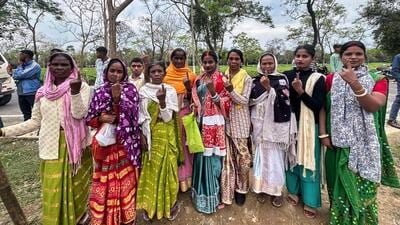
Who doesn’t love women at election time when they have demonstrated innumerable times their power and heft to swing results?
Yet, for all their talk about empowering women, in one aspect every party, national or regional, east or west, displays a predictable stinginess — a reluctance to share power with women. In four states and one Union territory going to the polls, this miserliness is evident. In Assam, only 13 of the 99 Congress candidates analysed by Association of Democratic Reforms (ADR) are women. The BJP is fielding just six women of 90 candidates. Pick a state and it’s the same story, even West Bengal, where chief minister Mamata Banerjee has demonstrated her great embrace of inclusion. Women contesting on a TMC ticket represent 18% of candidates, nowhere close to 33%.
When asked about the missing women, parties invariably talk of “winnability”. The message is clear: Women matter as voters not decision-makers.
In signed editorials, Prime Minister Narendra Modi called the passage of the Nari Shakti Vandan Adhiniyam in September 2023 to be “among the most special occasions of my life”. Three years later, he has called for a special Parliamentary session to discuss the implementation of 33% reservation in the Lok Sabha and assemblies with an urgency that the numbers, even his own party’s, do not justify.
When the Act was passed nearly three years ago, the understanding was that it would kick in only after the completion of the census followed by a delimitation exercise that would reallocate seats based on population. By some calculations, Lok Sabha seats would go up to 816. In theory, the additional 273 seats could then go to women which would possibly assuage male resentment at the loss of “their” seats.
That is now moot. Over three days (April 16-18), Parliament will figure out how to delink reservation from the lengthy census/delimitation process. If the BJP is able to reach a consensus with opposition parties — no party wants to be seen as spoiling women’s chances — it will reflect well on the women-friendly credentials the party, and specifically Modi, wishes to project. This will burnish that brand not just for this election cycle, but all the way up to the 2029 general elections. If it doesn’t succeed, well, at least they tried. Either way they remain the protectors and promoters of women’s interests.
The Congress understands the game. “If the intent was genuine, why was this not taken up earlier?” asked party chief Mallikarjun Kharge. But, said Ranjana Kumari, director of Centre for Social Research: “Regardless of the timing, if women finally end up with greater representation, it’s a win for them.”
The missing women in the house is not an accident. Despite a proven leadership record with at least 33% in panchayats, women are just 9.4% in the assemblies and under 14% in Parliament. This is not oversight, but exclusion by design. Women should not need a quota, but without it they will remain absent from the table. In 2003, Rwanda introduced quotas. Today, with 61.25% women members of Parliament, it has the most women of any parliament in the world.
Namita Bhandare writes on gender. The views expressed are personal