US President on Sunday heaped praises on Pakistan Prime Minister Shehbaz Sharif and the country’s army chief Field Marshal Asim Munir, while again reiterating the claim of having stopped Islamabad’s war with India last year, something New Delhi has repeatedly denied.
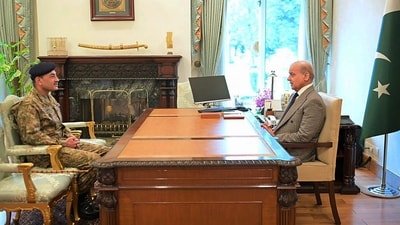
Trump’s fresh reiteration of the claim came in a Truth Social post after Pakistan hosted the talks between the US and Iran to end their war, which began six weeks ago. The Republican leader said the meeting took place under the “very competent leadership” of Sharif and Munir.
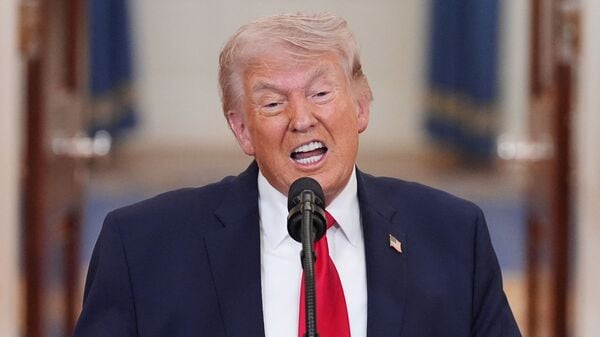
“I have been fully debriefed by Vice President , Special Envoy Steve Witkoff, and Jared Kushner, on the meeting that took place in Islamabad through the kind and very competent leadership of Field Marshal , and Prime Minister , of Pakistan,” Trump wrote in the post.
Calling both Pakistani leaders “extraordinary men”, Trump claimed that they “continuously thank” him for saving 30 to 50 million lives in the “horrendous war with India”. He further said that he always appreciates hearing that.
“They are very extraordinary men, and continuously thank me for saving 30 to 50 million lives in what would have been a horrendous War with India. I always appreciate hearing that — The amount of Humanity spoken of is incomprehensible,” the US President said.
The three-day conflict between India and Pakistan began when New Delhi struck terrorist launchpads inside Pakistani territory on May 7 last year under Operation Sindoor, in response to the Pahalgam terror attack. The ceasefire was announced on May 10, and Trump has been claiming credit for it ever since, although India has repeatedly said he had no role in it.
US-Iran talks fail
Both the US and Iran blamed the other for the failure of the talks to end six weeks of fighting that has killed thousands, roiled the global economy and sent oil prices soaring.
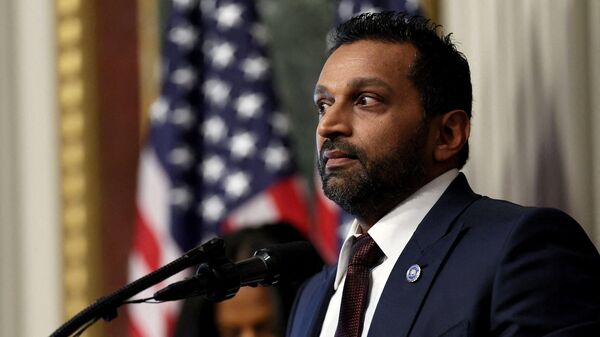
“The bad news is that we have not reached an agreement, and I think that’s bad news for Iran much more than it’s bad news for the United States of America,” , who headed the US delegation to the Islamabad talks.
Iran’s Parliamentary Speaker Mohammad Bagher Ghalibaf, who led his country’s delegation alongside foreign minister Abbas Araghchi, blamed the US for failing to win Tehran’s trust despite his team’s offering “forward-looking initiatives”.
“The US has understood Iran’s logic and principles, and it’s time for them to decide whether they can earn our trust or not,” Ghalibaf said on X.
The talks, which followed , were the first direct US-Iranian meeting in more than a decade and the highest-level discussions since the 1979 Islamic Revolution.
Vance said Iran had chosen not to accept American terms, including not to build nuclear weapons.
“I could go into great detail and talk about much that has been gotten, but there is only one thing that matters — IRAN IS UNWILLING TO GIVE UP ITS NUCLEAR AMBITIONS!” Trump said later.
Iran’s semi-official Tasnim news agency said “excessive” US demands had hindered reaching a deal. Other Iranian media said there was agreement on a number of issues, but the and Iran’s nuclear programme were the main points of difference.
Pakistan’s foreign minister, Ishaq Dar, said it was “imperative” to preserve the ceasefire. Speaking in Rome, Pope Leo also called on Sunday for a lasting ceasefire and said how close he felt to the “beloved Lebanese people”.