Washington — Democratic Sen. Cory Booker filed a legal brief with the U.S. Supreme Court on Wednesday backing cancer patients in a high-stakes case that could determine whether thousands of lawsuits over the weedkiller Roundup can proceed — and drawing a direct contrast with the Trump administration’s position.
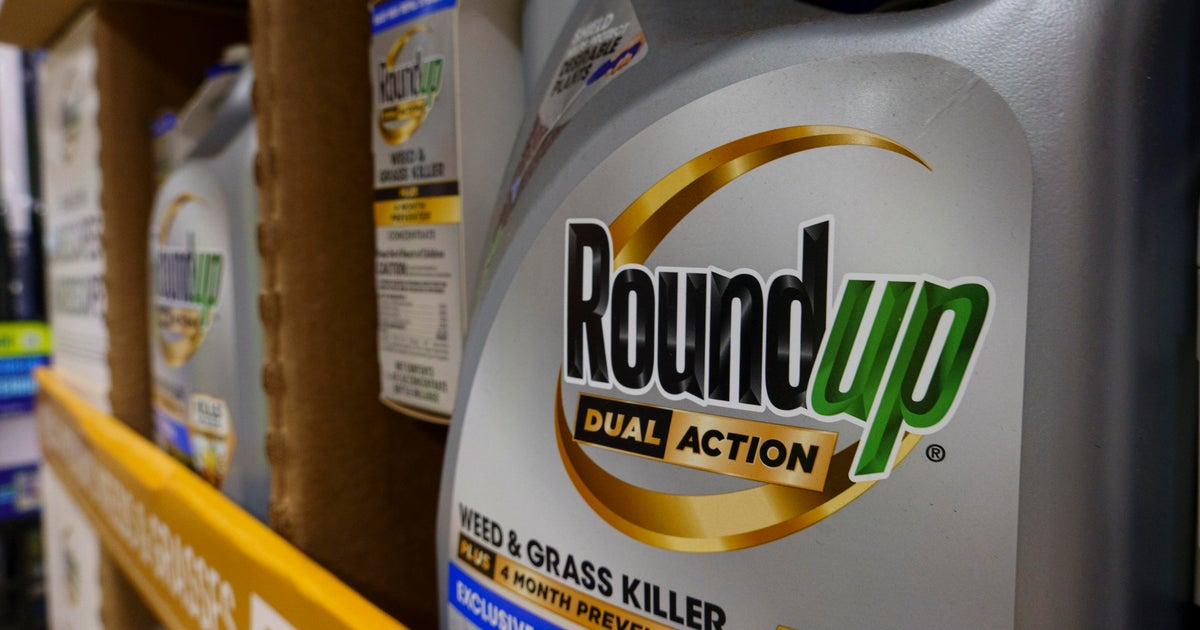
The filing, known as an amicus brief, supports a plaintiff who alleges Monsanto failed to warn consumers about cancer risks tied to Roundup, one of the most widely used herbicides in the world.
The case — Monsanto Company v. John L. Durnell — centers on whether federal law governing pesticide labeling overrides state-level claims that the company did not adequately warn users about potential health risks.
If the court sides with Monsanto, it could significantly limit or block many of the lawsuits brought by people who say long-term exposure to Roundup’s active ingredient, glyphosate, caused them to develop non-Hodgkin lymphoma, a type of blood cancer. A ruling against the company would allow those cases to continue moving through state courts.
Bayer, Monsanto’s parent company, has paid more than $10 billion to resolve earlier Roundup-related claims and is now pursuing a proposed $7.25 billion settlement to address additional cases.
Monsanto has denied a link between the active ingredient in glyphosate and cancer, saying hundreds of studies have established that glyphosate is safe.
In his brief, Booker argued Monsanto is seeking a “broad federal shield from liability” that it has “repeatedly failed to obtain from elected representatives,” warning the court against stepping in on an issue lawmakers have debated but not resolved.
He also said federal pesticide law, known as the Federal Insecticide, Fungicide, and Rodenticide Act, was designed to set minimum safety standards, not to block state-level lawsuits.
Booker argued those lawsuits serve as a critical mechanism for holding companies accountable, particularly as scientific understanding of potential risks evolves over time.
Booker has also pushed the issue in Congress. In recent years, he has introduced legislation aimed at strengthening accountability for pesticide manufacturers, including a bill that would allow people harmed by pesticides to sue in federal court and another targeting the use of certain harmful chemicals. Both efforts would amend the same federal law at the center of the Supreme Court case.
The case has also drawn in the Trump administration. The Justice Department filed its own brief backing Monsanto, arguing that federal law should preempt state-level failure-to-warn claims because federal regulators have already approved the product’s labeling.
In a statement to CBS News, Monsanto said federal law was designed to create a “uniform, nationwide framework” for pesticide labeling and argued that allowing lawsuits to proceed would create conflicting state standards.
“The security and affordability of the nation’s food supply depend on farmers’ and manufacturers’ ability to rely on the science-based judgments of federal regulators. Clarification from the Court is essential to restore uniformity, certainty, and the rule of law,” Monsanto said.
At the same time, President Trump has moved to boost domestic production of glyphosate, calling it critical to national security and the U.S. food supply, even as litigation over its safety continues.
Booker has also criticized the administration’s approach. In February, he condemned an executive order directing federal agencies to boost production of glyphosate, the key ingredient in Roundup, as lawsuits over its potential health risks continue.
Roundup’s key ingredient, glyphosate, has been at the center of a long-running scientific debate. The World Health Organization has classified it as a probable carcinogen, while the U.S. Environmental Protection Agency says it is not likely to cause cancer when used as directed.
That divide has fueled years of lawsuits, including cases where juries found Monsanto failed to adequately warn users about potential risks. Before serving as Health and Human Services secretary, Robert F. Kennedy Jr. successfully represented a man dying of cancer in a 2018 lawsuit against Monsanto in which the jury awarded $289 million to the plaintiff.
The Supreme Court is scheduled to hear arguments April 27, with a decision expected later this term that could shape the future of Roundup litigation and determine whether thousands of claims can move forward.