NATO WASN’T THERE WHEN WE NEEDED THEM, AND THEY WON’T BE THERE IF WE NEED THEM AGAIN. REMEMBER GREENLAND, THAT BIG, POORLY RUN, PIECE OF ICE!!! – President Donald Trump posted, on Wednesday , just as Wall Street Journal posted an exclusive article that the Trump administration is considering a plan to punish some members of the NATO alliance that he believes were unhelpful to the US and Israel during the Iran war.
A simmering dispute between the Trump administration and its European allies has broken into the open, with the White House actively considering retaliatory measures against NATO member states that declined to back, or actively obstructed, the US military campaign against Iran, The Wall Street Journal reported.
The proposal, circulating among senior administration officials, would involve withdrawing American troops from certain NATO countries and repositioning them in countries deemed more cooperative.
What the US Troop Redeployment Plan Actually Involves
According to Trump administration officials cited by the Wall Street Journal, the proposal would see US forces moved out of NATO countries considered unhelpful during the Iran war effort, and restationed in those that offered meaningful support. Critically, the plan stops short of a full American withdrawal from NATO, an action that would, by law, require congressional approval.
The plan remains in its early stages and is one of several options the White House is exploring to signal its displeasure with alliance members. That it has already gained traction among senior officials, however, speaks to the depth of frustration within the administration.
The US currently maintains approximately 84,000 troops across Europe.
Which NATO Countries Are in Washington DC’s Crosshairs?
Several alliance members have drawn specific criticism from the administration. Spain, notably the only NATO country yet to commit to spending 5% of its GDP on defence,— blocked US military aircraft involved in the Iran operation from transiting its airspace.
Germany, home to one of the most strategically vital US military installations in the world, attracted Washington DC’s anger after senior officials publicly criticised the war.
Italy briefly denied American forces access to an air base in Sicily.
France permitted the use of a base in the south of the country only after securing assurances that aircraft participating in Iranian strikes would not land there.
The plan under consideration could go beyond troop redeployment to include the outright closure of at least one US base in Europe — with Spain and Germany identified as possible candidates, WSJ report added.
Who Stands to Gain: Eastern Europe’s Rising Strategic Value
On the other side of the ledger, countries seen as cooperative are being positioned to benefit. Poland, Romania, Lithuania, and Greece have all been identified by officials as likely recipients of additional American military presence. These nations boast some of the highestand were among the first to signal willingness to participate in an international coalition monitoring the Strait of Hormuz.
Romania, in particular, moved swiftly to approve US Air Force access to its bases following the outbreak of hostilities.
The practical consequence of any redeployment eastward would be a larger American military footprint closer to Russia’s borders — a development almost certain to provoke a reaction from Moscow.
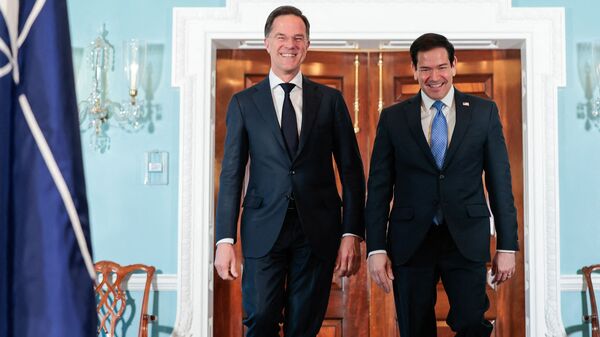
Trump meets with NATO leader Mark Rutte
NATO Secretary-General Mark Rutte was meeting with President Donald Trump on Wednesday to try to smooth over the president’s anger with the military alliance over the Iran war.
Trump had suggested the US may consider leaving the trans-Atlantic alliance after NATO member countries ignored his call to help reopen the Strait of Hormuz, a vital shipping waterway, as Iran effectively shut it and sent gas prices soaring.
Leavitt, Mark Rutte, and a ‘Frank and Candid’ Conversation
NATO Secretary-General Mark Rutte travelled to Washington DC on Wednesday to meet with Donald Trump, seeking to shore up an alliance under extraordinary strain.
Mark Rutte has made a point of maintaining working relations with Trump throughout the tensions, and was reportedly instrumental in persuading him to abandon efforts to annex Greenland.
The mood in Washington DC, however, remained combative. White House press secretary Karoline Leavitt set the tone: “It’s quite sad that NATO turned their backs on the American people over the last six weeks when it’s the American people who have been funding their defense.” She added that Trump intended to have a “frank and candid conversation” with Rutte.
Trump’s Escalating Rhetoric Against NATO
On Monday, , warning that the alliance’s refusal to back the US on Iran was “a mark on NATO that will never disappear.” He has also privately mused to aides about quitting the alliance entirely, and last month posted on his Truth Social platform that member countries “HAVE DONE ABSOLUTELY NOTHING TO HELP” in the war, adding: “U.S.A. NEEDS NOTHING FROM NATO.”
In a separate post, Trump invoked the long-running Greenland dispute with characteristic rhetorical force: “NATO WASN’T THERE WHEN WE NEEDED THEM, AND THEY WON’T BE THERE IF WE NEED THEM AGAIN. REMEMBER GREENLAND, THAT BIG, POORLY RUN, PIECE OF ICE!!!”
Europe’s Counter-Argument: We Were Never Consulted
Senior European officials have pushed back on Washington’s characterisation of events, arguing that they were given no advance notice of the decision to go to war with Iran, which made any meaningful military coordination in the opening days of the conflict effectively impossible.
The logistical consequences were immediate and telling: defence ministers from found themselves stranded in Dubai when the US launched its campaign, having been caught off guard as the United Arab Emirates shut down its commercial airspace.
The Iran War and a Cascade of Diplomatic Crises
The row over Iran is the latest chapter in a turbulent period for the transatlantic alliance. Since returning to office, Trump has inflamed European capitals with sweeping tariffs, conducted direct diplomatic engagement with Russian President Vladimir Putin over the Ukraine conflict, and triggered what officials described as an extraordinary diplomatic crisis with Denmark over his repeated attempts to incorporate Greenland into the United States
- Trump’s administration is considering troop redeployment in response to NATO allies’ lack of support during the Iran conflict.
- Countries like Spain and Germany face criticism for their hesitance to support U.S. military operations.
- Eastern European nations may benefit from increased U.S. military presence as a result of the proposed changes.